


Cork flooring has moved well beyond its reputation as a niche or retro flooring material. Made from the bark of cork oak trees, modern cork flooring combines a distinctive natural appearance with softness, sound absorption, thermal insulation, and a level of resilience that makes it appealing for bedrooms, living rooms, home offices, kitchens, and other everyday spaces.
But cork isn’t automatically the right choice for every room. Its comfort and warmth come with trade-offs: it can scratch or dent, direct sunlight can change its color, and moisture must be managed carefully. The finish, installation method, subfloor, and quality of the product can make a major difference in long-term performance.
This cork flooring ultimate guide explains what cork flooring is, how it compares with other flooring options, its advantages and disadvantages, installation methods, maintenance requirements, costs, and the situations where it makes the most sense.
Table of Contents
What Is Cork Flooring?
Cork flooring is a floor covering manufactured primarily from cork harvested from the bark of cork oak trees. The bark can be removed without cutting down the tree, after which the tree continues growing and can be harvested again.
Cork has a cellular structure containing millions of tiny air-filled spaces. This structure gives the material its characteristic combination of resilience, cushioning, warmth, and sound absorption. Modern cork floors are available as tiles, planks, and floating flooring systems, with different surface finishes and visual patterns.
Unlike hard flooring such as ceramic tile or stone, cork has some natural give underfoot. That makes it particularly attractive in areas where people stand or walk for long periods.
Cork Flooring at a Glance
| Feature | Cork Flooring |
|---|---|
| Feel underfoot | Soft, warm and resilient |
| Appearance | Natural, textured and distinctive |
| Sound absorption | Excellent compared with many hard floors |
| Thermal insulation | Very good |
| Moisture resistance | Moderate; depends heavily on product and finish |
| Scratch resistance | Moderate |
| Dent resistance | Moderate |
| Maintenance | Relatively simple but finish needs attention |
| Installation | Glue-down or floating systems |
| Best rooms | Bedrooms, living rooms, offices and many kitchens |
| Main concern | Moisture, scratches, dents and UV exposure |
The most important point is that cork flooring performance depends heavily on the specific product and installation system. A well-finished cork floor in a suitable room can perform very differently from an inadequately sealed floor exposed to persistent moisture.
What Are the Main Types of Cork Flooring?
Choosing cork isn’t only about color or pattern. The construction and installation method affect how the floor behaves.
1. Cork Tiles
Cork tiles are generally installed by adhering individual pieces to a properly prepared subfloor.
They offer flexibility in design because different tile sizes, patterns, colors, and layouts can be combined. Damaged sections can also be easier to replace individually than some continuous flooring systems.
The downside is that installation requires careful subfloor preparation and adhesive application. The finished floor also needs appropriate protection against moisture.
2. Floating Cork Flooring
Floating cork floors use planks or panels that connect together rather than being permanently glued to the subfloor.
This approach can simplify installation and makes floating cork a popular option for homeowners considering a DIY project. However, the subfloor still needs to meet the manufacturer’s requirements for flatness, cleanliness, moisture, and structural condition.
3. Prefinished Cork Flooring
Prefinished cork arrives with a factory-applied surface finish.
The major advantage is convenience. The protective surface is already applied, reducing the amount of finishing work required after installation.
4. Site-Finished Cork
With site-finished cork, the flooring is installed and then finished on-site.
This approach can allow greater control over the final appearance and protection, but it requires more installation skill and careful attention to the manufacturer’s finishing system.
5. Cork-Look Flooring
Not every floor marketed with a cork appearance is made entirely from traditional cork. Some engineered products use cork as a surface layer over another structural material.
Always check the product construction before comparing prices or performance.
Cork Flooring Pros and Cons
Cork’s biggest appeal is that it combines several qualities that are difficult to get from one conventional flooring material. However, those benefits come with limitations.
Advantages of Cork Flooring
Comfortable underfoot: Cork compresses slightly when pressure is applied, creating a softer walking surface than many hard flooring materials.
Warm feel: Its cellular structure provides natural thermal insulation, so cork tends to feel less cold than ceramic or stone.
Sound absorption: Cork can help reduce impact and airborne noise, making it attractive for bedrooms, offices, apartments, and upper floors.
Resilient surface: Cork has some ability to recover from compression, although heavy furniture can still create permanent impressions.
Distinctive appearance: Natural cork has a recognizable organic pattern, while modern products can offer a wide range of colors and designs.
Renewable material: Cork is harvested from the bark of cork oak trees rather than requiring the tree to be cut down.
Easy routine cleaning: Regular vacuuming or sweeping and appropriately damp cleaning can keep a properly finished cork floor looking good.
Disadvantages of Cork Flooring
Can scratch: Grit, pet claws, furniture movement, and sharp objects can damage the finish or surface.
Can dent: Cork’s softness is part of its appeal, but heavy furniture or concentrated loads can leave impressions.
Moisture requires attention: Standing water, leaks, high humidity, or moisture entering joints can cause problems depending on the product.
Can fade: Prolonged direct sunlight can alter the color of natural cork.
Finish requires maintenance: Many cork floors depend on their protective finish for resistance to wear and moisture.
Not ideal for every room: Areas with frequent standing water or uncontrolled humidity require extra caution.
| Pros | Cons |
| Comfortable | Can scratch |
| Warm underfoot | Can dent |
| Sound absorbing | Sensitive to moisture |
| Naturally insulating | Can fade in sunlight |
| Distinctive appearance | Finish may need renewal |
| Renewable material | Not suitable for every environment |
Is Cork Flooring Waterproof?
This is one of the most important questions to answer before purchasing cork.
Traditional cork flooring should not automatically be considered waterproof. Cork itself has natural moisture-resistant characteristics, but the complete flooring system includes the surface finish, joints, backing or core, adhesive, and subfloor.
A properly sealed cork floor can handle normal household spills when they are cleaned promptly. However, persistent moisture or water that enters seams can cause swelling, staining, separation, or other damage.
Some newer flooring systems are specifically designed to provide improved moisture resistance, so the manufacturer’s specifications matter more than a generic claim that “cork is waterproof.”
Should You Install Cork Flooring in a Bathroom?
Bathrooms present a higher level of moisture exposure than living rooms or bedrooms.
Cork can be used in some bathroom applications when the specific product, installation system, sealing method, and manufacturer’s instructions permit it. However, it isn’t the carefree waterproof option that some vinyl flooring products are.
For a bathroom, consider:
- The manufacturer’s moisture rating
- Whether the product is suitable for wet areas
- How seams are protected
- Whether the subfloor has moisture issues
- How standing water will be prevented
- Whether the warranty permits bathroom installation
If you’re looking for the simplest possible flooring solution for a consistently wet environment, cork may not be your safest choice.
Is Cork Flooring Good for Kitchens?
A kitchen can be an excellent application for cork because its comfort becomes especially noticeable around work areas.
People often spend significant amounts of time standing while cooking, washing dishes, or preparing food. Cork’s resilient surface can feel more comfortable than tile or stone.
However, kitchens also present risks from:
- Water leaks
- Food spills
- Heavy appliances
- Dropped utensils
- Grit and dirt
- Furniture movement
A properly finished cork floor can work well in a sustainable kitchen design, but spills should be cleaned promptly and furniture should be fitted with appropriate protective pads.
The best kitchen cork floor is therefore not simply the softest or cheapest product. Look for a flooring system with a finish and construction appropriate for the expected level of use.
Is Cork Flooring Durable?
Cork flooring can be durable, but durability should not be confused with hardness.
A very hard floor may resist dents better, while cork’s resilience provides comfort and impact absorption. Cork can therefore perform well in residential spaces without being as resistant to scratching and concentrated loads as harder surfaces.
Some cork floors can last for decades with appropriate installation and maintenance. Actual service life depends on the product, finish, traffic level, installation quality, moisture exposure, and maintenance routine.
How to Make Cork Flooring Last Longer
- Remove grit regularly.
- Use protective pads beneath furniture.
- Avoid dragging heavy objects across the floor.
- Clean spills quickly.
- Limit prolonged direct sunlight where practical.
- Follow the manufacturer’s cleaning instructions.
- Inspect the protective finish periodically.
- Refinish or recoat when the product’s maintenance instructions call for it.
The finish is particularly important because it acts as the first line of defense against everyday wear and moisture.
How Much Does Cork Flooring Cost?
Cork flooring prices vary significantly according to product quality, construction, finish, installation method, location, and labor rates.
Recent consumer flooring guides place cork material costs broadly in the mid-single-digit to low-double-digit range per square foot, with installation adding additional costs. Treat these as budgeting ranges rather than fixed prices because local labor and product availability can change substantially.
What Determines the Final Price?
Your total project cost can include:
- Cork flooring
- Underlayment, if required
- Adhesive for glue-down installations
- Moisture barriers or treatments
- Subfloor preparation
- Installation labor
- Trim and transition pieces
- Replacement material
- Finishing or recoating
A useful budgeting strategy is to obtain quotes based on the complete installed system, rather than comparing the price of flooring alone.
Should You Buy Extra Cork?
Yes. It’s sensible to purchase additional material for cuts, installation waste, and future repairs. One recent installation guide recommends ordering at least 10% extra.
Keeping leftover material can also be useful because matching a discontinued color or pattern years later may be difficult.
How Is Cork Flooring Installed?
There are two main approaches: floating installation and glue-down installation.
Floating Cork Installation
Floating cork flooring generally uses interlocking planks or panels.
A typical installation sequence is:
- Inspect and prepare the subfloor.
- Resolve moisture problems.
- Ensure the subfloor meets the manufacturer’s flatness requirements.
- Acclimate the flooring as specified.
- Plan the layout.
- Install the required underlayment or moisture protection.
- Assemble the flooring according to the manufacturer’s instructions.
- Maintain the required expansion gaps.
- Install trim and transitions.
Floating systems are often more approachable for DIY installation because individual planks can click together without adhesive.
Glue-Down Cork Installation
Glue-down cork requires more preparation.
The subfloor must be properly prepared because imperfections can affect the finished surface. Adhesive selection and application also matter.
This method is generally better suited to experienced installers, especially when dealing with large areas or demanding subfloor conditions.
The Subfloor Matters More Than You Think
One of the most common mistakes is focusing on the cork while ignoring the surface underneath it.
Before installation, check:
- Flatness
- Cleanliness
- Structural stability
- Moisture levels
- Existing flooring
- Manufacturer requirements
If the subfloor has moisture problems, installing a beautiful cork floor over it won’t solve the underlying issue.
How to Maintain Cork Flooring
Cork flooring doesn’t require complicated daily care, but it rewards consistency.
Daily or Regular Cleaning
Remove dirt and grit with a soft broom, vacuum, or flooring-safe cleaning method. Fine grit can act like sandpaper when repeatedly walked across the floor.
Damp Cleaning
Use a lightly damp, not soaking-wet, cleaning method and a product approved for your specific floor finish.
Avoid excessive water. Cork flooring should not be treated like a ceramic tile surface that can tolerate heavy wet mopping.
Protect the Floor
Place protective pads beneath furniture legs and avoid dragging heavy items.
Entry mats can also help reduce the amount of grit brought into the room.
Recoating
Many cork floors eventually need their protective finish renewed. The exact schedule varies by product and traffic level; one current guide gives a broad range of roughly three to ten years for polyurethane recoating.
Always follow the flooring manufacturer’s maintenance instructions rather than applying a generic coating.
Can Cork Flooring Be Repaired?
One advantage of cork is that damaged sections may be repairable.
For glue-down tiles, an individual damaged tile can potentially be removed and replaced. Floating systems may also allow damaged planks to be accessed and replaced, although the process depends on the layout and installation method.
Minor surface damage may sometimes be addressed with an appropriate repair or touch-up product.
The key is to keep spare flooring from the original installation. Natural cork patterns vary, and an older floor may be difficult to match perfectly with newly purchased material.
Cork Flooring vs. Other Flooring Options
The right flooring depends on what you value most.
| Flooring | Comfort | Moisture Resistance | Sound Control | Maintenance |
| Cork | Excellent | Moderate | Excellent | Moderate |
| Hardwood | Good | Moderate to low | Moderate | Moderate |
| Vinyl | Good | Often excellent | Moderate | Easy |
| Laminate | Moderate | Varies | Moderate | Easy |
| Tile | Low | Excellent | Low | Easy |
| Bamboo | Good | Moderate | Moderate | Moderate |
This isn’t a ranking of “best” flooring. Each material solves a different problem.
Choose cork when comfort, warmth, natural aesthetics, and acoustic performance are high priorities.
Choose another material when maximum water resistance, extreme hardness, or very low maintenance matters more.
Is Cork Flooring Eco-Friendly?
Cork has a strong sustainability story because cork is harvested from the bark of cork oak trees rather than requiring the entire tree to be cut down.
The bark regenerates and can be harvested again, making cork a renewable raw material. However, sustainability shouldn’t be judged by the raw material alone.
Look at the complete product:
- Where the cork was sourced
- How it was manufactured
- What backing materials are used
- What adhesives are required
- What finishes are applied
- How far the product is transported
- How long the floor is expected to last
- Whether components can be repaired or replaced
A durable floor that remains in service for decades can offer a different environmental profile from a short-lived product that must be replaced frequently.
Common Cork Flooring Mistakes to Avoid
1. Assuming All Cork Is Waterproof
Cork products differ significantly. Always verify the specifications for the exact flooring system.
2. Ignoring Subfloor Moisture
Moisture problems underneath the floor can cause serious issues regardless of how attractive the cork looks.
3. Using Too Much Water During Cleaning
Cork should not be saturated during routine cleaning.
4. Dragging Furniture
The resilient surface can still scratch or dent.
5. Ignoring Direct Sunlight
Strong UV exposure can gradually alter cork’s color.
6. Buying Only the Exact Square Footage
Keep additional material for installation waste and future repairs.
7. Choosing Based Only on Appearance
The best-looking cork isn’t necessarily the best product for your room. Construction, finish, moisture suitability, warranty, and installation requirements matter just as much.
Where Does Cork Flooring Work Best?
Cork is particularly compelling in rooms where people value comfort and reduced noise.
Excellent Choices
- Bedrooms
- Living rooms
- Home offices
- Libraries
- Children’s rooms
- Dining rooms
- Many kitchens
Use More Caution
- Bathrooms
- Laundry rooms
- Basements
- Entryways exposed to heavy moisture
- Rooms with persistent humidity
- Areas receiving intense direct sunlight
The right choice depends on the exact flooring product and environmental conditions.
Cork Flooring Buying Checklist
Before placing your order, answer these questions:
- What is the flooring’s exact construction?
- Is it tile, engineered plank, or floating cork?
- Is it prefinished?
- Is it suitable for my room?
- What moisture limitations does the manufacturer specify?
- What type of subfloor is required?
- Does the installation require adhesive?
- What maintenance products are recommended?
- How often does the finish need attention?
- What warranty is provided?
- Can damaged pieces be replaced?
- Is the flooring suitable for pets?
- Will direct sunlight affect the finish?
- How much extra material should I order?
If you can’t answer these questions, you’re not ready to compare products yet.
Final Verdict: Is Cork Flooring Worth It?
Cork flooring is worth considering if you want a floor that feels warm and comfortable, reduces noise, provides natural insulation, and adds distinctive character to a room.
Its biggest strengths are also what define its limitations. The softness that makes cork comfortable means it can be more vulnerable to dents and scratches than harder flooring. Its natural material characteristics make moisture management important. Its appearance can also change with prolonged sunlight exposure.
For many homeowners, the decision comes down to priorities.
Choose cork if comfort, warmth, acoustics, renewable materials, and natural character matter most.
Consider alternatives if maximum waterproofing, extreme scratch resistance, or almost maintenance-free ownership is your top priority.
The best cork floor isn’t necessarily the most expensive one. It’s the product whose construction, finish, installation method, and maintenance requirements match the room and the way you actually live.
Key Takeaways
- Cork flooring is valued for comfort, warmth, resilience, and sound absorption.
- Cork is available as tiles, floating planks, and other engineered constructions.
- Traditional cork should not automatically be treated as waterproof.
- Moisture control and proper sealing are critical for long-term performance.
- Cork can scratch, dent, and change color with prolonged UV exposure.
- Floating cork can be relatively DIY-friendly when the subfloor is suitable.
- Glue-down cork generally demands more precise installation.
- Regular cleaning and furniture protection help extend its service life.
- Keep spare flooring for future repairs and matching.
- Cork is particularly attractive for bedrooms, living spaces, offices, and many kitchens.
Frequently Asked Questions
Is cork flooring good for high-traffic areas?
It can work in residential high-traffic areas when the product and protective finish are appropriate, but cork is more vulnerable to scratches and dents than harder flooring. Entryways with frequent moisture and grit deserve particular caution.
Does cork flooring scratch easily?
Cork can scratch, particularly when exposed to grit, pet claws, sharp objects, or furniture movement. Regular cleaning and protective pads can reduce the risk.
How long does cork flooring last?
A well-installed and properly maintained cork floor can last for decades, but actual service life depends on the product, finish, traffic, moisture exposure, and maintenance. Some current flooring guidance cites 40 years or more under favorable conditions.
Can you put cork flooring in a kitchen?
Yes. Cork can be a comfortable kitchen flooring option because it is softer and warmer underfoot than many hard surfaces. However, spills and leaks should be addressed promptly, and the product must be appropriate for the environment.
Can cork flooring go in a bathroom?
Some products may be suitable for bathrooms when installed and sealed correctly, but cork isn’t inherently a universal waterproof flooring solution. Always check the manufacturer’s requirements and warranty before installation.
Is cork flooring good for pets?
It can be suitable for pet-friendly homes, but claws can scratch the finish and accidents involving standing moisture can cause problems. Protective finishes, prompt cleanup, and regular maintenance become especially important.
Is cork flooring better than vinyl?
Neither is universally better. Cork generally offers a warmer, softer and more natural feel with strong acoustic qualities, while vinyl can provide greater moisture resistance and easier maintenance. The best option depends on the room and your priorities.
Does cork flooring need to be sealed?
Many cork floors rely on a protective finish or sealer to improve resistance to wear and moisture. The required finish and maintenance schedule vary by product, so follow the manufacturer’s instructions.
Suggested Internal Linking Opportunities
- Natural Flooring Materials for Modern Homes — broad guide to sustainable flooring options.
- Cork Flooring vs. Vinyl Flooring — detailed comparison of comfort, durability, cost and moisture resistance.
- Best Flooring for Kitchens — compare cork, tile, vinyl, hardwood and other kitchen flooring choices.
- Best Flooring for Home Offices — focus on comfort and sound reduction.
- How to Clean Hardwood and Natural Flooring — complementary maintenance guide.
- Sustainable Home Renovation Ideas — connect cork flooring with broader eco-conscious design.
- Best Flooring for Small Spaces — discuss visual continuity, warmth and acoustic performance.
- Modern Flooring Trends — position cork within contemporary interior design.
- How to Choose Flooring for Every Room — create a pillar page linking to room-specific flooring guides.
- Cork Flooring Installation Guide — expand the installation section into a dedicated tutorial.
Visual Content Suggestions
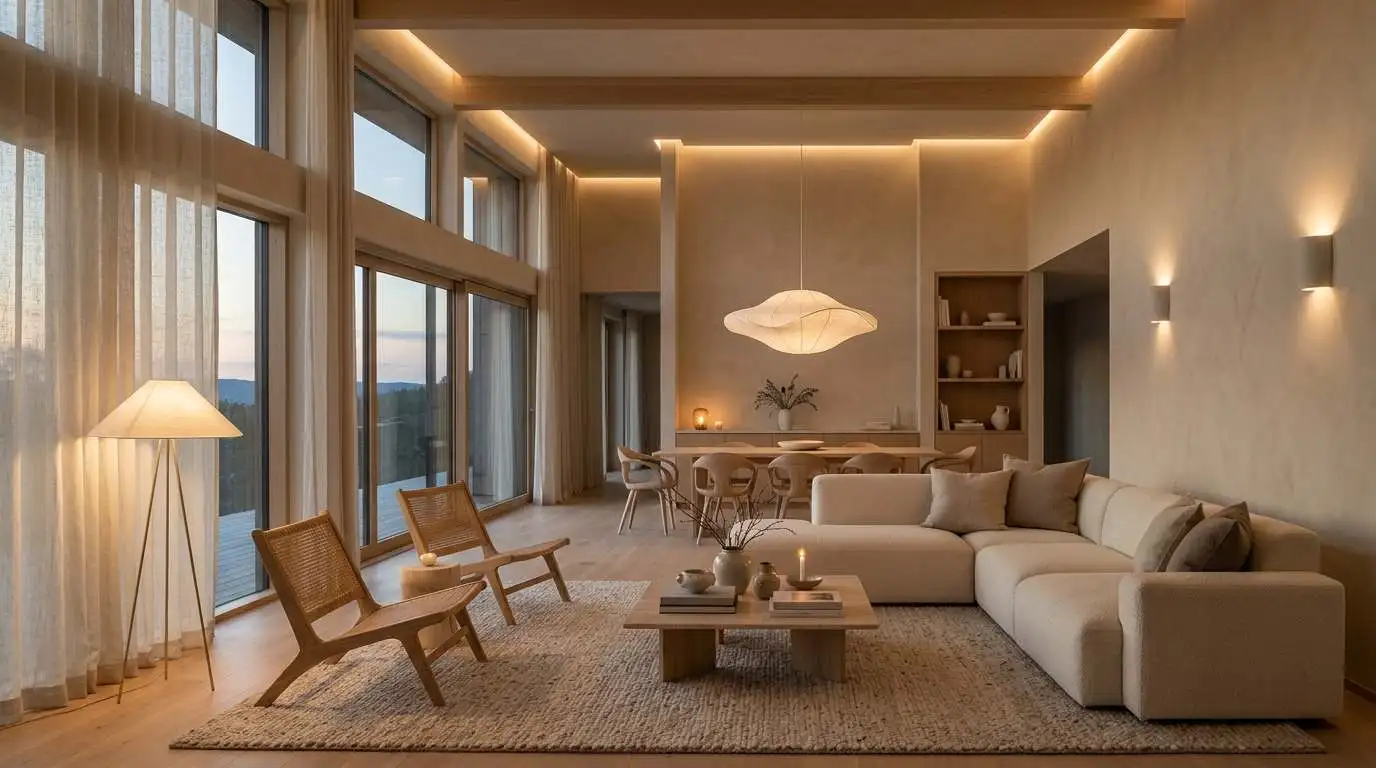
- Featured image: Elegant modern living room with natural cork flooring.
- Comparison graphic:
- Installation diagram: Floating cork flooring installation layers.
- Material close-up: Macro photograph showing natural cork texture.
- Maintenance graphic: Simple cork floor cleaning and protection checklist.
- Decision chart: “Is cork flooring right for your room?” flowchart.



Leave a Reply