
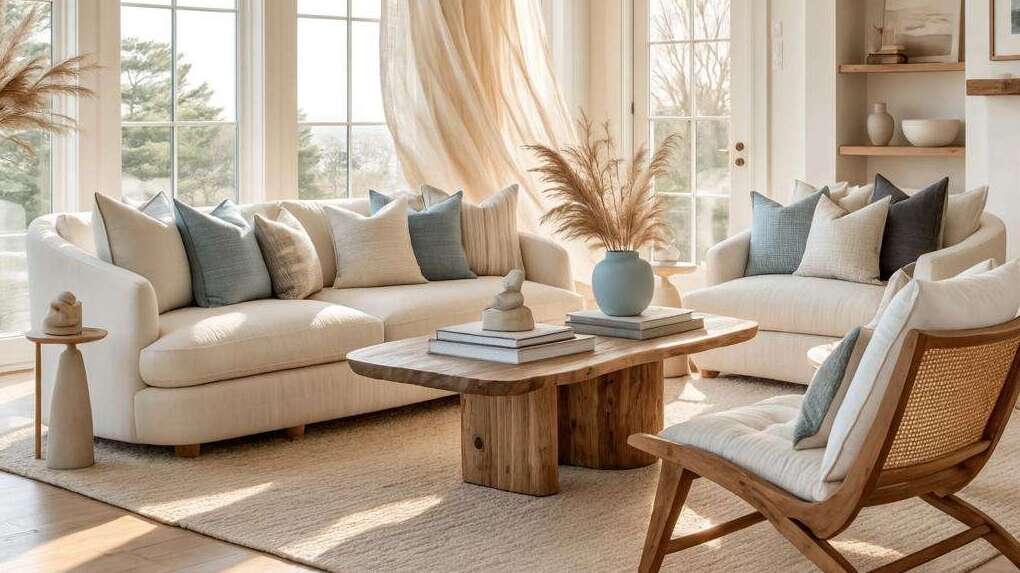

A coastal living room design brings the natural beauty of the seaside indoors through soft colors, organic textures, natural materials, and an atmosphere of effortless comfort. Inspired by sandy beaches, weathered driftwood, sunlit interiors, and the gentle movement of the ocean, this decorating style creates a welcoming space that feels bright, balanced, and connected to nature.
Coastal interiors do not need seashell collections, nautical decorations, or obvious ocean motifs to communicate their inspiration. The most sophisticated rooms capture the feeling of the coast through thoughtful material choices, relaxed furniture arrangements, layered fabrics, and a restrained color palette. Whether we are decorating a compact apartment, refreshing a family living room, or designing an open-plan home, coastal style offers a versatile foundation that can feel traditional, contemporary, rustic, or distinctly minimalist.
The key is to create a room that feels naturally inviting rather than overly themed. By combining light-filled spaces, natural textures, timeless furniture, and subtle coastal accents, we can achieve an interior that remains beautiful long after seasonal decorating trends have passed.
Table of Contents
1. Choose a Soft Coastal Color Palette
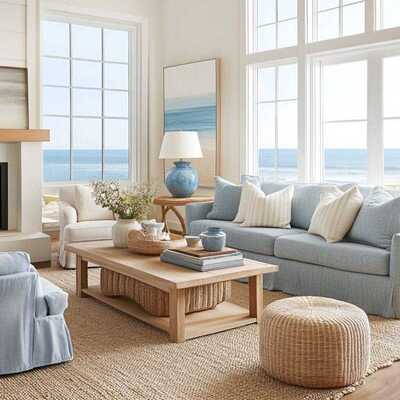
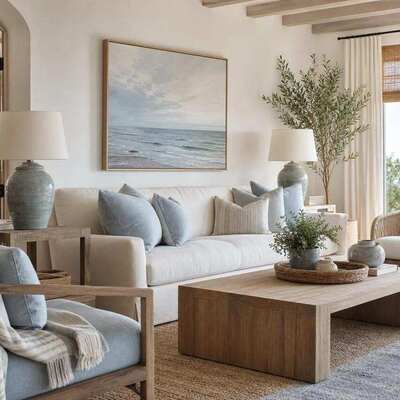
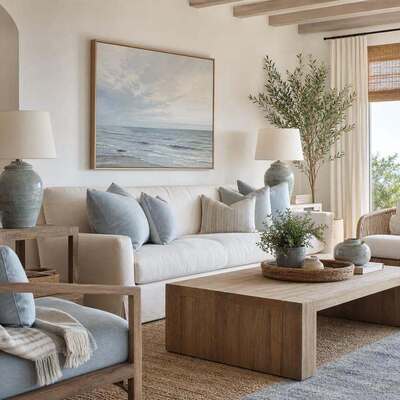
Color establishes the atmosphere of a coastal living room before we introduce furniture or accessories. The most versatile palettes take inspiration from the natural landscape, including warm sand, pale stone, creamy white, muted blue, soft gray, and the gentle green of coastal vegetation.
Warm white is an excellent starting point because it reflects natural light and creates a clean backdrop for furniture, artwork, and textured fabrics. Unlike stark white, warmer shades can make a room feel more welcoming, particularly when paired with oak flooring, woven accessories, and natural linen.
Sand and beige introduce warmth without overwhelming the room. These shades work particularly well in spaces with limited natural light, where cooler colors might feel flat. Soft blue can then add a subtle connection to the ocean, while muted sage introduces an organic quality reminiscent of dune grasses and coastal gardens.
We can distribute these colors throughout the room rather than relying on one dominant accent. For example, warm white walls, a sand-colored sofa, pale blue cushions, and natural wood furniture create a cohesive scheme without making the space feel predictable.
For a more contemporary interpretation, charcoal, deep navy, or muted sea green can provide contrast. The important consideration is balance: darker colors should complement the light foundation rather than overpower it.
2. Embrace Natural Materials and Organic Textures
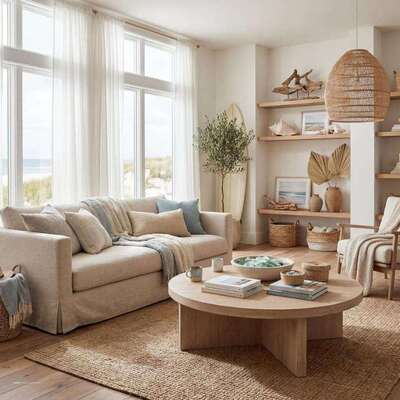
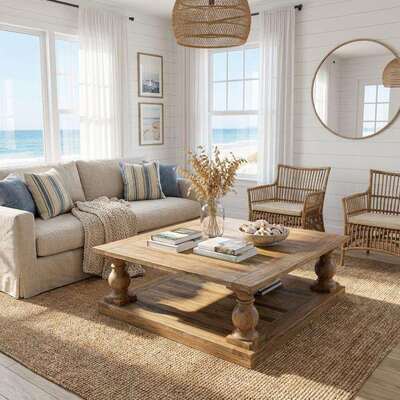
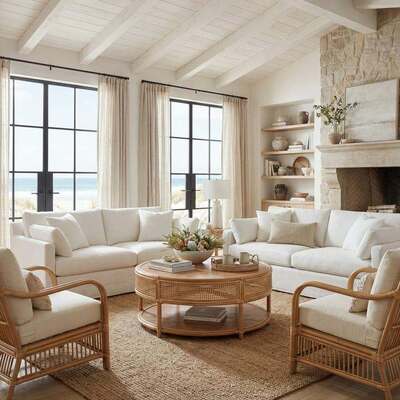
Natural materials give coastal interiors their characteristic depth. When a room uses a restrained palette, differences in texture become especially important. Wood, linen, cotton, jute, rattan, and stone create visual interest without requiring bright colors or decorative excess.
Light oak and weathered wood are particularly effective in coastal living rooms. A pale oak coffee table, timber sideboard, or exposed wooden beam introduces warmth and connects the interior to the natural world. For a relaxed atmosphere, we can choose finishes that reveal the grain rather than highly polished surfaces.
Woven materials offer another layer of character. Rattan chairs, seagrass baskets, and cane details introduce an airy, handcrafted quality that works beautifully alongside upholstered furniture. These materials should be used selectively so that the room feels curated instead of crowded.
Textiles also contribute significantly to the overall effect. Linen curtains soften windows, cotton cushions make seating comfortable, and wool or jute rugs help define the living area. Combining these surfaces creates a rich, tactile environment while preserving the simplicity associated with coastal style.
The most successful approach is to layer materials with different visual weights. Pair a substantial wooden coffee table with a soft linen sofa, or place a woven basket beside a smooth ceramic lamp. The contrast creates interest without sacrificing harmony.
3. Select Comfortable, Relaxed Coastal Furniture
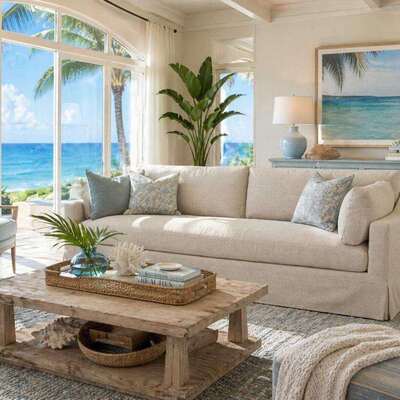
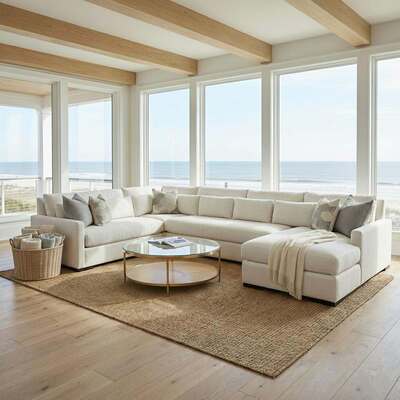
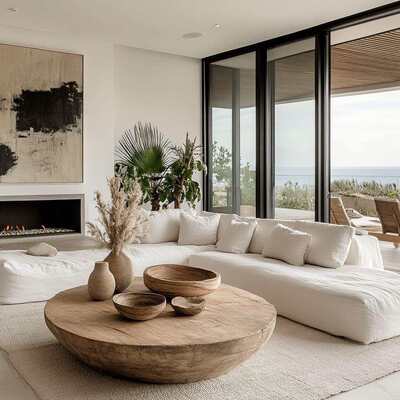
Coastal living rooms prioritize comfort without abandoning good design. Furniture should encourage conversation, relaxation, and everyday use rather than make the room feel like a formal showroom.
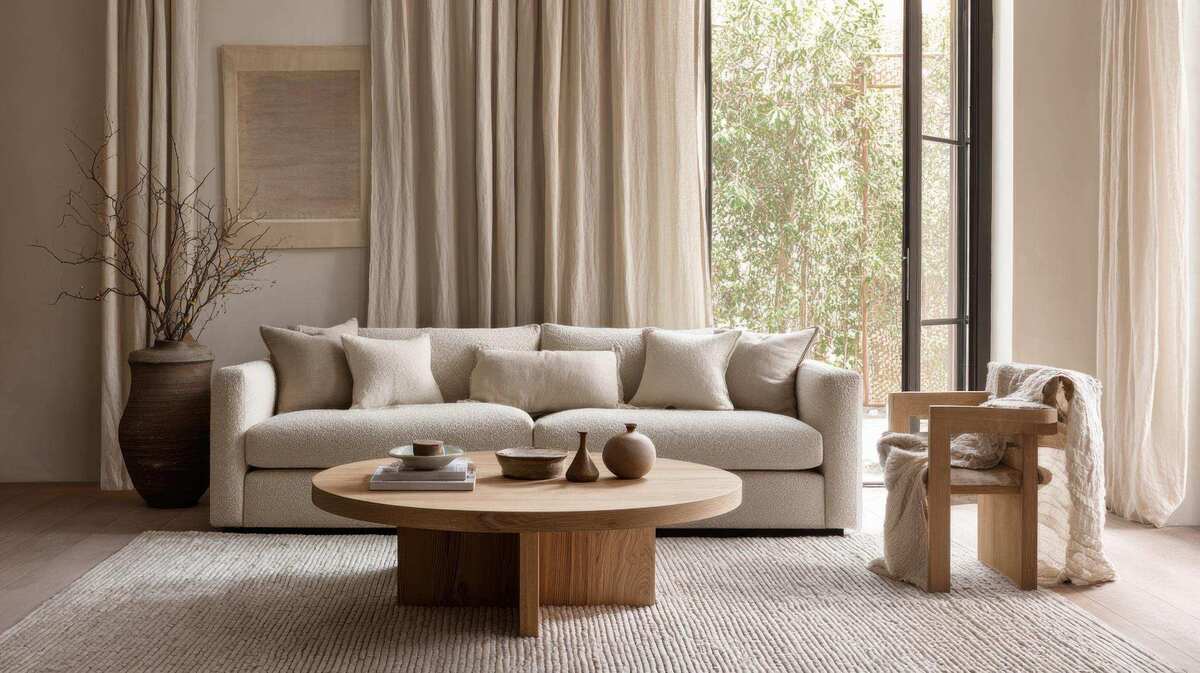
A comfortable sofa in a neutral fabric is often the most practical starting point. Cream, oatmeal, light beige, and soft gray upholstery can work with a wide range of accent colors and remain visually appealing as the rest of the room evolves. Removable, washable covers are especially useful in busy households, although the best fabric will depend on the needs of the space.
Slipcovered sofas are a natural fit for casual coastal interiors because their relaxed appearance suggests an easygoing lifestyle. For a more tailored aesthetic, a streamlined sofa with clean lines and textured upholstery can deliver the same lightness with a contemporary finish.
Coffee tables should complement the sofa without making the seating arrangement feel heavy. Pale wood, rounded timber, travertine-look surfaces, and simple woven designs can all work well. We should also consider proportion: a coffee table needs to be accessible from the seating area while leaving enough room to move comfortably around it.
Accent chairs provide an opportunity to introduce another material or silhouette. A wooden frame with woven details, a soft upholstered armchair, or a curved occasional chair can add character without disrupting the overall palette.
Rather than buying a matching furniture set, we can combine complementary pieces. A neutral sofa, a vintage-inspired wooden table, and a pair of individually selected chairs often create a more personal and enduring interior.
4. Maximize Natural Light With Airy Window Treatments

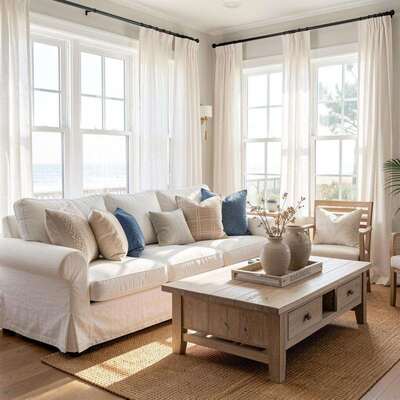
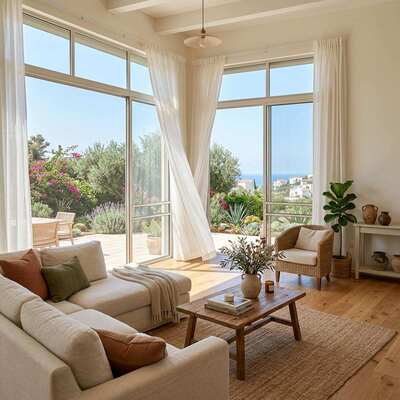
Natural light is one of the defining characteristics of coastal design. Bright interiors feel open and uplifting, while soft daylight reveals the subtle textures of linen, timber, stone, and woven accessories.
Where privacy permits, we can keep windows visually unobstructed and use lightweight linen or cotton curtains to soften the room. Sheer panels filter daylight without making the windows feel closed off. In rooms with strong afternoon sun, lined curtains or discreet blinds can provide additional control.
Curtain colors should relate to the rest of the interior. White, ivory, and pale oatmeal are dependable choices because they blend with neutral walls and allow natural materials to remain prominent.
The way curtains are installed also influences the room’s appearance. Mounting the curtain rod above the window frame and extending it slightly beyond the sides can create a taller, more generous visual impression. This technique is particularly useful in smaller living rooms.
If the room has limited natural light, reflective surfaces and thoughtful lighting can help. Mirrors positioned to reflect daylight, pale wall colors, and lamps with warm-white bulbs can create a brighter atmosphere without relying on major renovations.
5. Ground the Room With a Natural Coastal Rug
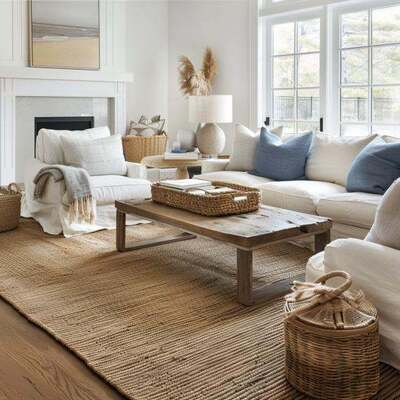
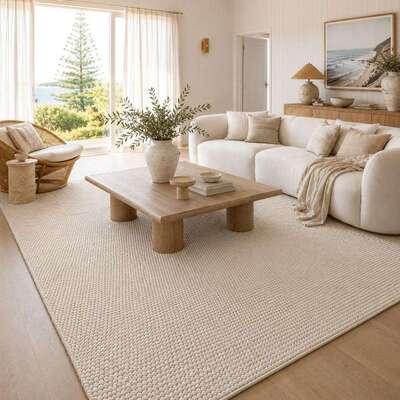
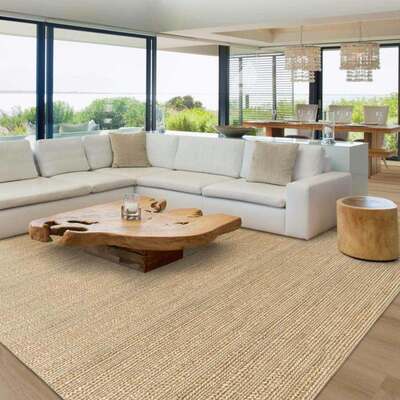
A rug helps bring the seating arrangement together and introduces another layer of texture underfoot. In a coastal living room, the most successful options often feature understated patterns, natural-looking fibers, or soft tonal variations.
Jute and sisal rugs offer a relaxed, organic appearance that pairs naturally with timber furniture and neutral upholstery. However, they can feel rough underfoot and may be less suitable for households that need frequent stain removal. Wool, washable cotton, and performance-fiber rugs provide alternative options for everyday comfort.
Choose a rug large enough to connect the furniture. Ideally, the front legs of the sofa and accent chairs should rest on the rug, creating a unified seating area. A rug that is too small can make even a generously furnished room feel fragmented.
Color is equally important. Sand, ivory, beige, and muted blue can support a coastal palette without competing with other decorative elements. A subtle stripe or faded geometric pattern adds interest while maintaining a relaxed atmosphere.
For open-plan homes, rugs are especially useful because they visually distinguish the living area from a dining space or kitchen without requiring walls or partitions.
6. Introduce Blue Accents Without Overdoing the Nautical Theme
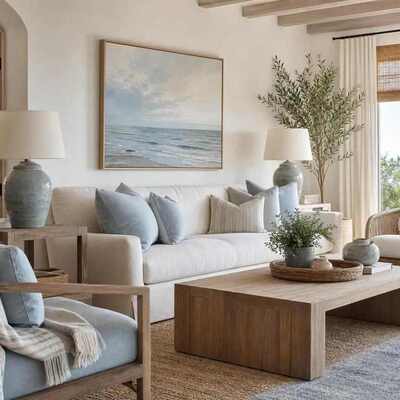
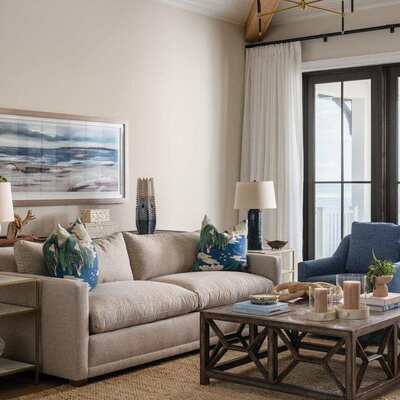
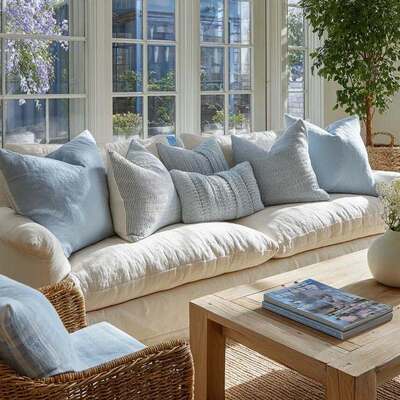
Blue is an obvious choice for coastal interiors, but its effectiveness depends on how it is used. Rather than decorating every surface with ocean-inspired shades, we can introduce blue selectively to create depth and visual rhythm.
Dusty blue, faded denim, blue-gray, and pale aqua offer gentle variations that work well with warm neutrals. These shades feel softer than highly saturated turquoise and can be incorporated into cushions, throws, artwork, ceramics, and occasional furniture.
For a more dramatic interpretation, navy blue can provide a strong contrast against ivory walls and pale timber. A pair of navy accent chairs, a blue patterned rug, or a substantial piece of artwork can anchor the room without making it feel dark.
The secret is to repeat accent colors in several places. If blue appears in the artwork, repeating a related shade in two cushions or a ceramic accessory helps the room feel intentional.
We can also balance cool blues with warm natural materials. Oak, beige upholstery, and woven textures prevent blue-heavy interiors from feeling cold, resulting in a room that feels fresh yet comfortable throughout the year.
7. Add Coastal Artwork and Thoughtful Decorative Objects
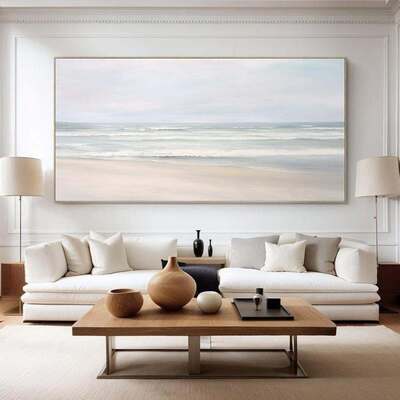
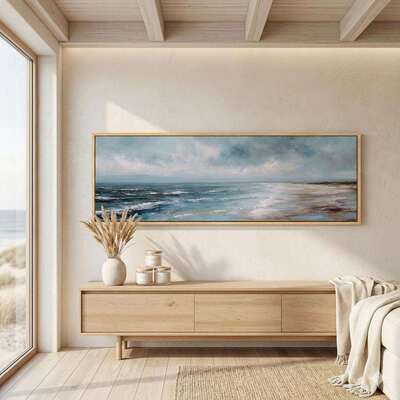
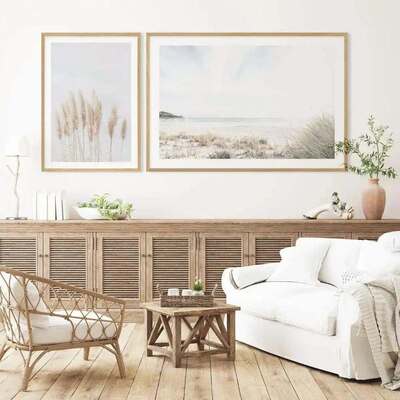
Artwork helps communicate the coastal inspiration without turning the room into a literal beach theme. Abstract seascapes, atmospheric landscape photography, soft horizon paintings, and botanical prints can all complement a sophisticated coastal palette.
A large artwork above the sofa can act as the room’s visual focal point. We can choose a piece featuring sand, pale blue, warm gray, and white to connect the colors already present in the furniture and accessories.
For a gallery wall, consistency matters more than identical frames. A combination of light wood, white, and understated natural finishes can create a cohesive arrangement even when the artwork varies in size and subject.
Decorative objects should follow the same principle of restraint. Handmade ceramics, a sculptural wooden bowl, a stoneware vase, or a carefully selected stack of books can add personality without filling every available surface.
Avoid relying on obvious seaside souvenirs as the main decorative feature. Shells, anchors, rope details, and signs with beach-related phrases can quickly make an interior feel themed rather than timeless. If we love these objects, using one or two meaningful pieces is usually more effective than displaying them throughout the room.
8. Use Layered Lighting to Create a Warm Evening Atmosphere
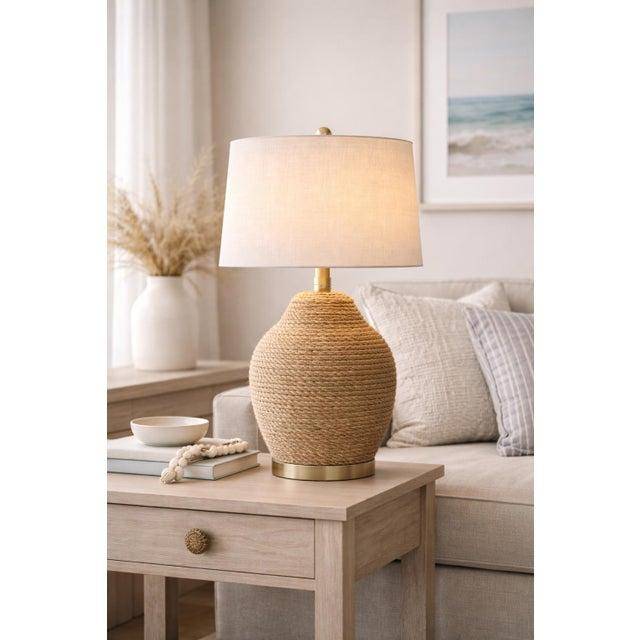
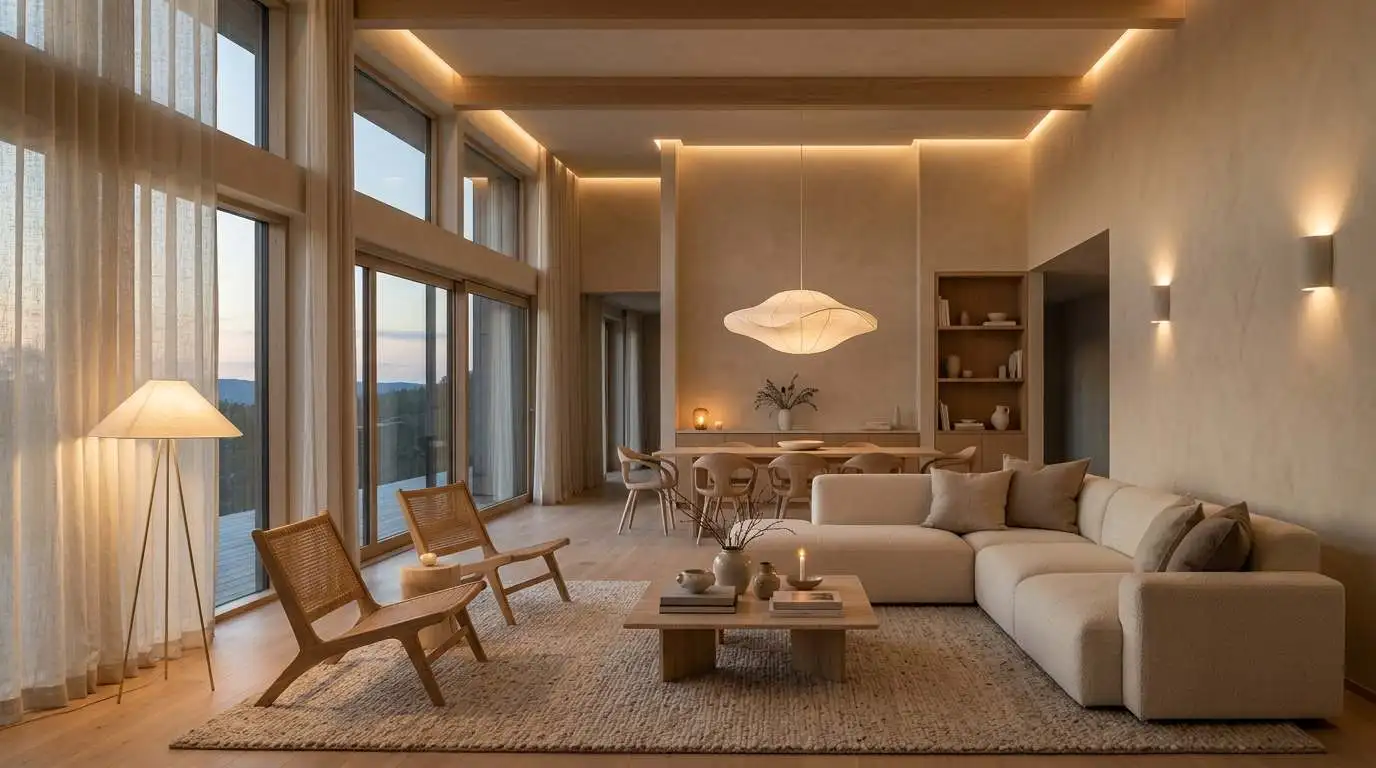
A coastal living room should feel inviting after sunset as well as during daylight hours. Layered lighting allows us to adjust the atmosphere for reading, entertaining, watching television, or simply relaxing.
Ambient lighting provides general illumination. Depending on the room, this might come from ceiling fixtures, recessed lights, or a central pendant. Natural materials, ceramic finishes, and simple sculptural shapes work particularly well with coastal interiors.
Task lighting makes the room more functional. A floor lamp beside an armchair creates a comfortable reading corner, while a table lamp on a sideboard adds useful light and visual balance.
Accent lighting introduces softer pools of illumination. Small lamps, discreet picture lights, and carefully positioned fixtures can emphasize artwork, architectural details, or decorative objects.
Warm-white bulbs generally support the relaxed character of coastal interiors. Using compatible dimmers where possible allows us to change the brightness according to the time of day.
We should avoid relying on a single overhead fixture. Multiple light sources at different heights create a more welcoming and visually interesting environment, especially in living rooms with limited natural light.
9. Bring Nature Indoors With Greenery
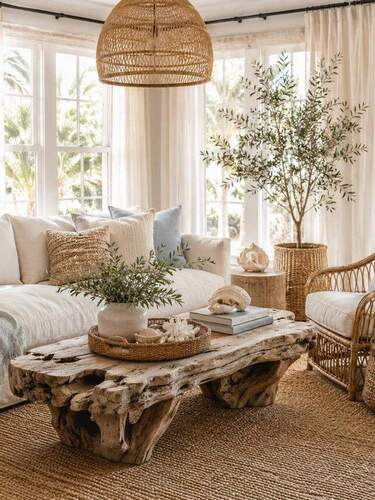
Plants introduce movement, color, and a connection to the outdoors that complements coastal design. Their organic shapes soften straight furniture lines and bring life to otherwise neutral interiors.
An olive tree, ficus, or other suitable indoor tree can create a striking focal point beside a bright window. Smaller plants work well on side tables, open shelving, or a console, while leafy arrangements can soften empty corners.
For a cohesive appearance, choose planters made from terracotta, textured ceramic, natural stone, or woven materials. These finishes reinforce the organic character of the room without introducing unnecessary visual complexity.
Plant selection should reflect the actual conditions in the living room. Consider available sunlight, humidity, temperature, and maintenance requirements before choosing varieties. A well-maintained plant suited to its environment will contribute more to the design than a struggling specimen selected purely for appearance.
For households that prefer minimal maintenance, a small number of carefully positioned plants can make a meaningful difference. There is no need to turn the living room into an indoor garden to achieve a natural coastal atmosphere.
10. Create a Small Coastal Living Room That Feels Spacious
A compact living room can capture the same relaxed aesthetic as a large beach house. The key is to prioritize visual openness, practical furniture, and a restrained selection of accessories.
Start with light-colored walls and furniture that suits the room’s proportions. A compact sofa with raised legs can expose more of the floor, helping the space feel less crowded. Slim side tables and nesting coffee tables offer useful surfaces without occupying unnecessary space.
Mirrors can help distribute natural light and create a greater sense of depth. Positioning a mirror opposite or adjacent to a window can be particularly effective, provided the reflected view is pleasant.
Vertical space deserves attention, too. Tall curtains, simple wall shelving, and artwork positioned at an appropriate height can draw the eye upward. However, open shelving should not become a storage area for miscellaneous objects. A few carefully arranged books, ceramics, and woven baskets will usually look more harmonious.
Instead of filling the room with numerous small decorative pieces, choose a handful of larger, useful accessories. A substantial rug, one piece of artwork, and a textured throw can establish the style without overwhelming the available space.
11. Explore Modern Coastal Living Room Design
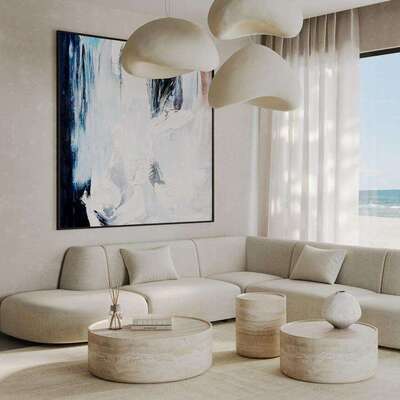
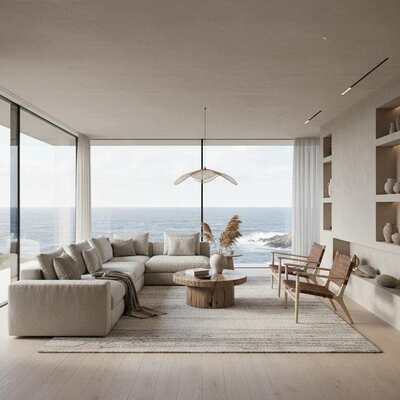
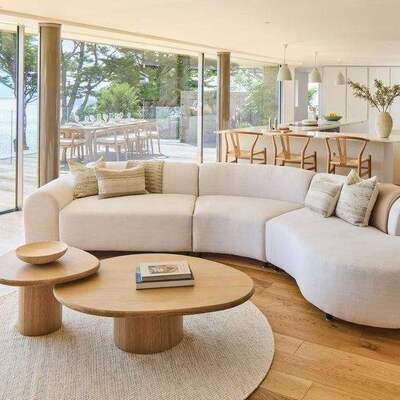
Modern coastal design combines seaside-inspired colors and materials with cleaner architectural lines. It is ideal for homeowners who appreciate natural textures but prefer a more streamlined interior.
Furniture often features simple silhouettes, gently curved forms, and understated detailing. A low-profile sofa, sculptural coffee table, and restrained lighting scheme create a composed foundation.
The color palette typically remains neutral, with warm whites, pale beige, and natural wood taking precedence. Blue and green appear as subtle accents rather than dominant decorative themes.
Materials are particularly important in this style. Smooth stone, textured upholstery, pale timber, and handmade ceramics provide contrast without introducing busy patterns.
Modern coastal rooms also benefit from thoughtful negative space. Leaving portions of walls, tabletops, and shelves relatively uncluttered allows the furniture and materials to stand out.
The result is a room that feels connected to the coast without relying on traditional beach-house decorations. It is equally suitable for a contemporary apartment, a suburban home, or a holiday property.
12. Try Rustic Coastal Style With Weathered Wood
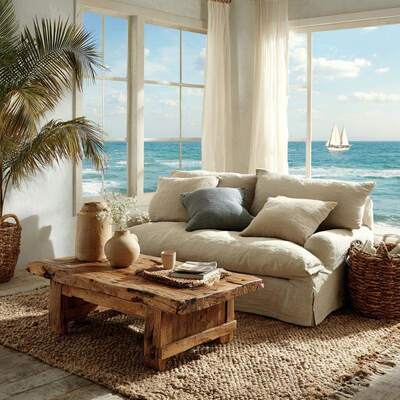
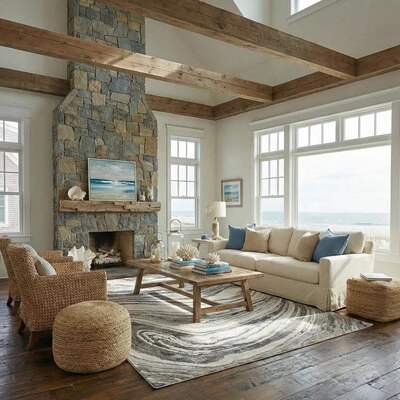
Rustic coastal interiors combine the relaxed atmosphere of seaside homes with the warmth of traditional craftsmanship. Weathered timber, textured fabrics, handcrafted objects, and imperfect finishes create a space that feels established rather than newly decorated.
Reclaimed wood furniture can introduce character through visible grain, subtle variations in color, and naturally distressed surfaces. A substantial wooden coffee table or vintage sideboard can serve as a focal point against pale walls and soft upholstery.
Natural textiles reinforce the welcoming atmosphere. Cotton throws, linen cushions, woven rugs, and relaxed curtains soften the heavier appearance of timber.
To prevent the room from becoming too rustic, we can balance aged materials with lighter elements. Cream upholstery, simple lamps, and understated artwork maintain a fresh, airy quality.
This approach works especially well in cottages, older homes, and interiors where original architectural features deserve attention. Exposed beams, timber floors, and textured walls can become part of the design rather than features that need to be concealed.
13. Design an Elegant Coastal Living Room With Subtle Luxury
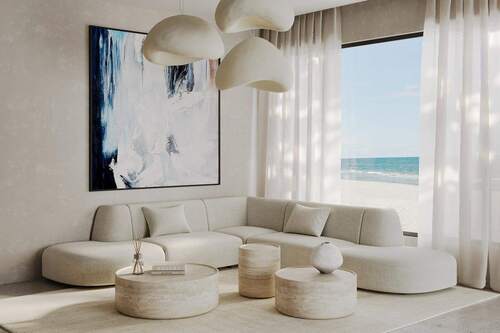
An elegant coastal living room relies on quality, proportion, and restraint rather than conspicuous decoration. The goal is to create an environment where every material contributes to a calm and cohesive composition.
Natural stone, refined timber, high-quality upholstery, and carefully selected lighting can elevate the room while preserving its relaxed character. A travertine coffee table, for example, introduces subtle variation and visual weight without requiring a bold color.
Textiles should feel comfortable and considered. Layering linen cushions with a soft wool throw creates a tactile contrast that makes a neutral sofa more interesting. Curtains that fall gracefully to the floor can add softness and a sense of height.
We should also pay attention to the details that are easy to overlook: the finish of cabinet handles, the scale of a table lamp, the spacing between furniture pieces, and the relationship between artwork and the sofa beneath it.
Understated elegance comes from consistency rather than excess. A few well-chosen pieces, balanced lighting, and natural materials often create a more sophisticated result than an abundance of expensive accessories.
14. Make Coastal Living Room Storage Beautiful and Practical
Everyday belongings can quickly undermine the calm atmosphere of a carefully designed living room. Thoughtful storage keeps essential items accessible while preventing surfaces from becoming cluttered.
Woven baskets can hold throws, magazines, or children’s toys. Wooden sideboards provide concealed storage for electronic accessories, games, and miscellaneous household items. Coffee tables with shelves or drawers can offer additional functionality without requiring extra furniture.
Open shelving is useful for displaying books and selected decorative objects, but it should be edited regularly. Combining objects of different heights and textures creates visual interest, while leaving some shelf space empty prevents the arrangement from feeling crowded.
In smaller rooms, multifunctional furniture can be particularly valuable. Storage ottomans, nesting tables, and compact cabinets help make better use of limited floor space.
Storage materials should relate to the rest of the design. Pale wood, natural woven fibers, and neutral finishes allow practical pieces to blend into the interior rather than compete with it.
15. Introduce Patterns Through Stripes and Natural Motifs
Coastal interiors do not need to be entirely plain. Thoughtfully chosen patterns can introduce movement and personality while maintaining the room’s relaxed character.
Subtle stripes are among the most versatile choices. Blue-and-white or beige-and-ivory stripes work well on cushions, throws, and upholstery. Their simple geometry creates a seaside association without requiring literal nautical imagery.
Botanical patterns, abstract waves, and understated organic prints offer additional possibilities. These designs can be introduced through a single cushion, a rug, or artwork rather than repeated across every surface.
The scale of a pattern matters. Larger motifs can work well in spacious rooms, while smaller patterns may be easier to incorporate into compact interiors. Mixing patterns is possible, provided they share a related palette and differ enough in scale to remain visually distinct.
For a timeless result, combine patterned textiles with solid upholstery and natural materials. This creates a balance between decoration and simplicity.
16. Adapt Coastal Design to Every Season
One advantage of a neutral coastal foundation is its ability to evolve throughout the year without requiring a complete redesign.
During warmer months, lightweight cotton cushions, sheer curtains, and fresh greenery reinforce the room’s airy atmosphere. Pale blue accents and natural woven accessories can emphasize the connection to summer without overwhelming the existing palette.
When temperatures fall, introduce additional texture through wool throws, thicker cushion covers, and softer rugs. Warm beige, muted terracotta, and deeper blue accents can add seasonal richness while complementing the permanent furniture.
Lighting also helps adjust the atmosphere. Brighter daylight-focused arrangements may suit summer afternoons, while layered table lamps and warm illumination make the room feel welcoming on darker evenings.
The foundation should remain consistent: comfortable furniture, natural materials, and a balanced color palette. Seasonal changes work best when they complement the room rather than replace its identity.
17. Avoid Common Coastal Living Room Decorating Mistakes
Even a beautiful collection of coastal-inspired pieces can feel disconnected when the room lacks balance. A few practical principles help maintain a cohesive result.
- Avoid excessive nautical decorations. Too many anchors, seashells, ropes, and beach signs can make the interior feel themed instead of timeless.
- Do not rely entirely on cool white and blue. Incorporating warm wood, beige textiles, and natural finishes prevents the room from feeling cold.
- Choose appropriately sized furniture. Oversized sofas can overwhelm small rooms, while undersized rugs can make larger spaces feel fragmented.
- Do not overlook lighting. A single overhead fixture rarely provides the warmth and flexibility needed for comfortable everyday living.
- Limit unnecessary accessories. Leaving some surfaces clear allows important furniture, artwork, and materials to receive attention.
- Consider maintenance before choosing materials. Pale upholstery, delicate rugs, and porous natural surfaces may require more care than alternatives designed for everyday use.
- Keep the design connected to the home’s architecture. Coastal style should complement the property’s proportions, flooring, windows, and existing features rather than impose a completely unrelated aesthetic.
The strongest interiors combine visual appeal with practical decisions. A living room should support the way people actually relax, entertain, and spend time at home.
How to Create a Coastal Living Room on a Budget
A coastal-inspired transformation does not require replacing every piece of furniture. In many cases, we can achieve a noticeable improvement by editing the existing room and making a few deliberate changes.
Begin by removing accessories that no longer serve a purpose. Clearing crowded surfaces and rearranging furniture can improve the sense of space without any additional spending.
Next, identify the elements that have the greatest visual impact. Replacing heavy curtains with lighter panels, introducing neutral cushion covers, or adding a textured rug can change the room’s atmosphere considerably.
Existing wooden furniture may be refreshed with an appropriate finish if its condition and material permit. Secondhand side tables, vintage ceramics, and pre-owned artwork can also introduce character without the expense of buying everything new.
We can make smaller decorative changes over time rather than purchasing an entire collection at once. Start with the sofa, lighting, and rug, then introduce artwork, greenery, and accessories as the budget allows.
The objective is not to imitate an expensive beach house. It is to create a comfortable, light-filled living room that reflects coastal simplicity through thoughtful choices.
Final Thoughts: Creating a Timeless Coastal Living Room
A successful coastal living room design is less about decorating with seaside objects and more about creating a comfortable relationship between color, light, materials, and space.
By combining a soft neutral palette with natural wood, tactile fabrics, comfortable furniture, layered lighting, and carefully chosen accents, we can create an interior that feels fresh without appearing cold and elegant without becoming formal.
The most effective approach begins with a few lasting decisions: choose furniture that suits the room, introduce natural textures, make the most of daylight, and avoid unnecessary clutter. From there, personal touches such as artwork, greenery, and handmade ceramics can give the space individuality.
Whether we prefer modern coastal minimalism, rustic beach-house charm, or understated elegance, the same principle applies: the best coastal interiors feel natural, welcoming, and thoughtfully lived in.
The result is a living room that offers more than a visual reference to the seaside. It creates a relaxed everyday environment where comfort, simplicity, and timeless design work together.
Suggested reads: Choosing the Right Coastal Beach House Exterior Design
Frequently Asked Questions About Coastal Living Room Design
What colors are best for a coastal living room?
Warm white, ivory, sand, beige, pale blue, soft gray, and muted green are excellent choices. These colors reflect the natural landscape and create a flexible foundation for different furniture styles. Navy and deeper blue can add contrast when used selectively.
Can coastal living room design work in a home far from the beach?
Yes. Coastal design is defined by its use of light, natural materials, relaxed furniture, and understated colors rather than its geographical location. These principles work in apartments, suburban houses, and urban homes just as effectively as in seaside properties.
What furniture works best in a coastal living room?
Neutral upholstered sofas, light wood coffee tables, comfortable accent chairs, and practical side tables are versatile options. Furniture should suit the room’s proportions and support everyday activities while maintaining an open, welcoming atmosphere.
How can we make a coastal living room look more modern?
Choose streamlined furniture, sculptural lighting, restrained accessories, and a simple color palette. Combine natural wood with stone, textured upholstery, and a few carefully selected blue or green accents. Avoid excessive nautical decorations to preserve a contemporary appearance.
What is the difference between coastal and nautical interior design?
Coastal design takes inspiration from the natural colors, textures, and relaxed atmosphere of seaside environments. Nautical design more directly references maritime themes through anchors, ropes, ship-inspired details, and strong navy-and-white combinations. Coastal interiors can be subtle and contemporary, while nautical rooms tend to use more recognizable seafaring motifs.
How do we decorate a small coastal living room?
Use light colors, appropriately scaled furniture, mirrors, airy window treatments, and a rug large enough to connect the seating area. Keep accessories selective and consider multifunctional furniture to maximize available space.

Leave a Reply