
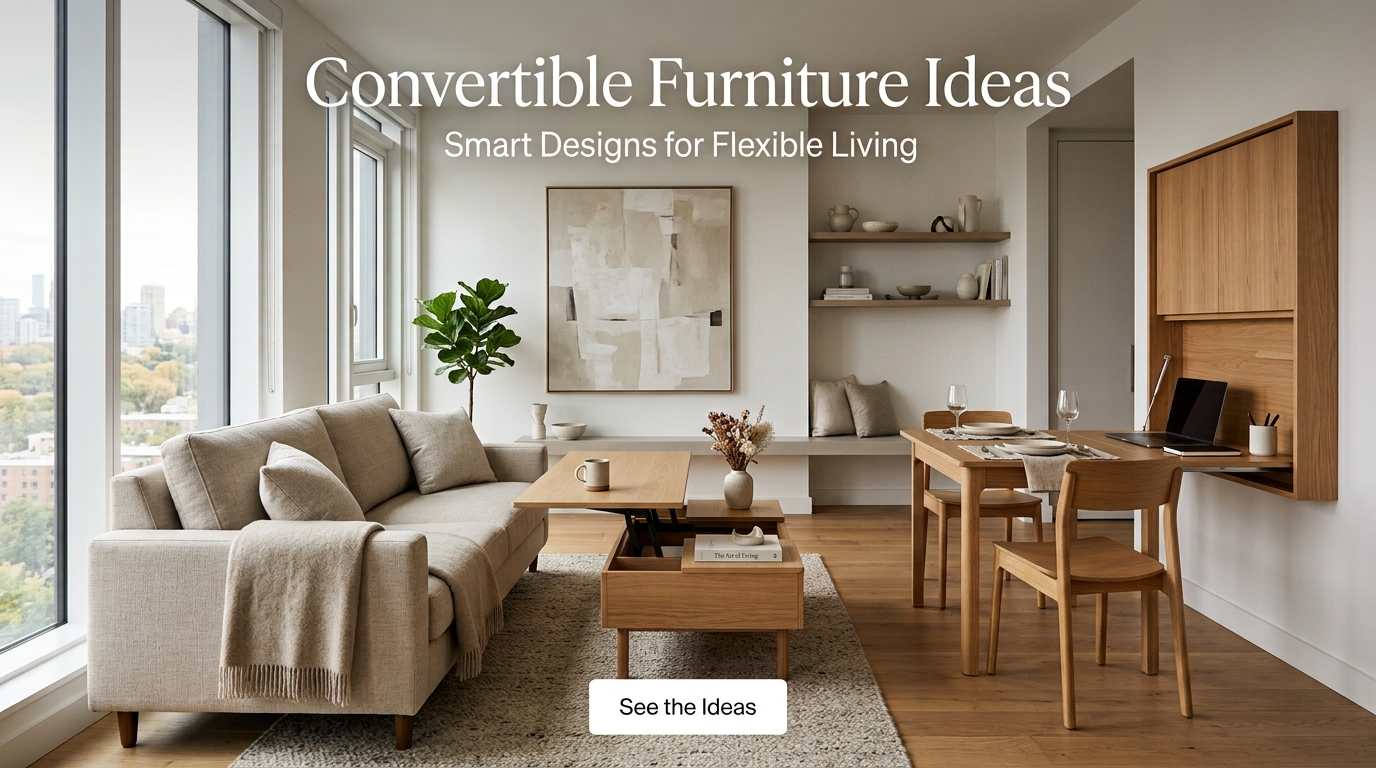

Convertible furniture has become one of the smartest ways to create a home that feels spacious, organized, and adaptable without sacrificing style. As rooms increasingly need to perform multiple functions, furniture that can change purpose throughout the day offers a practical solution for modern living.
From sofa beds and extendable dining tables to storage ottomans, folding desks, and transforming coffee tables, today’s convertible furniture is designed to combine functionality with attractive aesthetics. The right pieces can help us make better use of limited floor space while creating interiors that remain comfortable and visually refined.
Whether we are furnishing a small apartment, decorating a multifunctional guest room, or simply trying to make a larger home more efficient, these convertible furniture ideas can help us create rooms that work harder without looking crowded.
Table of Contents
What Is Convertible Furniture?
Convertible furniture is designed to serve two or more functions or change its configuration when needed. A single piece can often replace several traditional furnishings, making it particularly useful where space, flexibility, or storage is important.
A sofa may transform into a bed. A wall-mounted desk may fold away after working hours. A coffee table can rise to dining height. An ottoman can provide seating while concealing blankets, books, or other belongings.
The best convertible furniture doesn’t simply save space. It helps us create a more adaptable home where every piece has a clear purpose.
1. Sofa Beds for Living Rooms and Guest Spaces
The classic sofa bed remains one of the most useful examples of convertible furniture.
During the day, it functions as comfortable seating for relaxing, reading, or entertaining. At night, it can become a sleeping area for guests.
Modern sofa beds are available in many forms, including pull-out designs, click-clack mechanisms, futon-inspired models, and sectional configurations. For a small living room, a streamlined sofa bed can eliminate the need for a dedicated guest bed.
When choosing one, we should consider more than its appearance. Mattress quality, opening mechanism, frame construction, seat depth, and available floor clearance all influence how practical the furniture will be.
For homes where guests stay regularly, a sofa bed with a proper mattress can be considerably more comfortable than a basic fold-down model.
2. Extendable Dining Tables
An extendable dining table is another highly practical convertible furniture idea.
A compact table can keep everyday dining comfortable without occupying unnecessary floor space. When we have guests, hidden leaves or extension mechanisms allow the table to accommodate additional people.
This works particularly well in apartments and open-plan kitchens where a large permanent dining table could make the room feel cramped.
Round and oval extendable tables can be especially effective because their softer shapes improve circulation around the dining area. Rectangular tables, meanwhile, can provide greater seating capacity when fully extended.
For a timeless interior, we can look for natural wood, stone-effect surfaces, or understated neutral finishes that work with changing decor.
3. Lift-Top Coffee Tables
A lift-top coffee table can transform an ordinary living room into a more flexible workspace or dining area.
With the tabletop raised, we can use the surface for a laptop, writing, reading, or eating without needing a separate desk. When lowered, it returns to its conventional coffee-table function.
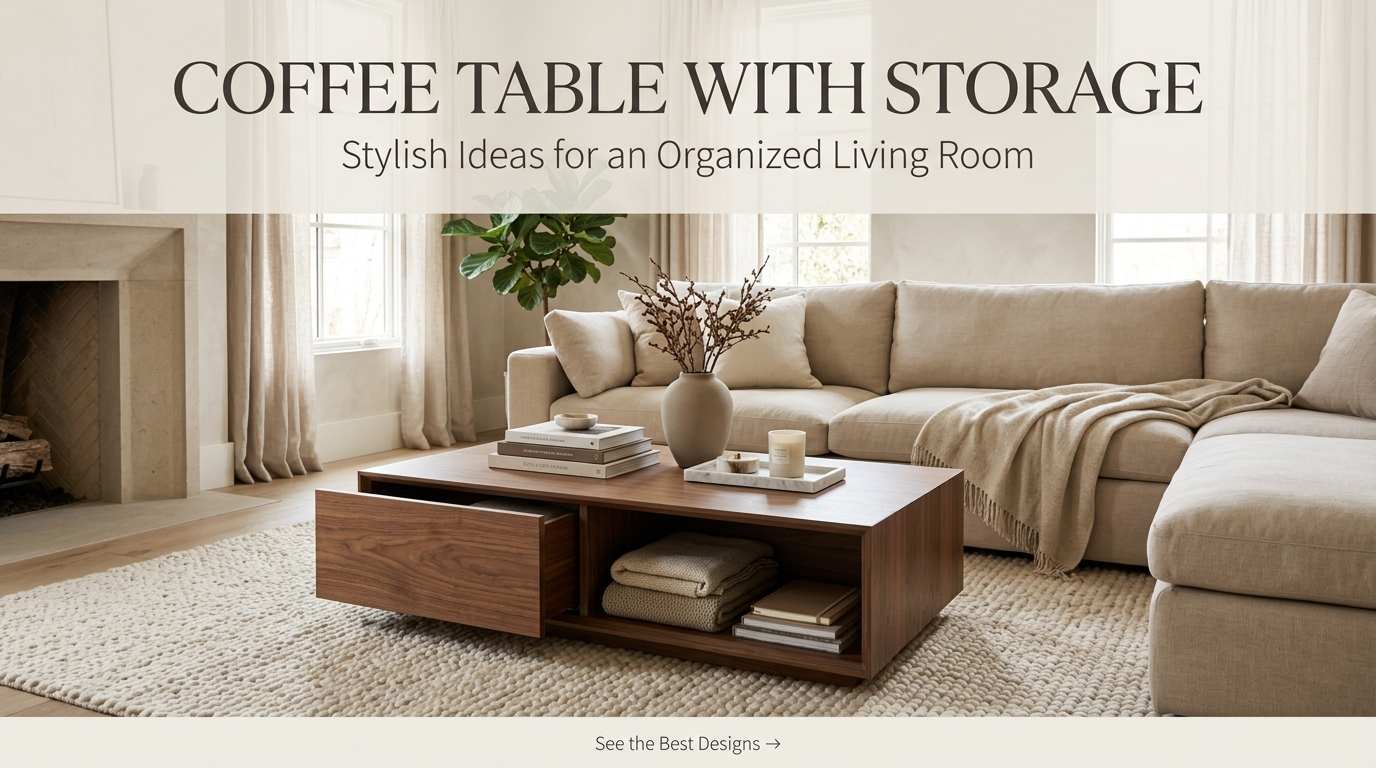
Many designs also include hidden storage beneath the lifting surface. This creates a useful place for remote controls, books, chargers, notebooks, and other everyday items.
For smaller homes, this combination of workspace, dining surface, coffee table, and storage can make a significant difference.
4. Folding Wall-Mounted Desks
A wall-mounted folding desk is ideal when we need a workspace but don’t want a permanent desk occupying valuable floor area.
When open, it provides enough surface for a laptop, notebook, lamp, or monitor. When the working day ends, the desk can fold against the wall, restoring the room to its original purpose.
This solution works particularly well in bedrooms, hallways, living rooms, and small apartments.
Some wall-mounted desks incorporate shelves or cabinets, allowing us to combine workspace and storage in a single vertical unit.
A minimalist design can make the desk almost disappear when closed, which is particularly attractive in calm, uncluttered interiors.
5. Murphy Beds and Wall Beds
For rooms that need to function as both bedroom and living space, a Murphy bed can be transformative.
A wall bed folds vertically into a cabinet or wall-mounted structure when it isn’t being used. During the day, the room can serve as an office, sitting room, studio, or guest area.
This makes Murphy beds particularly valuable in studio apartments, home offices, guest rooms, and compact urban homes.
Some contemporary systems incorporate shelving, desks, sofas, or cabinets around the bed, creating a complete multifunctional wall.
The result is more than a bed that disappears. It is a carefully planned system that allows one room to support several different activities.
6. Storage Ottomans
Ottomans are among the simplest convertible furniture solutions, but their versatility makes them exceptionally useful.
A storage ottoman can function as:
- Extra seating
- A footrest
- A coffee-table alternative
- A surface for trays and books
- Hidden storage
We can use a large upholstered ottoman in place of a conventional coffee table, particularly when comfort is more important than a rigid surface.
Storage inside the ottoman can hold throws, cushions, children’s toys, magazines, or seasonal accessories, helping maintain a cleaner-looking living room.
For a sophisticated aesthetic, structured upholstery in linen, boucle, leather, or textured fabric can make the piece feel decorative rather than purely functional.
7. Nesting Tables for Flexible Entertaining
Nesting tables provide several surfaces without requiring the permanent footprint of multiple tables.
Usually sold as a set of two or three tables in graduated sizes, nesting tables can remain stacked together or be separated when guests arrive.
They are particularly useful in living rooms where we occasionally need additional surfaces for drinks, snacks, books, or decorative objects.
When not needed, the smaller tables slide neatly underneath the largest one.
This makes nesting tables a simple way to introduce flexibility without bulky furniture.
8. Modular Sofas
Modular sofas give us the freedom to change the arrangement of a living room as our needs evolve.
Individual sections can often be rearranged into different configurations, including:
- L-shaped seating
- Straight sofas
- Corner arrangements
- Chaise configurations
- Separate lounge chairs
This is particularly useful when we move homes or regularly change the purpose of a room.
Instead of purchasing an entirely new sofa when the layout changes, we can often rearrange the existing modules.
For a long-term investment, we should prioritize durable upholstery, replaceable covers, strong connectors, and comfortable cushions.
9. Drop-Leaf Tables
Drop-leaf tables are an excellent choice for kitchens, dining rooms, and compact multipurpose spaces.
The table can remain narrow during everyday use and expand when additional surface area is required.
A small drop-leaf table can even function as a compact workstation during the day and a dining table in the evening.
Because the leaves fold downward, the table can fit into areas where a conventional dining table would be impractical.
This is particularly useful in narrow kitchens and apartments where every centimeter of floor space matters.
10. Convertible Console Tables
A console table normally provides a narrow decorative surface along a wall. However, some convertible designs can expand into full-sized dining tables.
When closed, the piece occupies very little space. When extended, it can provide seating for several people.
This makes a convertible console-to-dining table particularly useful for homes where formal dining is occasional rather than everyday.
It can also work well in entryways or open-plan living spaces where a full dining table would otherwise dominate the room.
11. Folding Chairs That Store Easily
Folding chairs are not necessarily associated with sophisticated interiors, but contemporary versions can be surprisingly stylish.
Slim folding chairs can be stored inside closets, behind doors, or against a wall and brought out whenever extra seating is needed.
Instead of keeping six or eight chairs around a small dining table all year, we can maintain a smaller everyday arrangement and introduce additional seating only when necessary.
Wooden, upholstered, and contemporary metal designs can complement a wide variety of interior styles.
12. Convertible Bunk Beds for Children’s Rooms
Children’s rooms often benefit from furniture that adapts as needs change.
Convertible bunk systems can combine sleeping areas with desks, storage, shelving, or seating. Some designs allow components to be separated as children grow older.
A loft bed with a desk underneath is another effective way to use vertical space.
Rather than spreading furniture across the floor, we can use the height of the room to create distinct zones for sleeping, studying, playing, and storing belongings.
Safety should always take priority when selecting elevated or transforming children’s furniture.
13. Benches With Hidden Storage
A storage bench can perform several jobs simultaneously.
Placed beneath a window, it can create a comfortable reading or relaxation area. In an entryway, it provides somewhere to sit while putting on shoes. In a bedroom, it can sit at the foot of the bed.
The internal compartment provides additional storage without adding another cabinet to the room.
This makes storage benches particularly effective in homes where we want to maintain a clean, uncluttered visual appearance.
14. Convertible Kitchen Islands
A kitchen island doesn’t always need to be a large permanent structure.
Some compact kitchens can benefit from movable or expandable islands that provide additional preparation space when needed and can be moved aside when the room needs more circulation.
An island can combine:
- Food preparation
- Dining
- Storage
- Workspace
- Appliance storage
A drop-leaf extension can turn a compact island into a breakfast bar or casual dining surface.
For smaller kitchens, mobility can be just as valuable as size.
15. Daybeds for Multifunctional Rooms
A daybed can bridge the gap between a sofa and a bed.
During the day, it can serve as a lounge or reading space. At night, it can function as a sleeping surface.
Daybeds are especially useful in guest rooms, home offices, studios, and enclosed balconies where a conventional bed would feel excessive.
Adding cushions and throws can make the piece look intentionally styled rather than like a bed waiting for guests.
16. Convertible Furniture for Small Apartments
Small apartments benefit most when furniture is selected according to function per square meter rather than appearance alone.
A successful small-space furniture plan might combine a sofa bed, nesting tables, a wall-mounted desk, an extendable dining table, and vertical storage.
The goal isn’t to fill every available area with clever furniture. Instead, we should choose pieces that eliminate redundancy.
For example, if a lift-top coffee table can function as a desk and dining surface, a separate small table may no longer be necessary.
This approach creates more open floor space while preserving functionality.
17. Convertible Furniture for Home Offices
A home office doesn’t necessarily need to remain an office all day.
A folding desk can disappear after working hours. A storage cabinet can conceal office equipment. A daybed can turn the room into a guest bedroom.
This is particularly valuable when a dedicated office isn’t available.
We can create a room that functions as an office during business hours and becomes a comfortable personal space afterward.
The best multifunctional office is one that can transition quickly between work and home life.
18. How to Choose Convertible Furniture
Before purchasing a convertible piece, we should consider how frequently we will actually use each function.
A piece with five different configurations isn’t necessarily better than one that performs two functions exceptionally well.
We should evaluate:
Size
Measure the furniture in every configuration, not just when folded or closed.
A sofa bed may fit perfectly against a wall but require significant floor clearance when opened.
Ease of Transformation
If converting a table or bed requires excessive effort, we may stop using its secondary function.
The mechanism should feel intuitive and sturdy.
Storage
Furniture that combines transformation with hidden storage can provide considerably more value in smaller spaces.
Durability
Moving parts experience more wear than conventional furniture. Strong hardware, quality hinges, durable frames, and reliable mechanisms are therefore important.
Visual Design
Functional furniture doesn’t need to look utilitarian.
We can select pieces that complement the home’s existing materials, proportions, and color palette.
How to Make Convertible Furniture Look Stylish
The biggest mistake with multifunctional furniture is allowing functionality to dominate the visual design.
We can avoid this by choosing simple silhouettes, cohesive materials, and restrained finishes.
Instead of buying every space-saving product available, we should create a consistent furniture language throughout the room.
Natural wood, textured fabrics, muted colors, clean lines, and quality hardware can make convertible furniture feel intentional and sophisticated.
It is also useful to keep the surrounding area visually calm. When furniture already performs multiple functions, excessive decoration can make the room feel busy.
The Best Convertible Furniture Ideas for Modern Living
Convertible furniture allows us to rethink how rooms function.
A living room doesn’t have to be only a living room. A guest room doesn’t have to remain empty most of the year. A dining area can double as a workspace, while a bedroom can incorporate an office without feeling like a corporate environment.
The most successful approach is to choose furniture based on how we actually live, rather than buying pieces simply because they advertise multiple functions.
A well-designed convertible piece should make everyday life easier, conserve valuable space, and contribute to the overall character of the home.
From Murphy beds and sofa beds to lift-top coffee tables, extendable dining tables, folding desks, modular sofas, and storage ottomans, there are now countless ways to create flexible interiors without compromising comfort or style.
Ultimately, the best convertible furniture is not furniture that does everything. It is furniture that does exactly what our homes need, when we need it, while allowing the rest of the space to remain open, comfortable, and beautifully considered.
Leave a Reply