
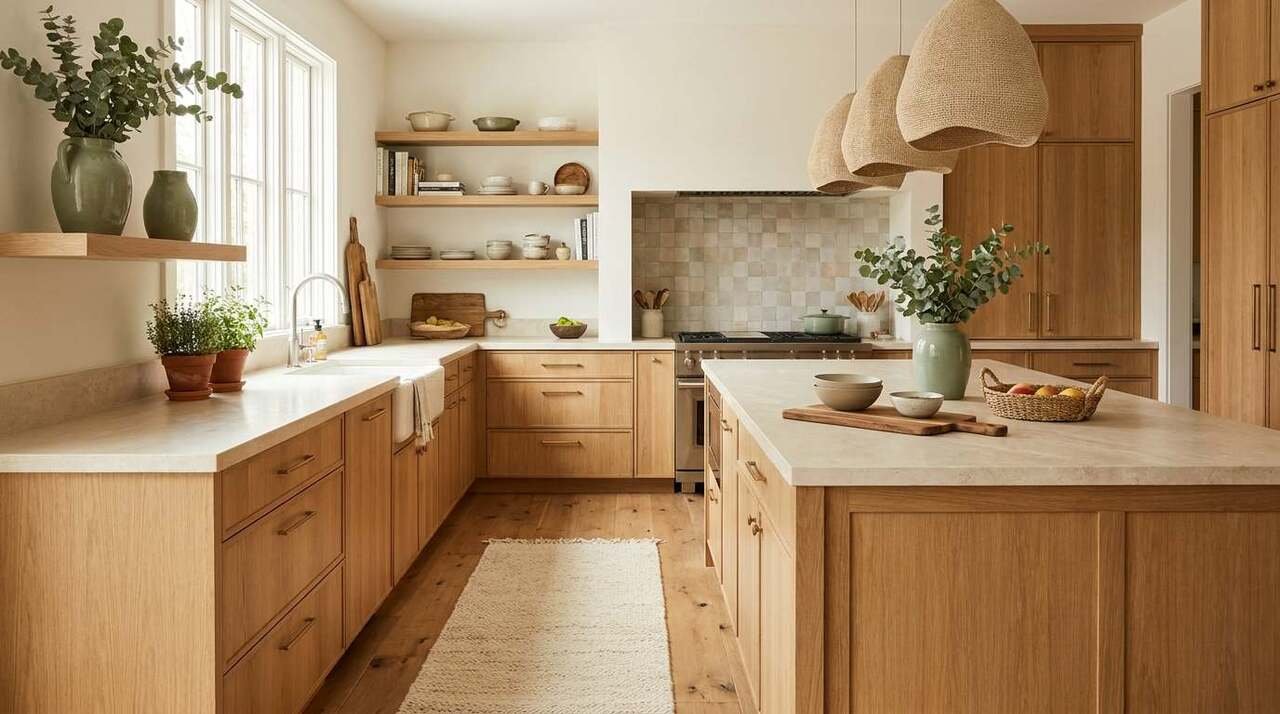

A beautiful kitchen doesn’t have to look like a showroom. The most successful kitchen design decorating ideas combine practical planning with materials, colors, lighting, and personal details that make the room feel inviting. In 2026, kitchen design is moving toward warmer palettes, natural wood, furniture-style cabinetry, distinctive stone, layered lighting, and spaces that feel more like part of the home than a purely utilitarian work zone.
The good news is that you don’t always need a complete remodel. Changing cabinet hardware, adding a runner, improving lighting, styling countertops, introducing artwork, or updating a backsplash can dramatically change how a kitchen feels.
This guide explores 25+ kitchen design decorating ideas, from easy budget updates to more substantial design choices, along with practical advice for choosing colors, materials, lighting, storage, and decorative accents.
Table of Contents
Quick Answer: What Makes a Kitchen Look Beautiful?
The best kitchen design combines function, proportion, lighting, material balance, and personality. Start with the layout and storage, then build the look with a coordinated color palette, cabinetry, countertops, backsplash, lighting, hardware, textiles, and carefully selected decorative pieces.
A simple formula is:
Functional layout + cohesive materials + layered lighting + useful storage + personal details = a kitchen that looks designed rather than decorated.
25+ Kitchen Design Decorating Ideas to Try
1. Warm Up the Kitchen With Natural Wood
Natural wood is one of the strongest kitchen design directions for 2026. Designers are increasingly using warmer woods to make kitchens feel more welcoming and less sterile.
You don’t necessarily need to replace every cabinet.
Try:
- A natural wood island
- Oak or walnut shelving
- Wood bar stools
- A timber cutting-board collection
- Wood-framed artwork
- A wooden range hood
- Furniture-style cabinetry
If your kitchen is predominantly white, even a few warm wood elements can introduce visual depth.
Design tip: Repeat the same wood tone in at least two or three places so the finish feels intentional.
2. Choose a Warm, Sophisticated Color Palette
Cool gray and stark white are no longer the only choices for contemporary kitchens. Current design conversations favor warmer neutrals and earth-inspired shades such as mushroom, taupe, clay, muted green, and warm white.
Consider combinations such as:
| Main Color | Supporting Color | Accent |
|---|---|---|
| Warm white | Natural oak | Brass |
| Mushroom | Walnut | Aged bronze |
| Sage green | Cream | Natural wood |
| Taupe | Dark brown | Brass |
| Dusty blue | Warm white | Nickel |
| Terracotta | Soft beige | Dark wood |
Rather than covering the entire kitchen in one bold color, use color strategically on an island, lower cabinets, pantry, or accent wall.
3. Make the Kitchen Island the Focal Point
A kitchen island can function as the room’s visual anchor as well as a preparation and gathering space.
For a dramatic effect, consider:
- Contrasting island cabinetry
- A waterfall countertop
- Statement pendant lights
- A distinctive stone surface
- Furniture-style legs
- Decorative stools
- A darker island color
But don’t make the island so large that it interferes with movement. An oversized island may look impressive in photographs while making everyday cooking less comfortable.
Best approach: Design the island around how you actually cook, serve, socialize, and move through the kitchen.
4. Add Statement Lighting
Lighting can completely change the atmosphere of a kitchen.
Instead of relying solely on recessed ceiling lights, layer several types:
- Ambient lighting for general illumination
- Task lighting for countertops and food preparation
- Accent lighting for shelves, cabinets, artwork, or architectural details
- Decorative lighting for visual impact
Try oversized pendants above an island, sconces near artwork, under-cabinet lighting, or small lamps placed safely in suitable kitchen areas.
Layered lighting is increasingly emphasized in contemporary kitchen design because it combines atmosphere with practical illumination.
5. Use the Backsplash as Artwork
A backsplash doesn’t have to disappear into the background.
For more personality, consider:
- Handmade-look ceramic tile
- Zellige-inspired tile
- Marble slabs
- Veined stone
- Patterned tile
- Herringbone layouts
- Colorful ceramic tile
- Full-height backsplash material
Current kitchen trends increasingly treat stone and tile as architectural features rather than merely protective surfaces.
Pro tip: If your countertops already have strong veining, choose a quieter backsplash. If your counters are simple, the backsplash can carry more visual interest.
6. Decorate Above the Cabinets—But With Restraint
The space above kitchen cabinets can be useful, but filling every inch with decorative objects can make the room feel cluttered.
Instead, choose a small collection of larger pieces:
- Oversized ceramic vessels
- Baskets
- Vintage serving pieces
- Artwork
- Decorative cutting boards
- Greenery
- Sculptural objects
Leave some negative space. Good kitchen decorating isn’t about displaying everything you own.
7. Bring Artwork Into the Kitchen
Treat your kitchen like another living space.
Artwork can soften cabinetry and introduce personality without requiring renovation.
Consider:
- Vintage botanical prints
- Food illustrations
- Abstract artwork
- Framed architectural drawings
- Photography
- Small gallery walls
- Children’s artwork in sophisticated frames
This is especially effective in kitchens with large blank walls.
8. Create a Coffee or Beverage Station
A dedicated beverage zone can make a kitchen feel more personalized while keeping everyday appliances organized.
A coffee station might include:
- Coffee machine
- Mugs
- Coffee canisters
- Small tray
- Floating shelf
- Under-cabinet lighting
- Artwork
- Sugar or syrup storage
For larger kitchens, a beverage station can become a separate hospitality zone.
Designers are increasingly incorporating dedicated beverage and hospitality areas into kitchen layouts, particularly in kitchens designed for entertaining.
9. Style Countertops Like a Designer
Countertops should look lived-in—but not overwhelmed.
A simple styling formula is:
One functional item + one natural element + one decorative object.
For example:
- Wooden cutting board
- Ceramic vase with greenery
- Decorative bowl
Or:
- Espresso machine
- Small tray
- Ceramic canister
Avoid covering every available surface with appliances and accessories. Visual clutter can quickly undermine an otherwise beautiful kitchen.
10. Introduce Greenery
Plants add softness and life to hard kitchen surfaces.
Good options include:
- Herbs
- Small olive trees
- Trailing plants
- Potted greenery
- Seasonal flowers
- Eucalyptus branches
If natural light is limited, choose plants appropriate for the available conditions rather than selecting greenery purely for appearance.
11. Upgrade Cabinet Hardware
One of the easiest kitchen decorating updates is replacing cabinet knobs and pulls.
Consider:
- Aged brass
- Brushed nickel
- Bronze
- Polished chrome
- Black hardware
- Ceramic knobs
- Mixed hardware finishes
Hardware should relate to the kitchen’s other metal finishes, but it doesn’t have to match every fixture perfectly.
Rule of thumb: Repeat a finish enough times for it to feel intentional.
12. Add a Kitchen Runner
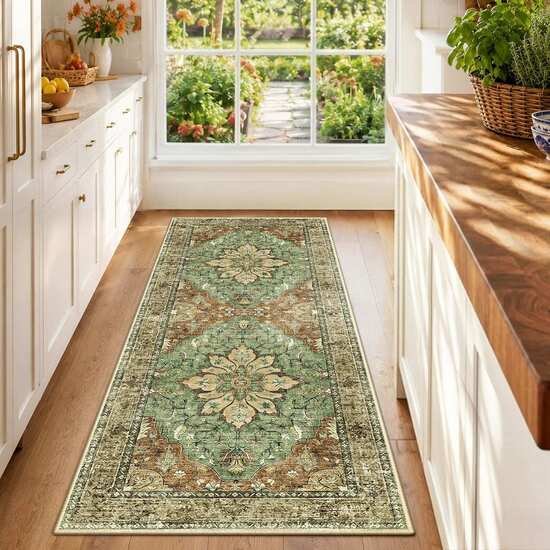
A runner can instantly make a kitchen feel warmer and more residential.
Place one:
- Along a galley kitchen
- In front of the sink
- Between the island and cabinets
- Along a long preparation zone
Choose a washable or kitchen-appropriate rug where possible, especially in high-traffic areas.
For a timeless look, consider muted patterns, vintage-inspired designs, stripes, or natural textures.
13. Use Open Shelving Strategically
Open shelving can create an attractive display area, but more isn’t necessarily better.
Instead of replacing an entire wall of cabinets, try one or two shelves for:
- Everyday dishes
- Glassware
- Cookbooks
- Ceramics
- Small plants
- Decorative bowls
Open shelving is increasingly being used in a more restrained way because exposed storage requires regular organization and cleaning.
Best use: Reserve open shelves for items you genuinely use or enjoy seeing.
14. Choose Furniture-Style Cabinetry
Furniture-inspired kitchen cabinetry can make a kitchen feel less like a built-in utility zone and more like a furnished room.
Ideas include:
- Freestanding-looking islands
- Hutch-style storage
- Glass-front cabinets
- Decorative legs
- Built-in sideboards
- Display cabinets
- Vintage-inspired cabinetry
Furniture-style cabinetry is among the notable kitchen design directions for 2026.
15. Add Glass-Front Cabinets
Glass-front cabinetry creates a lighter visual effect while giving you a place to display beautiful objects.
Use it for:
- Dinnerware
- Glassware
- Ceramics
- Serving pieces
- Cookbooks
For a less demanding alternative to fully transparent glass, consider textured or reeded glass.
16. Create a Beautiful Sink Wall
The sink area occupies a significant portion of most kitchens, so it deserves design attention.
A particularly attractive arrangement combines:
Large window + statement faucet + beautiful backsplash + thoughtful lighting.
If you’re remodeling, a sink positioned beneath a window can make dishwashing feel less enclosed while bringing natural light into the work zone.
Large workstation sinks are also gaining attention in contemporary kitchen design, particularly for households that cook and entertain frequently.
17. Mix Metals Carefully
Don’t be afraid to combine metal finishes.
For example:
- Brass cabinet hardware
- Stainless appliances
- Aged bronze lighting
- Nickel faucet
The key is creating a visual hierarchy rather than introducing random finishes.
Choose one dominant finish and one supporting finish, then repeat them throughout the room.
18. Add Personality With Tile
Tile is an excellent way to introduce character without replacing the entire kitchen.
Consider:
- Checkerboard floors
- Herringbone backsplash
- Handmade-look tile
- Decorative borders
- Patterned ceramic
- Muted geometric designs
- Colorful accent tile
Current kitchen design is moving toward more distinctive and personality-driven tile choices rather than relying exclusively on universally common finishes.
19. Turn a Blank Wall Into a Feature
A blank kitchen wall can become a major design opportunity.
Try:
- Large-scale artwork
- A gallery wall
- Decorative shelving
- Wallpaper in an appropriate location
- A plate display
- A large mirror
- A wall-mounted pot rack
- Architectural trim
A decorative wall can make a kitchen feel more connected to adjacent dining or living spaces.
20. Use Decorative Objects With Purpose
Kitchen accessories should ideally be both beautiful and useful.
Examples include:
- Wooden boards
- Ceramic pitchers
- Stoneware bowls
- Vintage trays
- Linen towels
- Cookbooks
- Sculptural fruit bowls
- Handmade pottery
The goal is edited abundance, not clutter.
21. Add a Seating Area
If space permits, make the kitchen comfortable enough for people to linger.
Options include:
- Counter stools
- A breakfast table
- Banquette seating
- A small upholstered chair
- A built-in bench
- A compact dining nook
Modern kitchens increasingly blur the boundary between cooking, dining, and socializing.
22. Create a Pantry or Hidden Appliance Zone
One of the smartest decorating ideas is actually about what you don’t see.
A hidden appliance zone can keep:
- Toasters
- Coffee machines
- Blenders
- Mixers
- Small appliances
off the main countertop.
Integrated zones and secondary prep areas are becoming more important as homeowners look for kitchens that remain visually calm without sacrificing functionality.
23. Add Texture
A kitchen made entirely from smooth, shiny surfaces can feel flat.
Introduce texture through:
- Natural wood
- Handmade ceramics
- Linen
- Woven baskets
- Stone
- Ribbed glass
- Textured tile
- Aged metals
Texture becomes especially valuable in neutral kitchens because it creates visual interest without requiring strong colors.
24. Make the Range Hood a Feature
Instead of treating the range hood as purely functional, make it part of the architecture.
Popular approaches include:
- Plaster-style hoods
- Wood-clad hoods
- Custom cabinetry
- Metal hoods
- Sculptural forms
- Contrasting finishes
A statement hood can become the visual center of a cooking wall.
25. Add a Plate Rack or Mug Display
A plate rack or mug rail introduces practical storage while giving the kitchen a collected, traditional character.
This works particularly well with:
- Cottage kitchens
- English-inspired kitchens
- Farmhouse interiors
- Traditional kitchens
- Vintage-inspired spaces
The trick is to display only pieces that add to the overall composition.
26. Use a Small Lamp for a Living-Room Feel
One of the easiest ways to make a kitchen feel less utilitarian is to introduce a small decorative lamp where appropriate.
A lamp on a counter, shelf, or sideboard can create a softer evening atmosphere when overhead lights are switched off.
This supports the broader movement toward kitchens that feel layered, comfortable, and connected to the rest of the home.
Kitchen Decorating Ideas by Budget
You don’t need a major renovation to make a noticeable difference.
| Budget | High-Impact Ideas |
| Under $50 | Towels, small plants, ceramics, artwork, countertop styling |
| $50–$150 | Runner, hardware, lighting accessories, larger decor |
| $150–$500 | Pendant lights, shelving, faucet upgrades, statement artwork |
| $500–$2,000 | Backsplash updates, cabinet refinishing, custom lighting |
| $2,000+ | Countertops, cabinetry changes, island upgrades, remodeling |
Best value: Start with elements that occupy large visual areas or affect everyday use. Lighting, cabinet color, hardware, backsplash, and countertop styling can often produce more noticeable results than buying dozens of small decorative accessories.
How to Choose a Kitchen Style
Before buying anything, identify the design direction you want.
Modern Kitchen
Use:
- Simple cabinetry
- Minimal hardware
- Clean lines
- Integrated appliances
- Large-format materials
- Controlled decoration
Warm Contemporary Kitchen
Use:
- Natural wood
- Warm neutrals
- Soft lighting
- Stone
- Minimal but personal accessories
Farmhouse Kitchen
Use:
- Natural wood
- Apron-front sink
- Shaker cabinetry
- Vintage accents
- Warm metals
- Textured materials
Traditional Kitchen
Use:
- Detailed cabinetry
- Decorative lighting
- Classic hardware
- Marble or stone
- Furniture-style pieces
- Layered accessories
Organic Modern Kitchen
Use:
- Natural wood
- Stone
- Earth tones
- Curved shapes
- Organic textures
- Minimal decoration
The strongest kitchens don’t necessarily follow one style perfectly. They combine compatible elements to create a space that reflects the homeowner.
The Kitchen Design Mistakes to Avoid
Beautiful kitchens can become impractical when decoration takes priority over function.
Avoid Excessive Open Shelving
Open shelves can look beautiful but require more maintenance and organization than closed cabinetry.
Don’t Oversize the Island
An island should improve the workflow, not create obstacles between major work zones.
Don’t Choose Materials in Isolation
Cabinet color, flooring, counters, backsplash, hardware, and lighting should be considered together.
Don’t Overdecorate the Counters
Leave enough clear workspace for actual cooking.
Don’t Chase Every Trend
Kitchen renovations are expensive. A better strategy is to use durable materials for permanent elements and express current trends through easier-to-change details.
Designers increasingly recommend thoughtful updates and lasting materials rather than remodeling purely to follow short-lived trends.
A Simple Kitchen Design Formula That Works
If you’re unsure where to start, use this five-layer approach:
Layer 1: Foundation
Cabinets, flooring, countertops, and backsplash.
Layer 2: Lighting
Ambient, task, accent, and decorative lighting.
Layer 3: Hardware
Cabinet pulls, knobs, faucets, and other metal details.
Layer 4: Softness
Runners, window treatments, towels, and upholstery.
Layer 5: Personality
Artwork, ceramics, plants, cookbooks, vintage finds, and meaningful objects.
This approach prevents the common mistake of buying decorative accessories before establishing the room’s overall visual direction.
How to Make a White Kitchen Feel Warmer
A white kitchen isn’t automatically outdated. The issue is usually whether the room feels flat or overly sterile.
To warm it up, add:
- Natural wood
- Warm white rather than stark white
- Brass or aged metal
- Textured backsplash tile
- Natural stone
- Plants
- Vintage accessories
- Artwork
- Warm lighting
- A patterned runner
The shift in 2026 isn’t necessarily “white kitchens are finished.” Instead, current design is placing greater emphasis on warmth, personality, and material variation.
How to Decorate a Small Kitchen
Small kitchens benefit from restraint.
Use these strategies:
- Keep the main palette light and cohesive.
- Use vertical storage.
- Select one decorative focal point.
- Keep counters relatively clear.
- Add under-cabinet lighting.
- Use reflective or translucent materials strategically.
- Choose furniture that fits the scale of the room.
- Use a runner to introduce pattern without consuming floor space.
In a small kitchen, every object competes for visual attention. A carefully edited space usually feels larger than a heavily decorated one.
Key Takeaways
- Kitchen design decorating ideas work best when beauty and functionality are planned together.
- Natural wood and warm earth tones are important directions in 2026 kitchen design.
- Layered lighting can improve both atmosphere and everyday usability.
- Use backsplashes, range hoods, islands, and lighting as potential focal points.
- Decorate countertops selectively rather than filling every available surface.
- Furniture-style cabinetry can make a kitchen feel more residential and collected.
- Open shelving works best when used strategically rather than everywhere.
- Add personality through artwork, ceramics, plants, textiles, and vintage pieces.
- Don’t make permanent renovation decisions solely because something is trending.
- The best kitchen is one that supports how you actually cook, live, and entertain.
Frequently Asked Questions
What are the best kitchen design decorating ideas for 2026?
Some of the strongest ideas include natural wood cabinetry, warmer earth-tone palettes, furniture-style cabinetry, distinctive backsplashes, layered lighting, hospitality-inspired zones, statement stone, and more personalized decoration.
How can I decorate my kitchen without remodeling?
Start with inexpensive visual changes such as cabinet hardware, artwork, plants, rugs, lighting, ceramics, countertop styling, and window treatments. These changes can refresh the room without altering its structure.
How do I make my kitchen look expensive?
Use fewer but better-looking accessories, coordinate materials, add layered lighting, incorporate natural textures, keep counters uncluttered, and choose substantial-looking hardware and decorative pieces.
What colors are trending for kitchens?
Warm whites, mushroom, taupe, clay, muted greens, dusty blues, and natural wood tones are prominent choices in 2026 kitchen design.
Are white kitchens still popular?
Yes. White remains a versatile kitchen color, but current design increasingly combines white with wood, texture, warm lighting, artwork, and natural materials to avoid a sterile appearance.
What should I put on my kitchen countertops for decoration?
Choose a small number of useful and attractive objects, such as a wooden cutting board, ceramic vessel, fruit bowl, cookbook, plant, or decorative tray. Keep enough surface clear for food preparation.
Is open shelving a good idea in a kitchen?
It can be, especially for frequently used dishes and decorative pieces. However, open shelves require more visual organization and cleaning than closed cabinets, so using them selectively is often more practical.
How can I make a small kitchen look more stylish?
Use a cohesive color palette, maximize vertical storage, add attractive lighting, limit countertop clutter, introduce one strong focal point, and choose appropriately scaled furniture and accessories.
Leave a Reply