
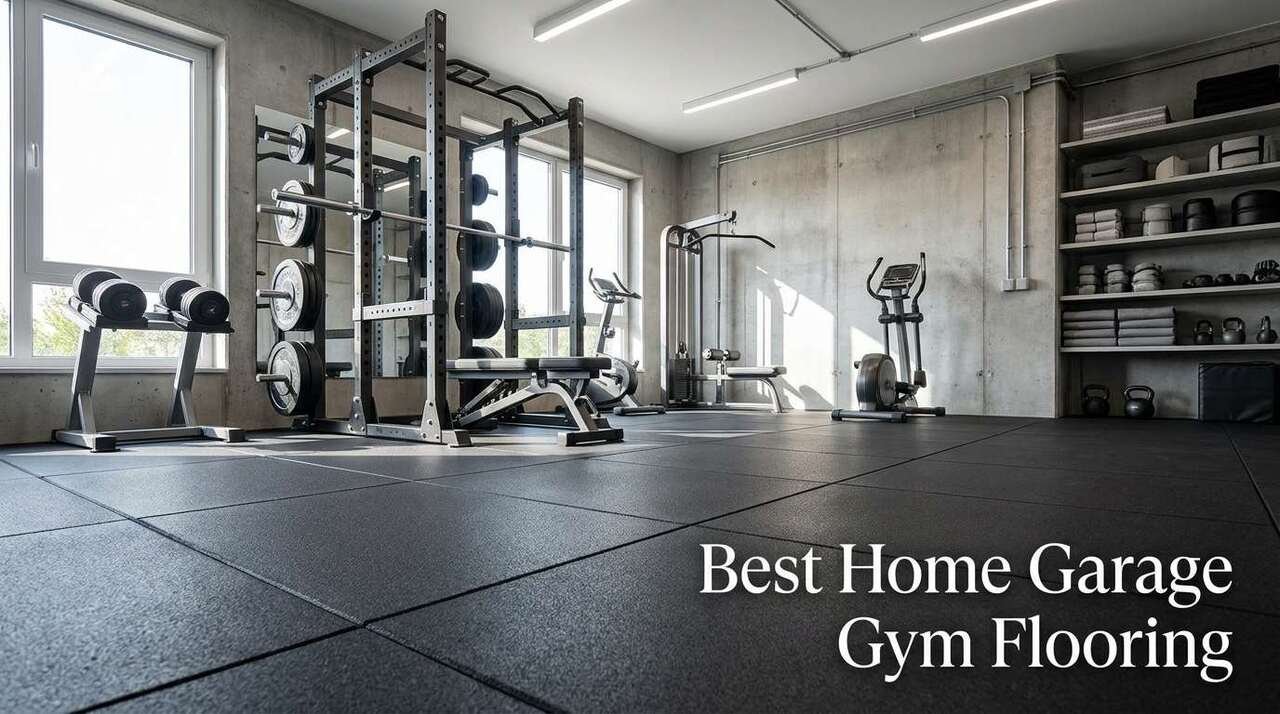

A well-designed garage gym needs more than quality equipment. The flooring is one of the most important foundations of a safe, comfortable, and durable training space. Garage floors must withstand heavy equipment, repeated impacts, dropped weights, moisture, temperature changes, and intense daily use. Choosing the wrong surface can lead to damaged concrete, unstable equipment, excessive noise, uncomfortable workouts, and expensive repairs.
For most home garage gyms, the best flooring solution combines impact resistance, durability, traction, moisture resistance, cushioning, and easy maintenance. The ideal choice depends on the type of training performed, the equipment installed, the condition of the existing concrete, and the climate of the garage.
This guide examines the best home garage gym flooring options, their advantages and disadvantages, installation considerations, thickness recommendations, maintenance requirements, and practical ways to build a professional-quality training floor without wasting money.
Table of Contents
What Is the Best Flooring for a Home Garage Gym?
There is no single flooring material that is perfect for every garage gym. However, high-density rubber flooring is one of the most versatile choices for homeowners because it offers an excellent balance between protection, durability, traction, and affordability.
For a typical strength-training garage gym, 3/8-inch to 1/2-inch rubber flooring can provide substantial protection against equipment movement and dropped weights. For Olympic lifting, deadlifting, or areas where heavy barbells may repeatedly contact the floor, 3/4-inch rubber flooring or dedicated lifting platforms provide additional impact protection.
Interlocking rubber tiles are particularly practical for homeowners because individual sections can be replaced if they become damaged. Rubber rolls are another excellent option for larger spaces where a seamless appearance and faster installation are priorities.
Why Garage Gym Flooring Matters
Garage gym flooring performs several important functions simultaneously.
First, it protects the concrete garage floor. Concrete is extremely hard but surprisingly vulnerable to repeated impact. Dropped dumbbells, kettlebells, barbells, and weight plates can chip or crack the surface over time.
Second, appropriate flooring protects the gym equipment. Repeated impact against bare concrete can damage weight plates, equipment frames, fasteners, and other components.
Third, rubber flooring improves traction and stability. A good training surface helps keep squat racks, benches, dumbbells, and machines stable during exercise.
Finally, flooring improves comfort. Standing, walking, stretching, and performing floor-based exercises on concrete for extended periods can be unpleasant.
Best Home Garage Gym Flooring Options
1. Rubber Gym Flooring
Rubber is the most popular all-around choice for garage gyms.
It is available as rubber tiles, rubber rolls, and mats in several thicknesses. Recycled rubber flooring is particularly common in strength-training environments because it can tolerate substantial abuse.
The major advantages include:
- Excellent impact resistance
- Strong traction
- High durability
- Easy cleaning
- Resistance to moisture
- Protection for concrete
- Compatibility with most gym equipment
- Long service life
For general home workouts, 3/8-inch rubber flooring can be sufficient. Increasing the thickness to 1/2 inch or 3/4 inch provides additional protection for heavier strength training.
2. Rubber Horse Stall Mats
For homeowners seeking a highly durable and economical solution, rubber stall mats are worth considering.
These thick mats are designed to withstand demanding environments and can work extremely well in garage gyms. Their substantial weight helps prevent movement, while their thickness provides excellent protection from heavy equipment and weights.
A major advantage is their cost-to-durability ratio. They are often less expensive than specialized premium gym flooring while providing considerable impact protection.
The drawbacks include their substantial weight, strong rubber odor when new, and sometimes less refined appearance.
For a serious garage gym where performance matters more than aesthetics, however, they can be an excellent choice.
3. Interlocking Rubber Tiles
Interlocking gym tiles provide a convenient installation method without necessarily requiring permanent adhesive.
The puzzle-style edges connect individual tiles together, creating a relatively stable training surface.
They work particularly well in smaller garages or spaces where the flooring may eventually need to be removed.
Advantages include:
- Simple installation
- Easy replacement
- No permanent adhesive required
- Good customization
- Available in different thicknesses
- Convenient for renters or temporary gyms
The primary limitation is that poorly fitted tiles can separate or shift during intensive workouts.
4. Rubber Rolls
Rubber rolls are particularly useful for larger garage gyms.
Instead of installing dozens of individual tiles, long rolls can cover substantial sections of the floor with fewer seams.
This produces a clean, professional appearance and minimizes gaps where dirt and moisture can accumulate.
Rubber rolls are particularly suitable when creating a dedicated full-size garage gym containing multiple machines, racks, benches, and free-weight areas.
Installation can be more demanding because the material is heavy and awkward to position.
5. EVA Foam Flooring
EVA foam tiles are inexpensive, lightweight, and comfortable underfoot.
They are excellent for activities such as:
- Yoga
- Mobility work
- Stretching
- Bodyweight exercises
- Light home workouts
However, foam is generally not the best choice for a serious strength-training garage gym.
Heavy equipment can permanently compress foam, while dropped weights can cause significant damage. Foam can also provide less stability under heavy racks and benches.
For this reason, EVA foam is better suited to light-duty training areas than heavy lifting zones.
6. Vinyl Gym Flooring
Vinyl can provide an attractive, easy-to-clean surface and may be suitable for multipurpose workout rooms.
It is particularly appealing when appearance is a priority.
However, standard vinyl flooring should not automatically be considered a substitute for thick rubber beneath heavy lifting equipment. Impact resistance varies significantly between products.
For a garage gym focused on heavy strength training, rubber remains the more practical choice.
7. Carpet Tiles
Carpet tiles may look attractive in a casual workout space, but they are generally not the first choice for a garage gym.
They can provide warmth and comfort for bodyweight exercises but are less suitable for environments exposed to moisture, dirt, sweat, and heavy equipment.
They are best reserved for low-impact training areas rather than heavy lifting zones.
How Thick Should Garage Gym Flooring Be?
Flooring thickness should correspond to training intensity.
| Training Type | Recommended Flooring |
|---|---|
| Yoga and stretching | 1/4-inch to 3/8-inch |
| Bodyweight workouts | 1/4-inch to 3/8-inch |
| Cardio machines | 3/8-inch |
| General strength training | 3/8-inch to 1/2-inch |
| Heavy dumbbell training | 1/2-inch |
| Powerlifting | 1/2-inch to 3/4-inch |
| Olympic lifting | 3/4-inch+ or lifting platform |
| Heavy deadlifting | 3/4-inch+ with dedicated impact protection |
Thickness isn’t the only factor. Material density and construction quality are equally important.
A dense rubber mat can provide considerably better performance than a softer, thicker foam product.
Best Flooring for Squat Racks
Squat racks require a stable foundation.
For a rack installed directly on the gym floor, dense rubber flooring is generally preferable to soft foam. Excessive cushioning can allow heavy equipment to sink slightly or become less stable.
A 3/8-inch or 1/2-inch dense rubber surface works well for many home strength-training environments.
Where exceptionally heavy loads are involved, a dedicated platform can provide additional stability and impact protection.
Best Flooring for Deadlifting
Deadlifting creates some of the highest impact loads in a home gym.
When weights are repeatedly dropped, thin flooring may not provide sufficient protection.
For serious deadlifting, we recommend creating a dedicated lifting zone using thick rubber flooring, reinforced rubber tiles, or a purpose-built lifting platform.
A platform can combine a rigid central lifting surface with thick rubber sections around the areas where bumper plates contact the floor.
This approach provides excellent protection while clearly defining the lifting area.
Rubber Flooring vs. Foam Flooring
The difference becomes obvious when the two materials are exposed to heavy equipment.
Rubber is dense, durable, stable, and highly resistant to impact.
Foam is softer, lighter, and more comfortable for low-impact exercises but can compress under heavy loads.
For a garage containing a power rack, barbell, adjustable dumbbells, weight plates, and strength machines, rubber is generally the better long-term investment.
Foam can still be useful as a secondary surface for stretching or mobility work.
How to Prepare a Concrete Garage Floor
Before installing gym flooring, the concrete should be inspected carefully.
Start by removing dirt, dust, grease, and other contaminants. The floor should be as clean as possible.
Check for:
- Cracks
- Uneven areas
- Standing moisture
- Oil contamination
- Loose concrete
- Drainage problems
- Significant slopes
Small imperfections may not be problematic beneath thick rubber flooring, but major uneven areas should be addressed before installation.
Moisture is particularly important in garages. Rubber flooring can tolerate demanding environments, but trapped moisture beneath an impermeable floor can create unpleasant odors and potentially damage the underlying surface.
How to Install Rubber Garage Gym Flooring
Installation depends on whether you choose tiles, mats, or rolls.
Interlocking Tiles
Begin in a corner and work systematically across the room. Connect each tile carefully and ensure the seams remain tightly aligned.
Avoid creating unnecessary gaps around walls or equipment.
Rubber Mats
Heavy mats can often be installed as a loose-lay system. Their weight helps keep them in position.
Allowing the material to acclimate before installation can also help reduce expansion or contraction issues.
Rubber Rolls
Rolls should be carefully measured and positioned. Because they are heavy, installation is easier with assistance.
The floor should be planned before cutting any material to minimize waste.
How to Keep Garage Gym Flooring Clean
Rubber flooring is relatively easy to maintain.
Regularly remove:
- Dust
- Dirt
- Hair
- Chalk
- Sweat
- Small debris
Sweeping or vacuuming should be performed routinely.
For deeper cleaning, use a suitable mild cleaning solution and avoid excessive water. The exact cleaning method should follow the flooring manufacturer’s recommendations.
Avoid harsh chemicals that could degrade the rubber surface.
Good ventilation is particularly useful in enclosed garages.
Common Garage Gym Flooring Mistakes
Choosing Flooring Based Only on Price
The cheapest flooring is rarely the best value if it needs to be replaced frequently.
Consider durability and expected lifespan, not just the initial purchase price.
Using Thin Foam Under Heavy Equipment
Foam can compress beneath racks, benches, and machines.
Heavy equipment generally requires a denser and more stable surface.
Ignoring Moisture
Garages are exposed to temperature fluctuations and moisture. Flooring should be selected and installed with the garage environment in mind.
Not Protecting High-Impact Areas
A garage gym doesn’t necessarily need the same flooring thickness everywhere.
A smarter strategy can be to use standard rubber flooring throughout the gym and additional impact protection beneath the lifting zone.
Failing to Measure Properly
Measure the entire usable floor area before purchasing material.
Remember to account for:
- Walls
- Doorways
- Garage doors
- Storage areas
- Fixed equipment
- Columns
- Irregular corners
Buying slightly more material than the exact calculated requirement can provide useful coverage for cuts and mistakes.
Our Recommended Garage Gym Flooring Strategy
For a versatile home garage gym, we recommend a dense rubber floor throughout the main workout area, combined with thicker impact protection in the areas used for heavy lifting.
A practical configuration might include:
Main gym area: 3/8-inch to 1/2-inch rubber flooring.
Strength-training area: 1/2-inch rubber.
Deadlift or Olympic lifting area: 3/4-inch or thicker impact protection, preferably with a dedicated platform where appropriate.
Stretching area: A separate exercise mat can provide additional comfort without requiring the entire garage floor to be covered in soft material.
This layered approach provides a strong balance between cost, durability, stability, comfort, and protection.
Final Verdict: What Is the Best Home Garage Gym Flooring?
For most homeowners, high-quality rubber gym flooring is the best overall choice for a home garage gym.
It provides the durability needed for strength training while protecting concrete and equipment from repeated impacts. It also offers reliable traction, reasonable comfort, straightforward maintenance, and long-term value.
For light workouts, thinner rubber or foam can be sufficient. For serious strength training, thicker rubber should be prioritized. For heavy deadlifting and Olympic lifting, a dedicated platform or additional impact protection is the safest and most durable approach.
The best garage gym flooring isn’t necessarily the thickest or most expensive option. It is the flooring that matches the training style, equipment, garage environment, and expected workload.
With the right combination of dense rubber flooring and targeted impact protection, a standard concrete garage can become a professional-feeling training environment that is safer, quieter, more comfortable, and significantly better equipped to handle years of workouts.





Leave a Reply