
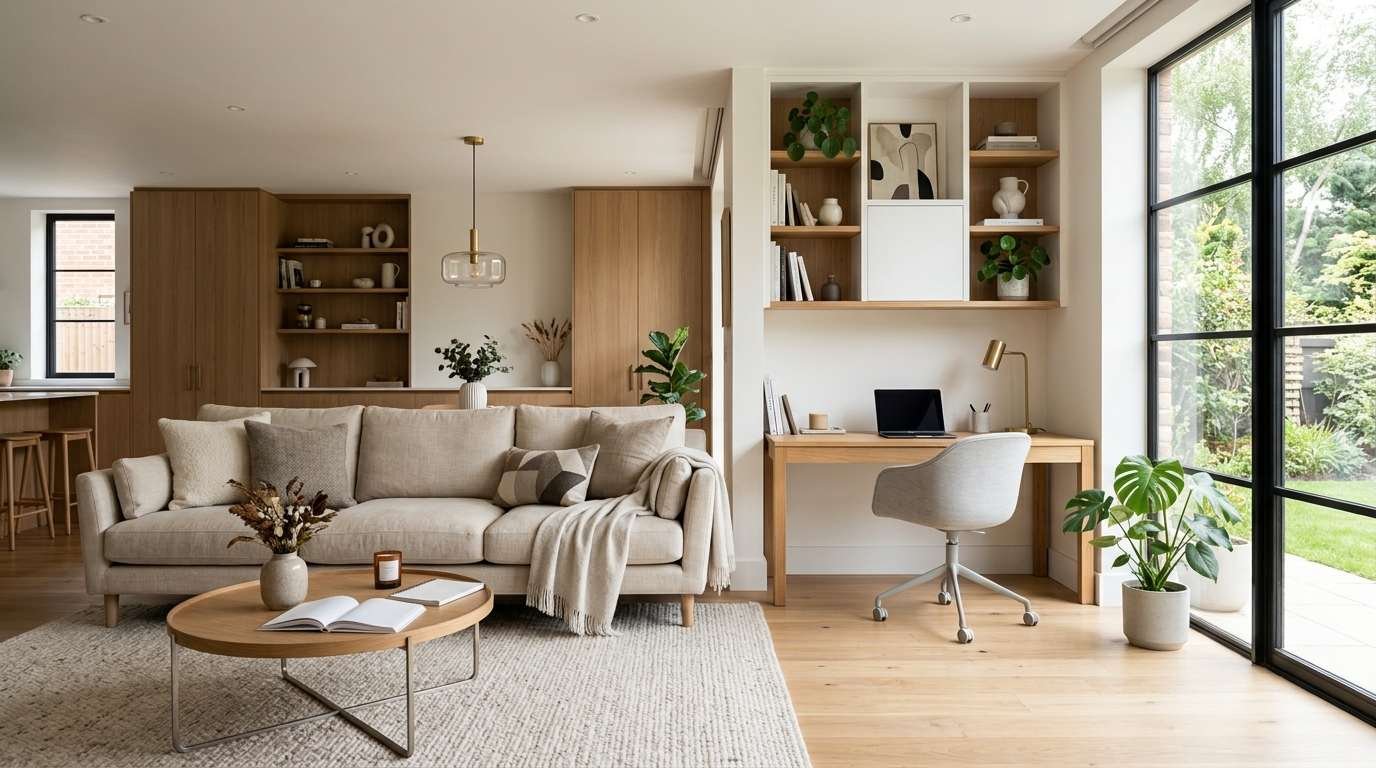

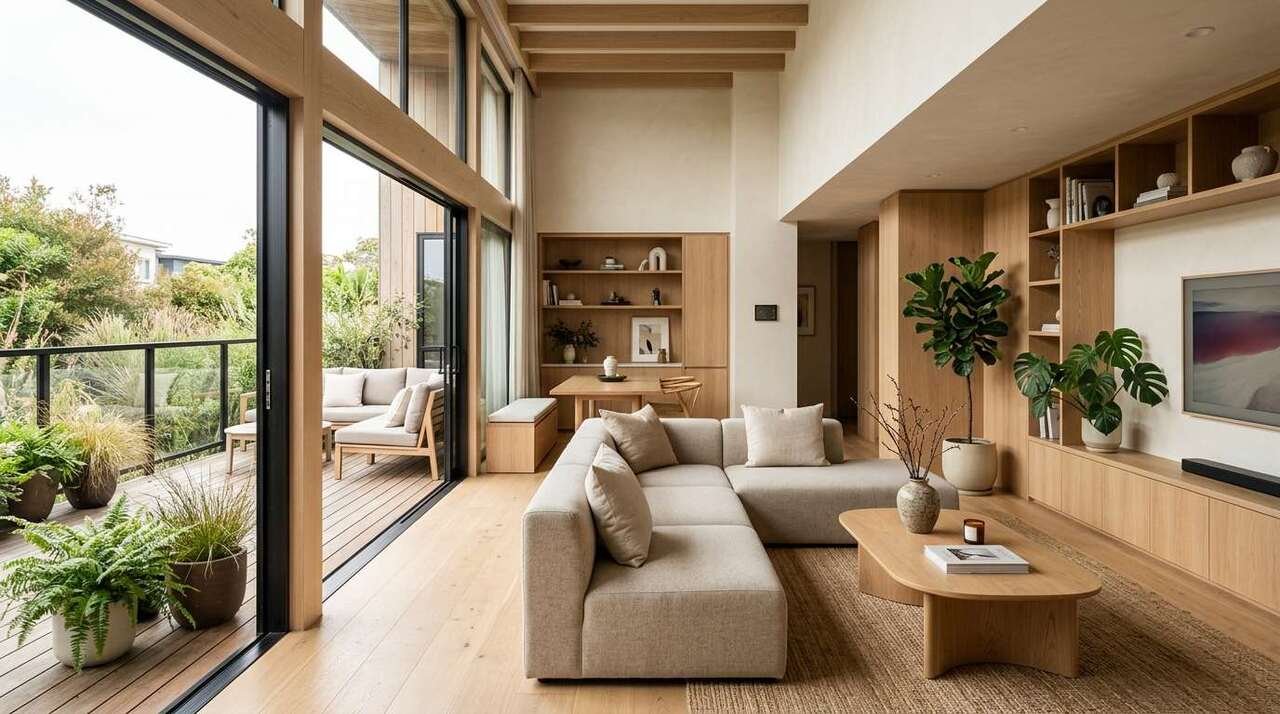
A living room no longer has to serve a single purpose. In many homes, the same space functions as a place to relax, work, entertain guests, read, watch television, exercise, or even accommodate overnight visitors. Hybrid living room ideas make it possible to combine these functions without making the room feel crowded or visually confused.
The key is to create a space where every area has a clear purpose while the overall design remains cohesive. With thoughtful furniture placement, flexible storage, adaptable lighting, and carefully chosen materials, we can create a living room that changes naturally throughout the day.
Table of Contents
What Is a Hybrid Living Room?
A hybrid living room combines two or more everyday functions within one thoughtfully designed space. Instead of creating completely separate rooms for every activity, we use the available floor area more efficiently.
A hybrid living room might combine:
- A lounge and home office
- A living room and dining area
- A living room and guest bedroom
- A family room and reading space
- A living room and play area
- A lounge and compact home gym
- A living room and creative workspace
- A living room and entertainment zone
The concept works particularly well in apartments, open-plan homes, smaller houses, and properties where an additional dedicated room isn’t available.
The goal isn’t simply to fit more furniture into one room. The goal is to make different activities coexist comfortably.
1. Combine a Living Room With a Home Office
One of the most practical hybrid living room ideas is creating a workspace within the lounge.
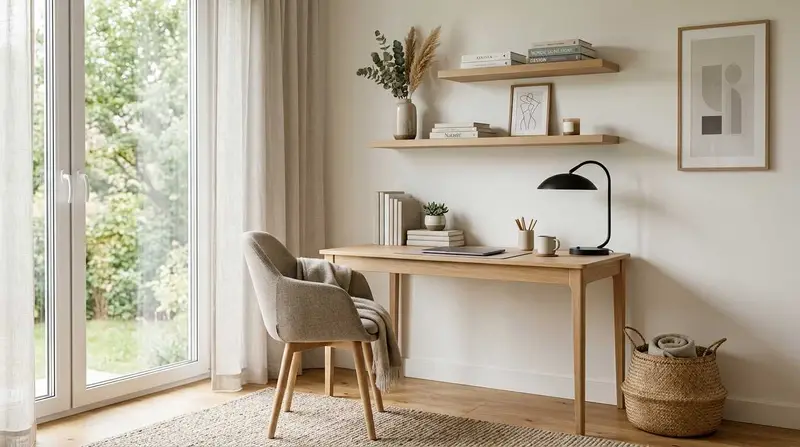
Rather than placing a large traditional desk in the middle of the room, we can use a compact writing desk against an empty wall, beneath a window, or beside a bookcase. A slim desk with drawers provides enough space for a laptop while maintaining a lighter visual footprint.
For a more polished appearance, choose an office chair that complements the living room rather than looking like conventional corporate furniture. Upholstered chairs, wood-framed seating, and minimalist ergonomic designs can integrate more naturally with residential décor.
Storage is equally important. Shelves, closed cabinets, baskets, and attractive boxes can keep office supplies organized when the workspace isn’t being used.
A particularly effective solution is a fold-down desk. When work is finished, the desk can be closed, allowing the living room to return visually to a relaxing environment.
2. Create a Living Room and Dining Room Combination
Open-plan living and dining areas are another classic example of hybrid design.
Instead of treating the two areas as unrelated spaces, we can visually connect them through repeated materials, colors, or shapes. For example, a wooden dining table can complement a wood coffee table, while matching neutral upholstery can connect the seating areas.
A rug can help define the living zone without creating a physical barrier.
The dining area should remain easy to access. Avoid positioning the sofa, coffee table, or decorative furniture where they interfere with dining chairs or walking paths.
A round dining table can be especially useful in smaller rooms because it eliminates sharp corners and often creates a more flexible circulation pattern.
3. Use a Sofa Bed for a Guest-Friendly Living Room
When space is limited, a hybrid living room can double as a guest bedroom.
A high-quality sofa bed provides everyday seating while offering a sleeping surface when visitors arrive. The most successful designs don’t look like temporary beds when they’re folded away.
Choose a model with comfortable cushions, durable upholstery, and a mechanism that is easy to operate.
We can also improve the guest experience with discreet storage. Keep bedding in a nearby ottoman, storage bench, cabinet, or dedicated linen compartment so the room can be transformed quickly.
A storage ottoman can perform several jobs at once: footrest, coffee-table alternative, extra seating, and hidden storage.
4. Divide the Room Without Building a Wall
A hybrid living room doesn’t necessarily need permanent partitions.
We can establish separate zones using:
- Open shelving
- Decorative screens
- Curtains
- Bookcases
- Area rugs
- Console tables
- Different lighting arrangements
- Furniture orientation
- Changes in ceiling or wall treatment
An open bookcase is particularly useful because it separates spaces while allowing light to pass through.
For a living room and office combination, for example, a low shelving unit behind the sofa can create a subtle boundary between the lounge and workspace without closing off either area.
5. Define Zones With Area Rugs
Rugs are one of the easiest tools for organizing a multifunctional room.
A large rug can visually group the sofa, chairs, and coffee table together, immediately establishing the primary relaxation zone. A second smaller rug can identify a reading corner or workspace.
The important consideration is proportion.
A rug that is too small can make a seating arrangement appear disconnected. Whenever possible, at least the front legs of the main seating should sit on the rug.
For hybrid interiors, rugs can also create separation without introducing additional furniture.
6. Choose Furniture That Performs More Than One Job
Multifunctional furniture is central to successful hybrid living room design.
Instead of asking whether a piece looks attractive alone, we can consider how many functions it performs.
A storage bench can provide seating and organization. A nesting table can serve as one compact table or several surfaces when needed. A console can become a workstation. An ottoman can function as seating, a footrest, storage, or even a temporary table when paired with a tray.
Furniture with multiple functions allows the room to adapt without requiring more square footage.
7. Create a Reading Corner Within the Living Room
A comfortable reading area doesn’t require an entire room.
An unused corner can become a dedicated reading zone with a comfortable armchair, compact side table, floor lamp, and small bookshelf.
Positioning the chair near a window can provide natural daylight during the afternoon. For evening reading, an adjustable floor or table lamp provides more controlled illumination.
Keep the color palette connected to the rest of the living room. A reading corner should feel like an extension of the space rather than a separate decorative theme.
8. Build a Family-Friendly Hybrid Living Room
A family living room often needs to accommodate adults, children, entertainment, storage, and relaxation simultaneously.
Durable upholstery becomes particularly important. Performance fabrics, washable covers, and hard-wearing materials can make maintenance easier.
Storage should also be accessible. Instead of relying entirely on high cabinets, use baskets, low drawers, storage benches, and modular shelving.
A designated children’s zone can contain books, toys, and creative materials without taking over the entire room.
The best arrangement allows the room to look orderly even when several activities are happening at the same time.
9. Add a Compact Home Gym
For homes without a dedicated workout room, part of the living room can accommodate light exercise equipment.
A yoga mat, resistance bands, adjustable dumbbells, or compact folding equipment can be stored in a cabinet or storage bench when not in use.
Avoid permanently filling the central floor area with equipment. A hybrid room works best when the exercise zone can appear when needed and disappear afterward.
A tall cabinet can be particularly useful because it takes advantage of vertical space while preserving valuable floor area.
10. Use Lighting to Separate Functions
Lighting is one of the most effective ways to make a multifunctional room feel organized.
Instead of relying on a single ceiling fixture, use several layers:
- Ambient lighting for general illumination
- Task lighting for work and reading
- Accent lighting for artwork and architectural features
- Decorative lighting for atmosphere
A desk requires brighter task lighting, while a lounge area benefits from softer illumination.
Wall sconces can save table space, while floor lamps can define a reading corner without requiring permanent architectural changes.
Dimmable lighting is particularly valuable because the same room can transition from a bright daytime workspace to a relaxed evening lounge.
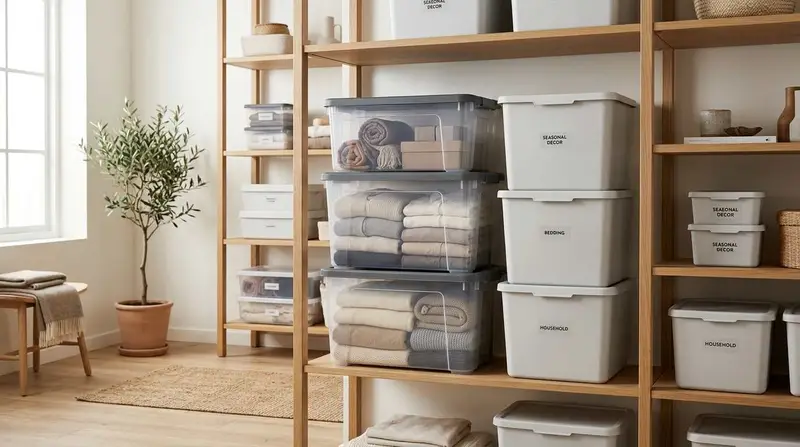
11. Make Storage Part of the Design
Hybrid rooms can quickly become cluttered because multiple activities require multiple categories of belongings.
The solution is not necessarily more furniture. Better-organized storage is usually more effective.
Consider closed cabinets for visually distracting items and open shelves for objects that contribute to the room’s appearance.
Built-in cabinetry can surround a television, fireplace, or doorway while providing substantial storage.
Baskets are useful for blankets, magazines, children’s toys, and everyday accessories. Matching or coordinated containers can create a more intentional appearance.
12. Use a Consistent Color Palette
A multifunctional room can feel chaotic when every zone has its own color scheme.
A unified palette creates visual continuity.
Neutral foundations such as warm white, beige, taupe, soft gray, natural wood, and muted earthy tones provide flexibility. Accent colors can then be introduced through cushions, artwork, rugs, curtains, and decorative objects.
We don’t need every item to match. Instead, repeat selected colors and materials throughout the room.
For example, black metal accents can appear on the lighting, coffee table, shelving, and picture frames. Natural wood can connect the dining table, media cabinet, and side tables.
13. Keep the Main Walkway Clear
Good hybrid living room design depends on circulation.
The room may contain several functional zones, but people still need to move naturally between doors, windows, seating, and adjacent rooms.
Avoid placing oversized furniture in major walkways. Leave enough clearance around frequently used doors and ensure dining chairs, desk chairs, and storage drawers can be pulled out comfortably.
A room with fewer pieces of furniture but better circulation often feels larger than a room packed with furniture that technically fits.
14. Use Vertical Space in Small Living Rooms
When floor space is limited, look upward.
Tall shelving, wall-mounted cabinets, vertical artwork, floating shelves, and floor-to-ceiling storage can increase functionality without consuming much floor area.
A wall-mounted television can also reduce the footprint of entertainment furniture.
Vertical storage is especially useful when combining a living room with an office because books, files, accessories, and technology can be organized above the primary workspace.
15. Create a Flexible Entertainment Area
A living room may need to function as both a peaceful lounge and an entertainment space.
A television doesn’t always need to dominate the room. It can be incorporated into built-in cabinetry, positioned above a low media console, or visually balanced with artwork and shelving.
Cable management is essential in a hybrid room. Visible cables can quickly make an otherwise sophisticated interior look unfinished.
Wireless devices, concealed power solutions, and cable channels can help maintain a cleaner appearance.
16. Consider Furniture With Wheels
Mobility can make a hybrid room considerably more adaptable.
A small desk on casters, movable side tables, lightweight stools, or nesting tables can be repositioned depending on the activity.
For example, a compact table can function as a work surface during the day and move beside the sofa when the room becomes an entertainment area.
This approach is especially useful when the same floor area needs to support several activities.
17. Add Character Without Overcrowding
Multifunctional doesn’t have to mean boring.
Artwork, sculptural lighting, decorative books, plants, ceramics, mirrors, and textiles can give the room personality.
However, every decorative object should have enough visual breathing room.
A carefully selected statement piece can have more impact than numerous small accessories.
A large mirror can also enhance the sense of openness while reflecting natural light. Position it thoughtfully rather than automatically placing it opposite a window.
18. Hybrid Living Room Ideas for Small Apartments
Small apartments benefit significantly from flexible design.
A compact sofa bed, nesting tables, wall-mounted desk, folding dining table, and vertical storage can transform one room into several functional zones.
Furniture should be appropriately scaled. Oversized sofas may look luxurious but can consume valuable circulation space.
Choose pieces according to the room’s actual dimensions rather than the size of the furniture showroom.
Light visual profiles, raised furniture legs, glass surfaces, and open shelving can also make a compact room feel less heavy.
19. Create a More Sophisticated Hybrid Living Room
A flexible room can still have a refined, high-end appearance.
The strongest approach is to focus on quality, proportion, texture, and restraint.
Natural wood, stone, linen, wool, leather, brushed metal, and carefully selected textiles can introduce depth without excessive decoration.
Rather than filling every surface, create focal points.
A sculptural pendant light, beautifully framed artwork, architectural coffee table, or textured accent chair can provide the visual interest needed to make the room feel intentional.
20. The Most Important Principle: Design for Change
The defining characteristic of a successful hybrid living room is adaptability.
The room should work when everyone is relaxing, when someone is working, when guests arrive, or when the space needs to be cleared for another activity.
That means choosing furniture that moves easily, storage that keeps everyday objects organized, lighting that can change throughout the day, and layouts that don’t depend on one fixed arrangement.
The most successful hybrid living room ideas don’t make a room look like several rooms squeezed together. They create one cohesive environment capable of supporting different aspects of everyday life.
Final Thoughts
A hybrid living room can be stylish, comfortable, and highly practical when each function is considered as part of one overall design.
Start with the activities the room needs to support. Establish clear zones, select multifunctional furniture, use rugs and lighting to define areas, and incorporate storage from the beginning.
Then refine the room with a consistent palette, natural textures, artwork, and carefully chosen decorative pieces.
The result is a living room that doesn’t simply accommodate modern life—it adapts to it. Whether the space needs to become a home office, guest bedroom, dining area, reading retreat, family room, or occasional workout zone, thoughtful planning allows the room to change without sacrificing comfort or style.

Leave a Reply