
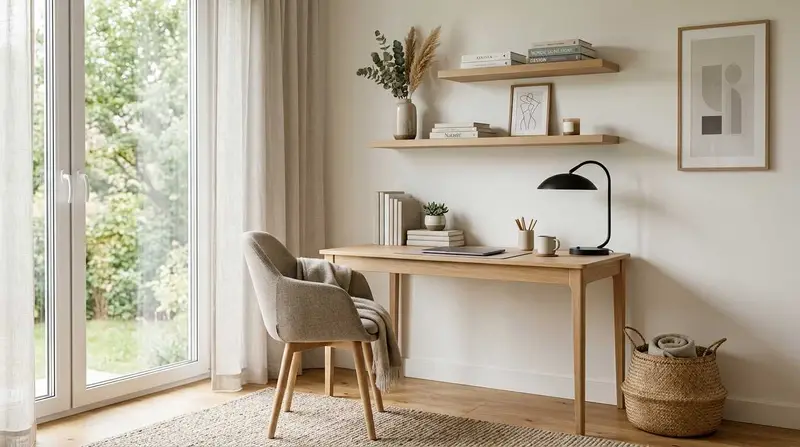

A well-designed home office should make it easier to concentrate without making the room feel sterile or overly corporate. Scandinavian-inspired home offices achieve this balance through simple forms, natural materials, soft colors, thoughtful storage, and an emphasis on everyday comfort.
The Scandinavian approach is especially effective in a home workspace because it prioritizes function without sacrificing warmth. Instead of filling a room with furniture and decorative objects, we can create a workspace around a few carefully selected elements: a practical desk, an ergonomic chair, useful lighting, organized storage, and materials that make the room inviting.
Whether we are furnishing a dedicated office, transforming a bedroom corner, or creating a compact workstation in an apartment, Scandinavian design offers a flexible foundation for a sophisticated and comfortable workspace.
Table of Contents
What Defines a Scandinavian-Inspired Home Office?
Scandinavian interiors are known for their simplicity, practicality, natural textures, and understated elegance. A Scandinavian-inspired home office applies these principles to a room where productivity and comfort need to coexist.
The design typically begins with a restrained palette. White, warm beige, soft gray, muted taupe, pale blue, and natural wood tones create a bright environment without relying on strong colors. Black accents can provide definition, particularly through lighting, desk legs, shelving brackets, or picture frames.
Furniture tends to have clean silhouettes rather than elaborate ornamentation. A wooden desk with tapered legs, a simple upholstered chair, or an open shelving unit can provide everything we need without visually overwhelming the room.
The goal is not to make the office completely empty. Instead, we create visual calm by giving every object a purpose.
Choose a Simple Scandinavian Desk
The desk is the visual and functional center of the home office, so its proportions deserve careful consideration.
For a traditional Scandinavian look, we can choose a desk made from light or medium-toned wood with a clean rectangular surface. Oak, ash, birch, and similar finishes work particularly well because their natural grain introduces warmth into an otherwise neutral space.
A minimalist white desk can also work beautifully, particularly in a small office where we want to maintain a sense of openness.
For larger rooms, a substantial wooden desk can become a statement piece while remaining consistent with the restrained character of Scandinavian design.
When choosing a desk, functionality should come before appearance. We should consider:
- Sufficient surface space for a monitor or laptop
- Comfortable legroom
- Cable-management options
- Storage requirements
- Desk height
- Available floor space
- Placement relative to natural light
A beautiful desk that leaves us cramped or uncomfortable will quickly undermine the purpose of the room.
Use Natural Wood to Add Warmth
One of the easiest ways to create a Scandinavian atmosphere is by incorporating natural wood.
Wood prevents a neutral office from feeling cold and adds subtle visual texture without requiring elaborate decoration. A wooden desktop, floating shelves, drawer unit, or small side table may be enough to establish the aesthetic.
We can also introduce wood through smaller details such as:
- Desk organizers
- Picture frames
- Monitor stands
- Storage boxes
- Plant stands
- Decorative trays
- Table lamps
The most sophisticated approach is to avoid matching every wooden element perfectly. Slight variations in tone can make the office feel more natural and collected.
Create a Soft Neutral Color Palette
Color plays an important role in Scandinavian-inspired workspace design. Rather than using numerous competing shades, we can establish a quiet neutral foundation.
A useful palette might combine warm white walls with light oak furniture, beige textiles, soft gray upholstery, and a few black accents.
For a slightly warmer look, cream and taupe can replace stark white. These tones work particularly well when paired with natural wood and warm lighting.
A muted accent color can also be introduced without disrupting the overall aesthetic. Dusty green, pale blue, clay, or muted brown can appear through artwork, cushions, ceramics, or textiles.
The objective is cohesion rather than monotony.
Prioritize Natural Light
Scandinavian interiors traditionally make excellent use of natural light, and the same principle works exceptionally well in a home office.
If possible, we can position the desk near a window without placing the monitor directly in a position that creates distracting glare. Sheer curtains or lightweight window treatments can soften intense daylight while preserving brightness.
Natural light can also make a compact office appear considerably larger.
Where the room receives limited daylight, we can compensate with several layers of artificial lighting rather than relying on one overhead fixture.
Layer the Office Lighting
A Scandinavian-inspired home office should feel comfortable throughout the day.
A practical lighting arrangement can include:
- Ambient lighting for general illumination.
- Task lighting positioned near the desk.
- Accent lighting for warmth and atmosphere.
A simple desk lamp with a refined silhouette can become both a functional tool and a decorative feature. Matte finishes, neutral shades, and understated metal details fit naturally into the aesthetic.
Warm-to-neutral light is often more comfortable for an evening workspace than excessively cool lighting.
Select an Ergonomic Chair Without Losing Style
Minimalist design should never come at the expense of comfort.
An ergonomic office chair is one of the most important investments we can make because the chair directly affects how comfortably we can work for extended periods.
Fortunately, ergonomic furniture does not have to look clinical. We can look for chairs with:
- Clean profiles
- Neutral upholstery
- Supportive backrests
- Adjustable height
- Appropriate lumbar support
- Comfortable armrests
- A restrained visual presence
A fabric-upholstered chair in gray, beige, or charcoal can soften the room while maintaining a polished appearance.
Add Scandinavian Storage Solutions
Clutter can quickly destroy the calm appearance of a minimalist office. Scandinavian design therefore relies heavily on practical storage.
Closed cabinets are useful for documents, electronics, and supplies that we do not need to see every day. Open shelving can display books, plants, ceramics, and a limited selection of decorative objects.
Floating shelves are particularly useful in smaller offices because they use vertical wall space without consuming much floor area.
Desk drawers, woven baskets, wooden boxes, and minimalist filing solutions can keep frequently used items organized.
A useful rule is to make everyday essentials accessible while keeping visual clutter concealed.
Use Plants to Bring Nature Indoors
Plants provide an easy way to introduce color and organic texture into a Scandinavian office.
A single large plant can fill an empty corner, while smaller plants can sit on a shelf or desk. Greenery works particularly well against white walls and natural wood.
For a minimalist appearance, we should avoid covering every available surface with plants. One carefully positioned plant can have more visual impact than a collection of small pots scattered throughout the room.
Simple ceramic, stone, or neutral-colored planters complement the aesthetic particularly well.
Introduce Soft Textures
Scandinavian interiors may look minimalist, but they rarely feel harsh because texture plays such an important role.
A wool or cotton rug can soften a hard floor. A linen curtain can filter daylight. A woven basket can add tactile interest to storage. A soft cushion can make a reading chair more inviting.
These details allow us to maintain a restrained color palette while preventing the office from feeling flat.
The combination of wood, wool, linen, cotton, ceramic, and greenery creates depth without requiring excessive decoration.
Design a Scandinavian Home Office in a Small Space
We do not need an entire room to create an effective Scandinavian workspace.
A small section of a bedroom, living room, hallway, or landing can become a functional workstation with the right choices.
A slim wooden desk can fit against a wall, while floating shelves provide storage above it. A compact ergonomic chair can be pushed underneath the desk when the workspace is not being used.
For extremely small spaces, a wall-mounted desk can be particularly effective.
Light colors also help maintain visual openness. Instead of filling the area with storage furniture, we can use vertical shelving and concealed storage to preserve valuable floor space.
Create a Scandinavian Workspace With Personality
Minimalism does not mean eliminating personality.
A home office should still reflect the people who use it. We can introduce individuality through carefully selected artwork, books, photography, ceramics, vintage objects, or meaningful accessories.
The key is intentional placement.
Rather than displaying dozens of objects, we can choose a few pieces that contribute something meaningful to the room. A framed architectural print, sculptural vase, vintage desk clock, or handmade ceramic piece can provide character without overwhelming the workspace.
Try a Modern Scandinavian and Japandi Combination
Scandinavian design pairs naturally with Japandi interiors, which combine Scandinavian simplicity with Japanese restraint.
This combination works especially well in home offices because both styles value clean lines, natural materials, functional furniture, and visual calm.
A Japandi-influenced Scandinavian office might feature darker wood, handmade ceramics, low-profile furniture, textured fabrics, and fewer decorative objects.
The result can feel warmer and more sophisticated than a strictly minimalist office.
Avoid Making the Office Too Sterile
One common mistake with Scandinavian-inspired interiors is interpreting minimalism as an absence of warmth.
An office consisting entirely of white furniture, bare walls, and bright lighting can feel more like a commercial workspace than a comfortable home environment.
We can prevent this by adding warm wood, textured textiles, greenery, artwork, and softer lighting.
The room should feel organized, but it should also feel lived in.
Scandinavian Home Office Ideas for a More Sophisticated Look
For a more refined interpretation of Scandinavian design, we can focus on quality and proportion rather than adding more decoration.
A few sophisticated combinations include:
- Light oak desk + charcoal ergonomic chair
- Cream walls + walnut shelving
- Beige rug + black minimalist desk lamp
- White desk + natural woven storage
- Oak furniture + muted green plants
- Warm white walls + sculptural artwork
- Natural wood + soft gray textiles
These combinations create an understated aesthetic that feels polished without becoming overly formal.
Final Thoughts
The best Scandinavian-inspired home offices combine practical functionality with visual simplicity. We can create this atmosphere through natural materials, restrained colors, ergonomic furniture, effective storage, layered lighting, and carefully chosen decorative elements.
The most successful office does not necessarily contain expensive furniture or a large amount of space. It contains the right pieces, arranged thoughtfully.
By keeping the workspace organized, introducing natural textures, maximizing available light, and allowing a few personal details to stand out, we can create a home office that feels calm, comfortable, elegant, and genuinely useful every day.



Leave a Reply