
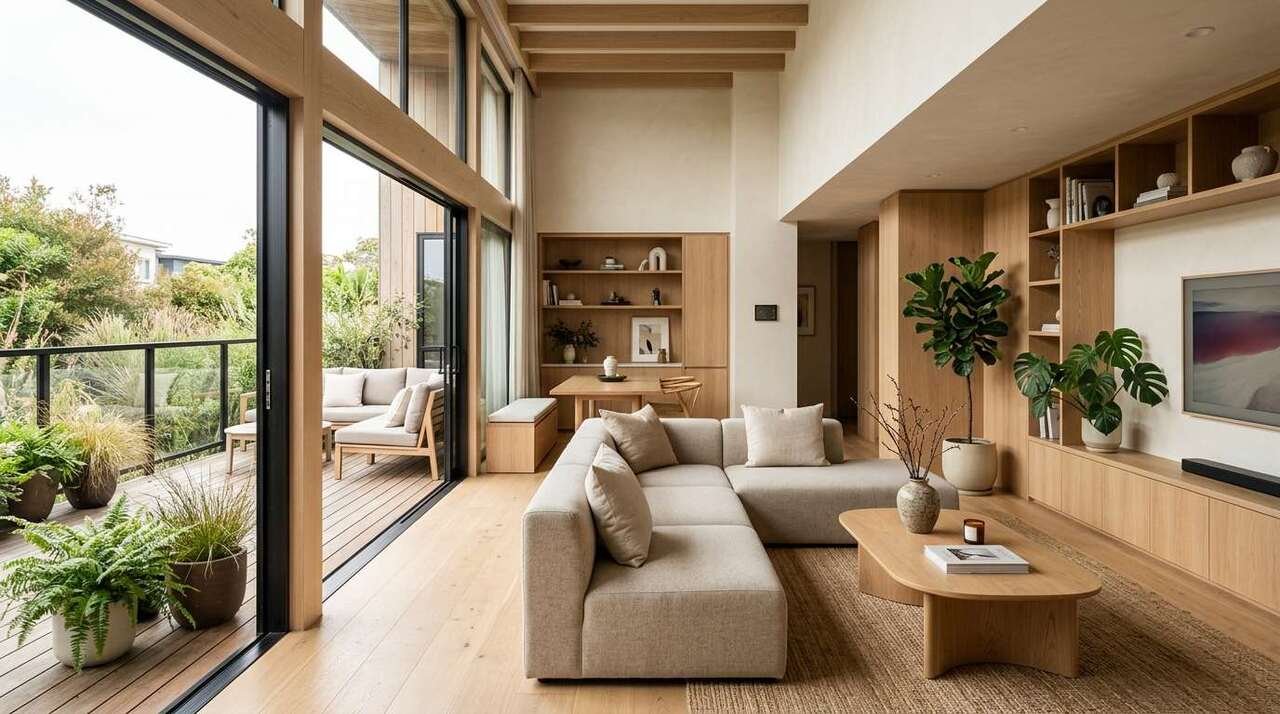

Our homes are no longer designed simply as places to eat, sleep, and store belongings. The modern home evolution reflects a broader change in the way we work, relax, entertain, organize, and connect with technology. As lifestyles become more flexible and personal priorities shift, residential spaces are adapting to support comfort, functionality, efficiency, and individual expression.
We are seeing a move away from rigid room-by-room layouts toward homes that can respond to different activities throughout the day. A dining area can become a workspace, a spare bedroom can serve as a creative studio, and an outdoor space can function as an extension of the living room.
This evolution isn’t about following every interior design trend. It is about creating homes that work better for the people who live in them.
Table of Contents
What Is the Modern Home Evolution?
The modern home evolution describes the gradual transformation of residential spaces in response to changing lifestyles, technology, design preferences, and practical needs.
Traditional homes often assigned one primary purpose to each room. Today, we increasingly value flexibility. We want spaces that can accommodate multiple activities without feeling cluttered or uncomfortable.
Several ideas are driving this transformation:
- Flexible and multifunctional rooms
- Smarter home technology
- More efficient storage
- Natural light and connection to the outdoors
- Comfort-focused furniture
- Sustainable materials and energy-conscious choices
- Minimalist organization
- Personalized interior design
- Dedicated spaces for remote work and hobbies
- Greater emphasis on wellness at home
The result is a home that feels less like a collection of separate rooms and more like a connected environment designed around everyday life.
From Formal Rooms to Flexible Living Spaces
One of the clearest changes in residential design is the decline of strictly defined spaces.
A formal dining room may once have been used primarily for special meals. In a contemporary home, that same space might function as a dining area, homework station, home office, or entertaining zone.
This doesn’t mean every room needs to perform five different functions. Instead, we are becoming more intentional about how available space is used.
A flexible home layout can include furniture that serves multiple purposes, movable pieces that can be rearranged, and subtle visual divisions that create separate zones without requiring permanent walls.
For smaller homes and apartments, this approach can be particularly valuable.
The Rise of Multifunctional Furniture
Furniture is playing an important role in the modern transformation of residential interiors.
Instead of filling a room with individual pieces for every possible purpose, we can choose furnishings that provide greater flexibility.
Examples include:
- Storage ottomans that provide seating and hidden storage
- Extendable dining tables
- Sofa beds for occasional guests
- Wall-mounted desks
- Modular shelving systems
- Benches with built-in compartments
- Nesting tables
- Foldaway workstations
- Beds with integrated drawers
The goal is not simply to own fewer things. It is to make every major piece of furniture earn its place.
A well-designed multifunctional piece can help us maintain an uncluttered appearance while making a room considerably more practical.
Smart Home Technology Is Changing Everyday Living
Technology has become another defining element of the modern home.
Smart lighting, connected thermostats, security systems, voice-controlled devices, automated window treatments, and energy-monitoring systems can change how we interact with our surroundings.
The most successful technology tends to be the technology we barely notice.
For example, automated lighting can adjust throughout the day without requiring constant interaction. Smart thermostats can help manage indoor temperatures more efficiently. Connected security systems can provide information about doors, windows, cameras, and activity when we are away.
The purpose of smart home technology should be convenience and control, rather than adding devices simply because they are available.
A thoughtfully connected home can reduce repetitive tasks and allow us to manage different aspects of the house more easily.
The Home Office Has Become a Permanent Design Consideration
The modern home increasingly needs to support professional life as well as personal life.
Even when we do not work remotely every day, having a comfortable place for focused computer work, studying, administration, or creative projects can make a home more useful.
A dedicated office is ideal when space allows, but it isn’t essential.
A compact workspace can be created beneath a staircase, along a hallway wall, inside a spare bedroom, or within part of a larger living area.
The key is to establish a clear working zone.
A comfortable chair, appropriate lighting, organized cable management, sufficient storage, and a suitable desk can make even a small workspace feel intentional.
Natural Light Has Become a Design Priority
Modern residential design increasingly emphasizes the relationship between indoor and outdoor environments.
Large windows, glass doors, skylights, reflective surfaces, light-colored walls, and carefully positioned mirrors can help maximize the perception of natural light.
Natural light can also influence how colors, textures, and materials appear throughout the day.
Rather than treating windows as simple architectural openings, we can use them as important design features.
Window treatments should provide privacy and light control without unnecessarily blocking daylight.
The same principle applies to outdoor views. A garden, balcony, courtyard, terrace, or even a collection of plants near a window can strengthen the connection between the interior and exterior.
Biophilic Design Brings Nature Indoors
Our relationship with nature has also influenced contemporary interiors.
Biophilic home design incorporates natural elements into living spaces through plants, wood, stone, natural fibers, organic shapes, water features, and views of greenery.
Houseplants remain one of the simplest ways to introduce this concept. But biophilic design can go much further.
A room might combine:
- Natural wood furniture
- Linen curtains
- Woven baskets
- Stone surfaces
- Indoor plants
- Organic textures
- Natural daylight
- Earth-inspired materials
The objective is to create an environment that feels connected to the natural world without making the interior look themed or artificial.
Minimalism Is Evolving Into Intentional Living
Minimalism has often been associated with empty rooms and extremely limited possessions. Modern interiors are taking a more practical approach.
We can think of this newer approach as intentional living.
The objective isn’t necessarily to own as little as possible. It is to keep things that are useful, meaningful, beautiful, or genuinely enjoyed while reducing unnecessary visual and physical clutter.
This creates homes that feel calmer without sacrificing personality.
A comfortable reading chair, favorite artwork, treasured photographs, or collection of books can contribute warmth and character. The difference is that these objects are selected deliberately rather than accumulated without consideration.
Storage Is Becoming Part of the Architecture
As homes become more multifunctional, effective storage becomes increasingly important.
Poor storage can quickly undermine an otherwise beautiful interior.
Modern storage solutions often integrate directly into the architecture or furniture. Built-in cabinets, floor-to-ceiling shelving, under-bed storage, concealed drawers, window-seat compartments, and customized closets can make better use of available space.
Vertical space is particularly valuable in smaller homes.
Tall shelving can take advantage of unused wall space while keeping frequently used objects accessible. Closed cabinetry can conceal everyday clutter, while open shelving can display carefully selected decorative pieces.
The most effective storage strategy combines both.
The Kitchen Is Becoming a Social Hub
The kitchen has undergone one of the most significant transformations in residential design.
Rather than functioning only as a food-preparation area, the contemporary kitchen frequently serves as a place for dining, conversation, homework, entertaining, and informal work.
Kitchen islands can provide preparation space, seating, storage, and a natural gathering point.
Open-plan layouts can strengthen connections between kitchens and living areas, although partially separated kitchens are also becoming attractive to people who prefer greater privacy and noise control.
The ideal approach depends on how a household actually uses the space.
Bathrooms Are Becoming Personal Retreats
The modern bathroom is also moving beyond basic functionality.
We increasingly see bathrooms designed around comfort, organization, visual simplicity, and a sense of relaxation.
Features such as walk-in showers, floating vanities, layered lighting, heated flooring, large mirrors, natural materials, and integrated storage can make an ordinary bathroom feel considerably more refined.
However, a sophisticated bathroom does not require expensive finishes everywhere.
Thoughtful lighting, clean lines, coordinated materials, attractive hardware, and effective organization can produce a polished result without excessive decoration.
Outdoor Spaces Are Becoming Extensions of the Home
Balconies, patios, terraces, courtyards, and gardens are increasingly treated as genuine living spaces.
Comfortable outdoor furniture, lighting, weather-resistant textiles, planters, privacy screens, and outdoor cooking areas can transform underused areas into functional extensions of the interior.
Even a small balcony can become a morning coffee space or compact reading retreat.
The modern home therefore extends beyond its interior walls.
Sustainability Is Becoming Part of Home Design
Another important aspect of the modern home evolution is greater awareness of environmental impact.
Homeowners can make more sustainable choices through energy-efficient appliances, durable materials, responsible furniture purchases, improved insulation, efficient lighting, water-saving fixtures, and thoughtful maintenance.
Sustainability doesn’t always mean replacing everything with the newest product.
Sometimes the more responsible choice is to repair, reuse, refinish, or repurpose what we already own.
Choosing durable materials and timeless furniture can also reduce the need for frequent replacement.
Personal Style Matters More Than Following Trends
Modern interiors don’t need to look identical.
One home may combine Scandinavian simplicity with warm wood. Another may use traditional furniture alongside contemporary lighting. A third might combine vintage pieces, modern architecture, and handmade accessories.
The most successful spaces often reflect the people who live there.
Instead of asking which trend is currently popular, we can ask more useful questions:
What do we actually use?
What makes us comfortable?
Which possessions have meaning?
How should the space function during an ordinary day?
These questions lead to interiors that are more personal and often more enduring.
How to Create a More Modern Home Without Remodeling
A complete renovation isn’t necessary to participate in the modern home evolution.
Small changes can produce meaningful improvements.
1. Improve the Lighting
Replace harsh single-source lighting with a combination of ambient, task, and accent lighting.
2. Reduce Visible Clutter
Remove items that no longer serve a purpose and create dedicated homes for frequently used belongings.
3. Introduce Flexible Furniture
Choose pieces that can perform more than one function, particularly in smaller rooms.
4. Create Functional Zones
Use rugs, furniture placement, lighting, or shelving to define different activities within an open room.
5. Bring in Natural Elements
Add plants, wood, woven textures, stone, or natural fabrics to introduce warmth.
6. Upgrade Small Details
New cabinet hardware, modern light fixtures, mirrors, curtains, and textiles can significantly change the character of a room.
7. Make Technology Less Visible
Organize cables, conceal unnecessary devices, and integrate smart technology without allowing it to dominate the visual design.
The Future of the Modern Home
The next stage of home design will likely continue to prioritize adaptability, comfort, efficiency, technology, and personalization.
Homes need to accommodate increasingly varied routines. We may work from home one day, entertain friends the next, exercise indoors, pursue hobbies, care for family members, and use the same rooms for completely different purposes.
That makes adaptability more valuable than rigid design.
Future homes will also continue to balance technology with human comfort. Automated systems can make a home more convenient, but natural materials, comfortable furniture, daylight, greenery, and personal objects remain essential to making a space feel genuinely inviting.
The modern home is therefore not defined by a particular color palette, furniture style, or architectural trend.
It is defined by how effectively the space supports real life.
A More Intentional Approach to Home Design
The modern home evolution is ultimately a shift from designing rooms for appearance alone toward designing environments around everyday experience.
We can create better homes by considering how we actually move through them, where we naturally spend time, what creates unnecessary friction, and which elements contribute to comfort.
A beautiful home can also be practical.
A technologically advanced home can still feel warm.
A minimalist home can still have personality.
A sustainable home can still be stylish.
And a small home can still feel spacious when every element has a clear purpose.
The most meaningful modern interiors are not necessarily the most expensive or elaborate. They are the ones that combine functionality, comfort, beauty, and personal character in a way that makes everyday living easier and more enjoyable.
As lifestyles continue to change, our homes will continue changing with them. The future of residential design is not simply about building newer houses. It is about creating smarter, more flexible, more comfortable, and more intentional places to live.

Leave a Reply