
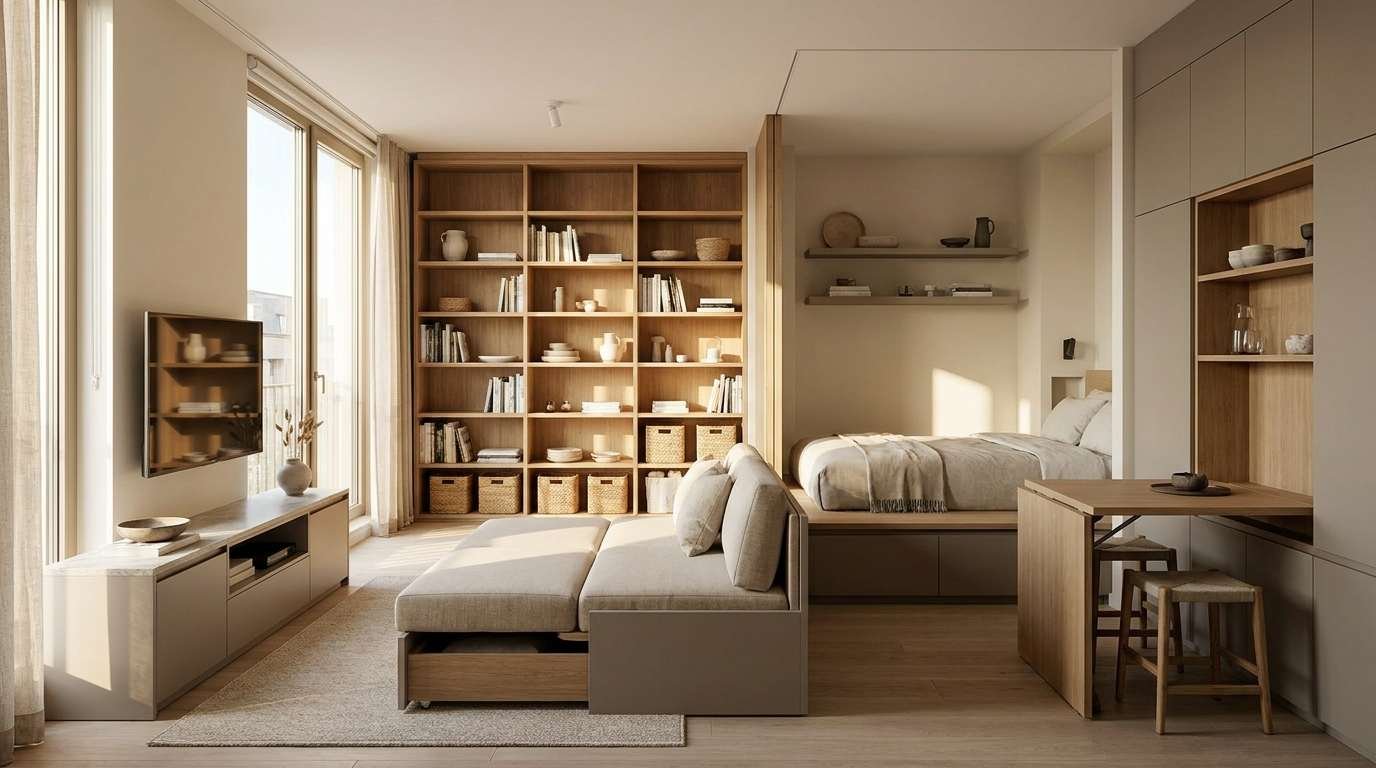

Small homes don’t necessarily need less stuff—they need smarter ways to store it. The best genius storage solutions for small spaces make every square foot work harder without making a room feel crowded.
From forgotten wall space and the area beneath your bed to multifunctional furniture, hidden cabinets, and vertical shelving, there are plenty of ways to increase storage without expanding your home. The trick is to stop thinking only in terms of floor space and start looking at the walls, corners, doors, ceilings, and unused gaps around furniture.
This guide covers practical storage ideas for apartments, studios, tiny bedrooms, compact kitchens, small bathrooms, and other spaces where every inch matters.
Table of Contents
What Makes a Storage Solution “Genius”?
A genius storage solution does more than give you somewhere to put things. It solves a specific space problem while keeping your home functional and visually calm.
The most effective small-space storage ideas usually do at least one of these things:
- Uses vertical space instead of valuable floor area
- Turns an unused area into functional storage
- Combines furniture and storage
- Hides clutter behind doors or panels
- Makes frequently used items easier to reach
- Uses awkward corners efficiently
- Creates storage without making the room feel smaller
- Gives one piece of furniture multiple purposes
The goal isn’t to squeeze more containers into a room. It’s to make storage part of the room’s design.
1. Think Vertically Before Adding More Furniture
When floor space is limited, look up.
Walls offer some of the most underused storage real estate in a small home. Tall bookcases, wall-mounted cabinets, floating shelves, pegboards, and vertical organizers can dramatically increase capacity without consuming much floor area.
A floor-to-ceiling shelving system is particularly effective because it uses the full height of the room rather than stopping at eye level.
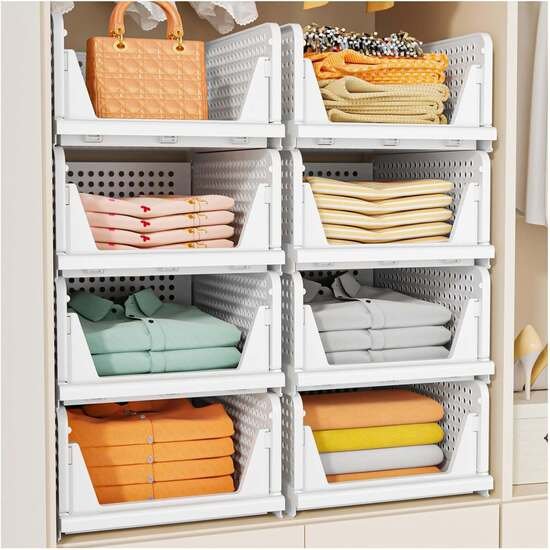
Try these vertical storage ideas:
- Floor-to-ceiling bookshelves
- Tall narrow cabinets
- Floating shelves
- Wall-mounted baskets
- Pegboards
- Vertical kitchen rails
- Over-the-door organizers
- Hanging planters
- Wall-mounted shoe racks
Expert tip: Keep frequently used items between waist and eye level. Reserve the highest shelves for seasonal or rarely needed belongings.
2. Turn the Space Under Your Bed Into a Storage Zone
The space underneath a bed is one of the easiest places to add hidden storage.
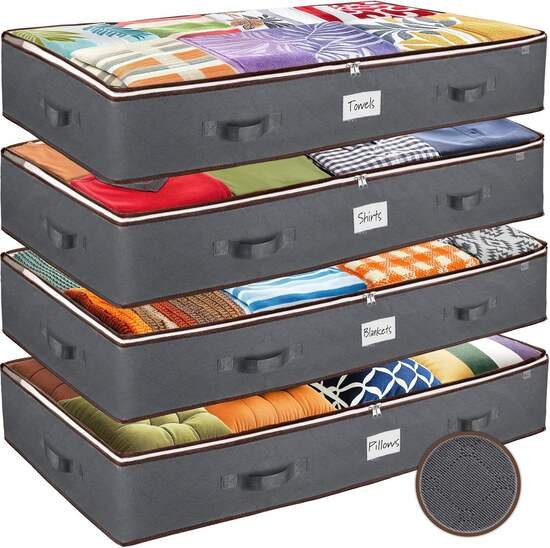
Instead of allowing it to collect dust, use low-profile storage boxes, rolling drawers, or purpose-built under-bed containers.
It’s ideal for belongings you don’t need every day, such as:
- Winter clothing
- Extra bedding
- Shoes
- Luggage
- Seasonal decorations
- Spare towels
For a cleaner appearance, choose containers that fit completely beneath the bed so nothing visually spills into the room.
Better still: choose a storage bed
A platform bed with built-in drawers or hydraulic lift storage can provide substantial hidden capacity without requiring another piece of furniture.
This is particularly useful in small bedrooms where a traditional dresser may consume too much floor space.
3. Use the Back of Every Door
Doors aren’t just entrances and exits. They’re potential storage surfaces.
An over-the-door organizer can create additional space for accessories, cleaning products, toiletries, shoes, pantry items, or small household supplies.
In a bathroom, the back of a cabinet door can hold:
- Hair tools
- Brushes
- Cosmetics
- Cleaning supplies
- Small bottles
In a bedroom, an over-door organizer can help store scarves, handbags, shoes, or accessories.
The key is choosing slim organizers that don’t interfere with the door closing.
4. Install Floating Shelves in Dead Wall Space
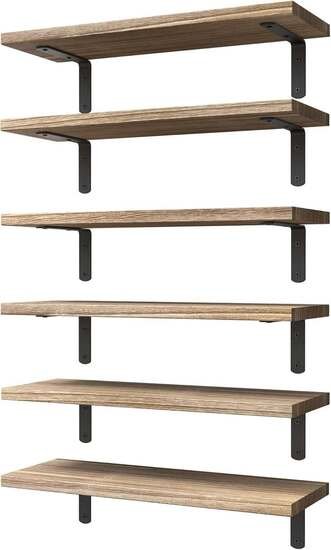
Floating shelves are among the simplest small-space storage ideas because they provide storage without adding bulky furniture.
Look for forgotten wall areas above:
- Toilets
- Desks
- Beds
- Sofas
- Kitchen counters
- Entryway benches
- Laundry machines
Instead of filling every shelf with decorative objects, combine useful storage with a few visually appealing pieces.
For example, a small entryway shelf could hold keys, sunglasses, mail, and a decorative vase.
That turns an otherwise unused wall into a practical drop zone.
5. Make Your Entryway Work Harder
Small entryways often become clutter magnets.
Shoes, coats, bags, umbrellas, keys, and mail can quickly overwhelm a narrow entrance.
A compact entryway system can solve several problems at once.
Consider combining:
- Wall hooks
- A narrow shoe cabinet
- A small floating shelf
- A mirror
- Baskets
- A slim bench with hidden storage
A simple entryway formula
Hooks + shelf + shoe storage + mirror = functional small entryway.
If you don’t have room for a traditional console table, mount a narrow shelf directly to the wall.
6. Choose Furniture That Does Double Duty
In a small home, furniture should ideally perform more than one job.
This is one of the most powerful principles of compact interior design.
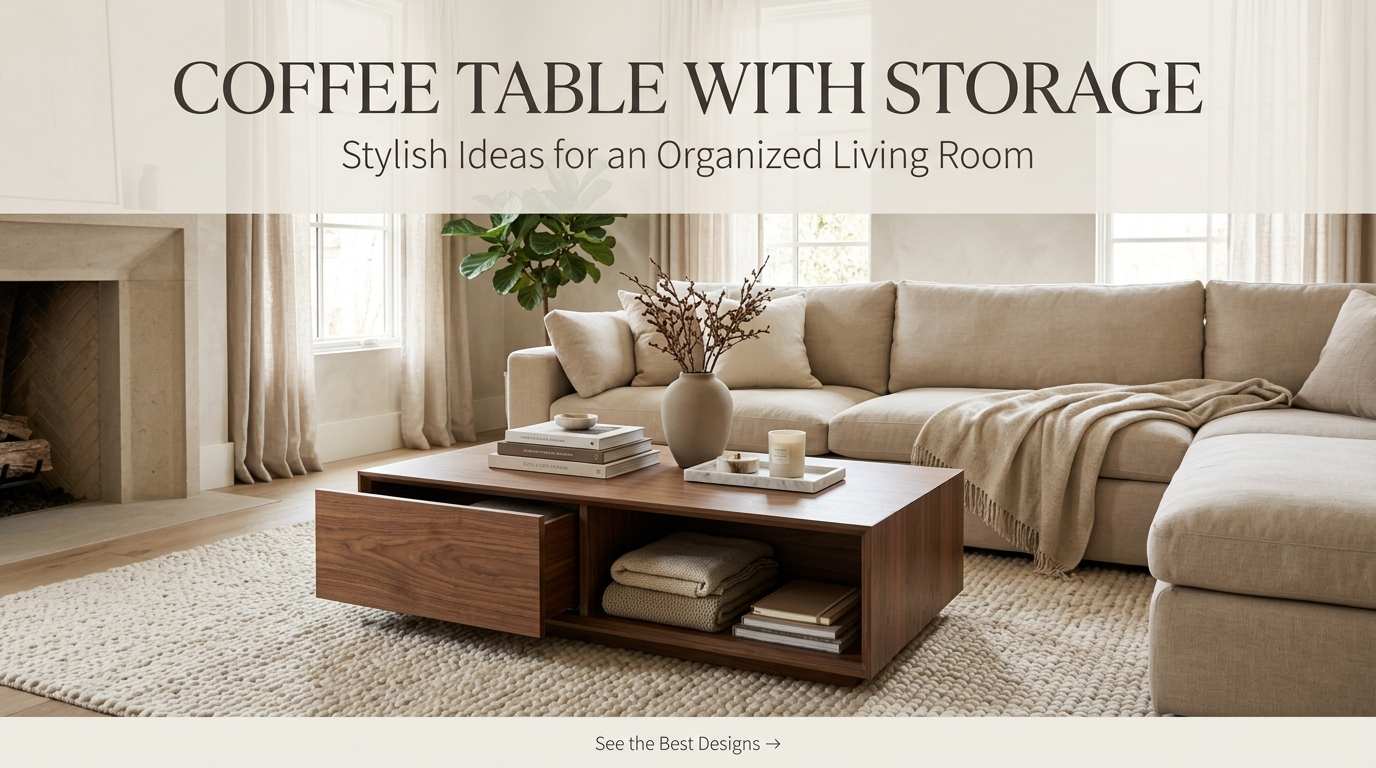
Instead of buying a coffee table that only functions as a coffee table, consider a design with:
- Hidden compartments
- Lift-up tops
- Drawers
- Shelves
- Nesting surfaces
Other examples include:
| Furniture | Storage opportunity |
|---|---|
| Ottoman | Blankets, games, accessories |
| Bed | Drawers or lift-up storage |
| Bench | Shoes, bags, linens |
| Sofa | Hidden compartments |
| Desk | Drawers and shelving |
| Side table | Books and small essentials |
| Staircase | Pull-out drawers or cabinets |
The best multifunctional furniture gives you storage without making the room look like a storage room.
7. Exploit Awkward Corners
Small homes often contain corners that are too narrow or oddly shaped for conventional furniture.
Don’t ignore them.
A narrow corner can accommodate:
- A triangular shelf
- Tall corner shelving
- A slim cabinet
- A hanging organizer
- A compact desk
- A plant stand with baskets
Kitchen corners can be especially valuable. Corner drawers, rotating organizers, and custom shelving can make difficult cabinet areas considerably more useful.
The 6-inch rule
Even a narrow gap can sometimes become useful storage.
A slim pull-out cabinet between appliances or furniture can hold cleaning supplies, spices, toiletries, or other narrow items.
The lesson: measure before dismissing a space as unusable.
8. Use the Space Above Cabinets
The area above kitchen cabinets frequently becomes an awkward dust-collecting zone.
Depending on your kitchen design, it can instead be used for attractive storage.
Place infrequently used items in matching baskets or decorative boxes.
Good candidates include:
- Seasonal kitchenware
- Serving pieces
- Baking equipment
- Entertaining supplies
However, avoid storing everyday essentials there. Anything you use frequently should remain easy to access.
9. Create a Hidden Pantry
Don’t have a dedicated pantry?
You may not need one.
A narrow pull-out cabinet can transform an unused gap beside a refrigerator or cabinet run into valuable pantry storage.
Use it for:
- Spices
- Canned goods
- Oils
- Baking ingredients
- Pasta
- Snacks
Adjustable shelves make narrow pantry units even more versatile.
This is especially useful in compact kitchens where conventional cabinets can’t accommodate everything.
10. Use Magnetic Storage in the Kitchen
Magnetic organizers can turn vertical surfaces into storage areas.
A magnetic strip can hold certain kitchen tools, while magnetic containers can make use of the side of a refrigerator or another compatible metal surface.
Potential uses include:
- Spices
- Measuring spoons
- Small tools
- Kitchen scissors
- Notes and lists
The benefit is simple: you gain organization without occupying another drawer or countertop.
11. Make the Inside of Cabinets Work Harder
Opening a cabinet door often reveals a large amount of unused vertical space.
Attach appropriate organizers to the inside of cabinet doors to create additional storage for smaller items.
This works particularly well in:
- Bathrooms
- Kitchens
- Utility rooms
- Home offices
Instead of allowing small items to disappear into deep cabinets, organize them on the door where they’re visible and accessible.
12. Build Storage Around the Toilet
Bathrooms often have limited floor space, making vertical storage especially valuable.
The wall above the toilet can accommodate:
- Floating shelves
- Tall cabinets
- Recessed niches
- Baskets
- Narrow shelving units
Keep the design visually light.
Open shelving works well for attractive towels and baskets, while closed cabinets are better for products you don’t want on display.
13. Replace a Bulky Nightstand
A traditional bedside table can consume surprisingly valuable floor space.
If your bedroom is tight, consider:
- Floating nightstands
- Wall-mounted shelves
- Narrow pedestal tables
- Headboards with integrated shelves
- Wall-mounted cabinets
A floating shelf can provide just enough room for a lamp, phone, book, and glass of water while keeping the floor completely clear.
14. Choose a Headboard With Storage
A storage headboard can turn the wall behind your bed into functional furniture.
Look for designs incorporating:
- Shelves
- Cabinets
- Niches
- Lighting
- Small drawers
This can eliminate the need for conventional bedside furniture altogether.
For a minimalist bedroom, built-in storage around the headboard can create a particularly streamlined appearance.
15. Use Baskets to Control Visual Clutter
Storage isn’t only about capacity. It’s also about appearance.
Open shelves can quickly look messy when every individual item is visible.
Baskets provide a simple solution.
Use matching or coordinated baskets to group:
- Toys
- Cables
- Blankets
- Accessories
- Cleaning supplies
- Small household items
A useful organizing rule
Open storage is best for attractive or frequently used items. Closed storage is best for visual clutter.
This simple distinction can make a small room feel significantly calmer.
16. Turn the Staircase Into Storage
If your home has stairs, look underneath them.
The triangular space beneath a staircase can become:
- Drawers
- Cabinets
- Shelving
- A pantry
- A compact home office
- Coat storage
This is one of the best examples of designing around architecture rather than adding furniture afterward.
For homeowners planning renovations, built-in under-stair storage can be particularly valuable.
17. Use Narrow Furniture Instead of Smaller Furniture
There’s an important difference between small and slim.
A small room doesn’t necessarily require tiny furniture. It often needs furniture with a narrow footprint.
For example, a tall cabinet that’s only 30 cm deep may provide more useful storage than a wide, shallow cabinet.
Look for:
- Slim bookcases
- Narrow consoles
- Vertical dressers
- Slim shoe cabinets
- Narrow rolling carts
This preserves walking space while increasing storage capacity.
18. Add Rolling Storage
Mobility is an underrated storage advantage.
A slim rolling cart can fit into narrow gaps and move wherever you need it.
Use one in:
- Kitchens
- Bathrooms
- Laundry rooms
- Offices
- Bedrooms
For example, a narrow kitchen cart can hold pantry supplies and slide between the refrigerator and a wall when not needed.
19. Use the Space Behind the Sofa
If your sofa isn’t directly against a wall, the area behind it can become useful storage.
A slim console behind the sofa can provide space for:
- Books
- Lamps
- Decorative objects
- Charging stations
- Baskets
In a small living room, this can function as both furniture and a subtle room divider.
20. Create a Vertical Cleaning Closet
Cleaning equipment can be surprisingly difficult to store in compact homes.
Instead of allowing brooms, mops, vacuums, and supplies to occupy random corners, create a dedicated vertical storage area.
A narrow utility cabinet can organize:
- Brooms
- Mops
- Dustpans
- Cleaning sprays
- Vacuum accessories
Wall-mounted hooks can also keep long tools upright and off the floor.
21. Use Pegboards for Flexible Storage
Pegboards aren’t just for workshops.
A well-designed pegboard can provide flexible organization in:
- Home offices
- Kitchens
- Craft rooms
- Entryways
- Utility rooms
The major advantage is adaptability. Hooks, shelves, baskets, and holders can be rearranged as your storage needs change.
This makes pegboards particularly useful when you’re unsure exactly how your storage system will evolve.
22. Store Seasonal Items Strategically
Not everything needs to be immediately accessible.
Seasonal items should occupy the hardest-to-reach storage areas.
Use high shelves, under-bed compartments, upper cabinets, or deep storage bins for things such as:
- Holiday decorations
- Winter clothing
- Beach accessories
- Seasonal bedding
- Special-event supplies
Keep everyday essentials in the easiest-to-reach locations.
This simple change can make an existing storage system feel much larger.
23. Declutter Before Buying More Storage
Here’s the storage mistake people often overlook:
Buying storage doesn’t automatically solve an organization problem.
If you have too many belongings, adding containers can simply create more places to hide clutter.
Before buying another organizer, ask:
- Do I use this?
- Do I need to keep it?
- Do I own duplicates?
- Is there a better place for it?
- Would someone else get more use from it?
Then organize what’s left.
A smaller collection of useful belongings is much easier to store than a larger collection of things you rarely use.
The Small-Space Storage Formula
If you’re overwhelmed by where to start, use this simple framework:
Step 1: Find unused space
Look at:
- Walls
- Corners
- Doors
- Under furniture
- Above cabinets
- Behind furniture
- Narrow gaps
- Staircases
Step 2: Categorize your belongings
Group items by how often you use them:
Daily → easiest access
Weekly → convenient storage
Seasonal → higher or deeper storage
Rarely used → least accessible storage
Step 3: Match storage to the item
Don’t buy organizers first.
Identify what needs storing, then choose the appropriate solution.
Step 4: Prioritize vertical solutions
When floor space is limited, use height.
Step 5: Hide visual clutter
Use cabinets, drawers, baskets, and boxes where appropriate.
Small-Space Storage: What Should You Choose?
| Problem | Best solution | Why it works |
|---|---|---|
| Limited floor space | Vertical shelving | Uses wall height |
| Tiny bedroom | Storage bed | Uses otherwise wasted space |
| Narrow kitchen | Pull-out pantry | Uses slim gaps |
| Small entryway | Wall hooks + shoe cabinet | Keeps floor clear |
| Tiny bathroom | Over-toilet storage | Uses vertical wall space |
| Cluttered living room | Storage ottoman | Combines seating and storage |
| Awkward corner | Corner shelving | Uses difficult spaces |
| Too many accessories | Door organizers | Adds hidden capacity |
| Limited desk space | Pegboard | Moves storage upward |
| Seasonal clutter | Under-bed bins | Keeps rarely used items hidden |
Common Small-Space Storage Mistakes
Even a good storage system can fail when it’s poorly planned.
1. Filling every available surface
More storage isn’t always better. Overloading shelves can make a room feel visually smaller.
2. Ignoring accessibility
If you need a ladder every time you want something, the storage system isn’t practical for everyday use.
3. Buying containers before measuring
Measure shelves, cabinets, drawers, and gaps first.
4. Mixing too many storage styles
A room can quickly feel chaotic when every basket and organizer looks different.
5. Storing everything in open shelving
Open storage is attractive until every small object becomes part of the room’s visual landscape.
6. Forgetting future needs
A storage system should accommodate changes rather than only solving today’s problem.
How to Make Small-Space Storage Look Stylish
Functional storage doesn’t have to look utilitarian.
For a more polished interior:
- Choose storage in colors that complement the room.
- Use matching baskets where multiple containers are visible.
- Mix closed and open storage.
- Keep decorative objects to a minimum.
- Repeat materials for visual consistency.
- Choose furniture with clean silhouettes.
- Hide cables whenever possible.
- Leave some empty shelf space.
That last point matters.
Empty space is part of good organization.
A shelf that’s 100% full may technically maximize capacity, but a shelf that’s 80% full often looks and functions better.
A 15-Minute Small-Space Storage Audit
Want a quick starting point?
Set a timer for 15 minutes and walk through your home.
Write down:
Three unused vertical spaces
Two awkward corners
One piece of furniture that could provide storage
One door that could hold an organizer
One area underneath furniture that’s currently unused
Then choose the easiest improvement and complete it first.
Small improvements compound quickly.
Key Takeaways
- Think vertically when floor space is limited.
- Use the space beneath beds, sofas, cabinets, and stairs.
- Turn doors and unused walls into storage surfaces.
- Choose multifunctional furniture whenever possible.
- Use narrow furniture to preserve walking space.
- Combine open storage with baskets and closed cabinets.
- Organize seasonal items in harder-to-reach areas.
- Measure spaces before purchasing organizers.
- Declutter before adding more storage.
- Remember that good storage should improve both function and visual calm.
Suggested Reads: Tiny Apartment Ideas: Maximizing Your Space
Frequently Asked Questions
What are the best storage solutions for very small spaces?
The best solutions usually maximize vertical and hidden storage. Consider floor-to-ceiling shelving, storage beds, floating shelves, over-door organizers, multifunctional furniture, narrow cabinets, and under-furniture storage.
How can I add storage without making a small room feel crowded?
Prioritize wall-mounted, vertical, built-in, and concealed storage. Keeping floor space open is particularly important because clear walking areas can make a small room feel more spacious.
What is the most overlooked storage space in a small home?
Walls, the backs of doors, areas beneath furniture, and narrow gaps between cabinets or appliances are frequently overlooked. These spaces can provide meaningful additional storage without requiring much floor area.
Is open shelving good for small spaces?
Open shelving can work well when used selectively. It’s best for attractive or frequently accessed belongings. For miscellaneous items and visual clutter, closed cabinets or baskets usually create a cleaner appearance.
How do I organize a small bedroom with no closet?
Use a combination of a storage bed, tall dresser, slim wardrobe, under-bed containers, wall hooks, floating shelves, and door-mounted organizers. Prioritize vertical storage to preserve floor space.
How can I make a small kitchen more organized?
Use vertical wall storage, magnetic organizers, pull-out pantry cabinets, cabinet-door organizers, drawer dividers, and storage containers that make the most of cabinet height.
Should I declutter before buying storage?
Yes. Decluttering first helps you understand how much storage you actually need. Otherwise, you may spend money organizing belongings you don’t use.
How do I maximize storage in a rental?
Focus on removable solutions such as tension rods, over-door organizers, freestanding shelving, adhesive hooks where appropriate, rolling carts, and furniture with built-in storage. Always check your lease before making permanent modifications.
Leave a Reply