

An elegant table setting turns an ordinary meal into a polished dining experience. The right combination of dinnerware, glassware, flatware, linens, lighting, and decorative details creates a table that feels intentional without becoming crowded.
Whether we are preparing a formal dinner, holiday gathering, romantic meal, wedding reception, or sophisticated everyday table, the same principles apply: establish a clear place setting, create visual balance, coordinate materials, and leave enough room for guests to dine comfortably.
This guide covers elegant table setting ideas, formal table etiquette, centerpiece placement, color combinations, seasonal styling, and practical ways to create a refined table at home.
Table of Contents
What Is an Elegant Table Setting?
An elegant table setting combines functional dining pieces with coordinated decorative details to create a refined presentation. A typical arrangement includes a charger or placemat, dinner plate, napkin, fork, knife, spoon, water glass, wine glass, and a carefully chosen centerpiece.
Elegance comes from proportion and coordination. Matching every item perfectly isn’t required. In fact, combining different textures—such as linen, ceramic, glass, wood, and polished metal—can make the table feel more sophisticated.
The most successful tables usually have three characteristics:
- A defined place setting for every guest
- A restrained decorative scheme with two or three dominant colors
- Enough practical space for plates, glasses, serving dishes, and comfortable movement
The table should look beautiful before dinner begins while remaining easy to use once guests sit down.
How to Set an Elegant Dinner Table
For a classic formal arrangement, begin with the plate and build outward.
Place the dinner plate in the center of each setting, approximately one inch from the table edge. If using a charger, position it underneath the dinner plate.
Place the fork to the left of the plate. The knife goes immediately to the right, with its blade facing inward toward the plate. Place the spoon to the right of the knife.
The napkin can sit on the plate, beneath the forks, or beside the place setting. For a particularly polished presentation, a folded linen napkin secured with a simple ring adds structure without taking up much space.
Glassware belongs above and slightly to the right of the dinner plate. A water glass generally occupies the most accessible position, while wine glasses can be arranged beside it according to the beverages being served.
Basic Elegant Place Setting
| Table Item | Recommended Position |
|---|---|
| Charger | Under the dinner plate |
| Dinner plate | Center of the place setting |
| Salad plate | Above or to the left of the dinner plate |
| Dinner fork | Left of plate |
| Salad fork | Left of dinner fork |
| Dinner knife | Right of plate |
| Soup spoon | Right of knife |
| Water glass | Above knife |
| Wine glass | Right of water glass |
| Napkin | On plate or beside forks |
This arrangement provides a classic foundation that works for dinner parties, holiday meals, anniversaries, and formal entertaining.
Elegant Table Setting Ideas for Different Occasions
The occasion should influence the level of formality.
A Sunday dinner may call for beautiful linen napkins, ceramic plates, and fresh flowers. A formal holiday dinner can support chargers, multiple glasses, polished flatware, candles, and layered textiles.
1. Classic White and Gold Table Setting
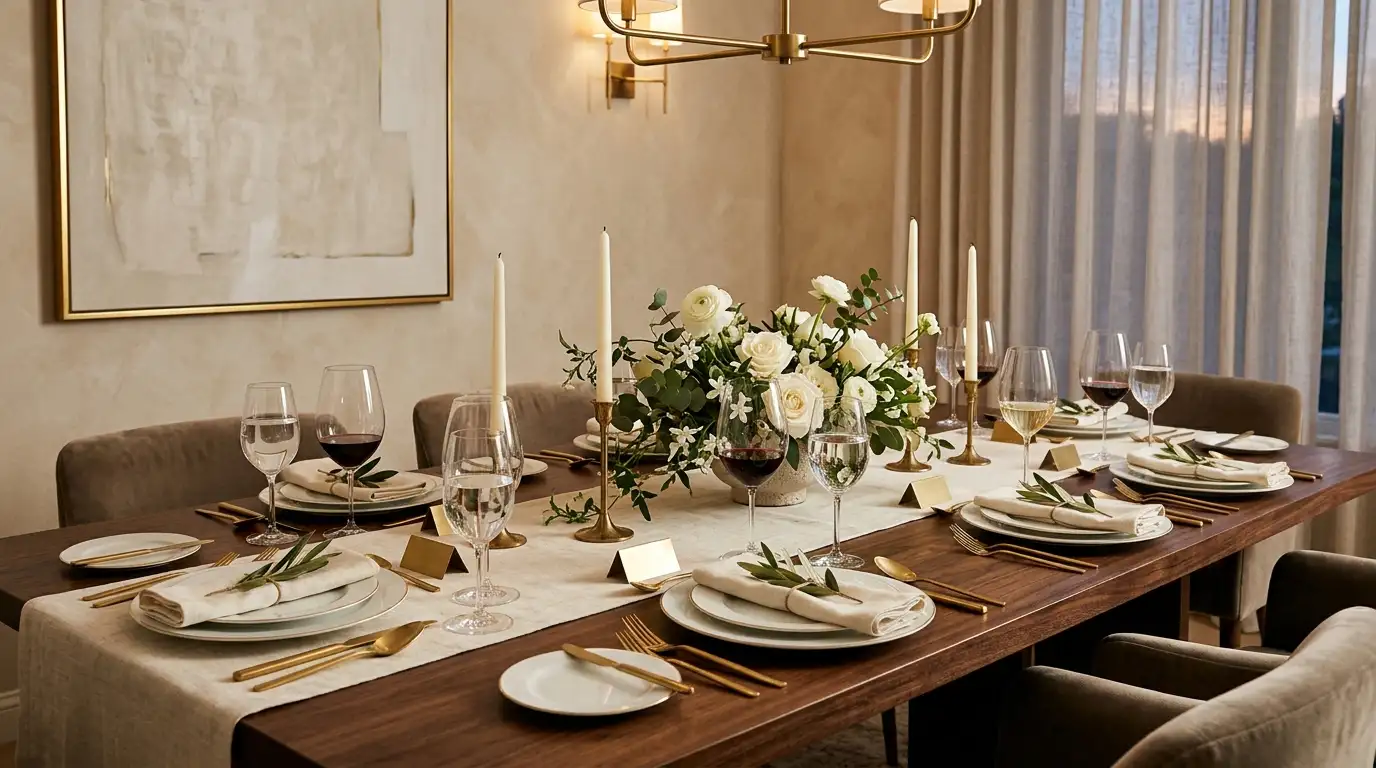
White dinnerware paired with gold or brass details creates one of the most versatile elegant table settings.
Use crisp white plates as the foundation. Add textured ivory linen napkins, gold-tone flatware, clear glassware, and a restrained centerpiece of white flowers or greenery.
The result feels sophisticated without depending on a seasonal theme.
2. Black and White Elegant Table
Black dinnerware creates a dramatic foundation when paired with white linens and clear glassware.
For balance, keep the centerpiece relatively light. White flowers, pale greenery, candles, or a simple sculptural arrangement can prevent the table from feeling visually heavy.
Black flatware can reinforce the color scheme, while silver or brass provides contrast.
3. Neutral Linen Table Setting
Neutral colors work beautifully for relaxed elegance.
Layer beige, cream, taupe, soft white, and natural wood. Linen napkins and a woven runner add texture while maintaining a quiet visual palette.
This approach works particularly well with organic dinnerware and handmade ceramics.
4. Romantic Table Setting
For an intimate dinner, focus on atmosphere.
Use soft linen napkins, low floral arrangements, taper candles, and warm-toned tableware. Keep the centerpiece low enough that guests can easily see one another across the table.
Muted blush, cream, champagne, burgundy, or dusty rose can create a romantic palette without making the table feel overly themed.
Choosing Elegant Dinnerware
Dinnerware provides the visual foundation for the entire table.
White porcelain remains a dependable choice because it works with almost every color palette. Cream and ivory plates create a warmer appearance, while dark ceramics bring more drama.
When selecting dinnerware, consider:
- Plate size
- Shape
- Rim width
- Finish
- Color
- Texture
- Durability
- Compatibility with the rest of the tableware
A slightly textured plate can make a simple table feel more layered. Handmade ceramics introduce subtle variation and work particularly well with linen and natural materials.
For frequent entertaining, we recommend choosing dinnerware that can transition between casual dinners and formal occasions.
Elegant Flatware: Silver, Gold, or Mixed Metals?
Flatware has a surprisingly strong visual impact.
Silver flatware creates a traditional and timeless appearance. It works especially well with white porcelain, crystal-style glassware, and formal linens.
Gold flatware introduces warmth and pairs beautifully with cream, beige, black, green, and blush palettes.
Matte black flatware creates a contemporary appearance, particularly when used with white, stone-colored, or earthy dinnerware.
Mixed metals can work, too. The key is repetition. If brass appears in the centerpiece, napkin rings, and candleholders, the combination feels deliberate rather than accidental.
Choosing Glassware for an Elegant Table
Glassware should complement the table without overwhelming it.
For a formal dinner, we may use:
- Water glasses
- Red wine glasses
- White wine glasses
- Champagne flutes when appropriate
The shape of each glass should correspond to its intended beverage, but the visual relationship between the glasses matters as well.
Avoid overcrowding each setting. Three beautifully arranged glasses often look more sophisticated than five different glasses competing for attention.
Clear glass is the easiest option for a versatile table. Cut glass or crystal-style designs add traditional formality, while simple stemware suits contemporary interiors.
Elegant Napkin Ideas
Napkins are one of the easiest ways to change the character of a table.
For an elegant setting, linen and high-quality cotton are excellent choices. Their natural texture immediately makes the table feel more considered.
Try these arrangements:
- Folded neatly on the dinner plate
- Rolled inside a decorative napkin ring
- Folded beneath the forks
- Draped casually beside the plate
- Tied with ribbon for a special occasion
- Finished with a small botanical sprig
For a formal dinner, we generally want the napkin fold to look intentional but remain practical for guests.
How to Choose a Centerpiece
A centerpiece should frame the table rather than block it.
For seated dinners, low arrangements are particularly practical because guests can maintain eye contact across the table.
Long rectangular tables often suit a linear arrangement of several small vases. Round tables can accommodate one central floral arrangement, bowl, candle grouping, or sculptural object.
Consider the overall height carefully. Tall arrangements can work when they are narrow or positioned where they don’t obstruct conversation.
Elegant Centerpiece Ideas
- White seasonal flowers
- Olive branches
- Eucalyptus
- Taper candles
- Low ceramic vessels
- Glass bud vases
- Fruit arranged in a shallow bowl
- Natural greenery
- Sculptural candleholders
- Seasonal branches
The centerpiece should also leave enough room for serving dishes.
Elegant Table Settings With Candles
Candlelight changes the atmosphere dramatically.
Taper candles provide vertical structure and a traditional dining-room appearance. Votive candles create small pools of light across the table.
For a sophisticated arrangement, use several candles at varying heights while keeping them within a coherent material or color family.
Unscented candles are usually the safest choice for dinner because strong fragrances can interfere with the aroma of food.
How to Choose Colors for an Elegant Table
A simple color strategy makes table styling easier.
Start with one foundation color, then add one supporting shade and one accent.
For example:
| Foundation | Supporting Color | Accent |
|---|---|---|
| White | Ivory | Gold |
| Cream | Beige | Brass |
| Black | White | Gold |
| Sage | Cream | Natural Wood |
| Navy | White | Silver |
| Burgundy | Ivory | Brass |
| Taupe | Linen | Matte Black |
Repeating each accent two or three times helps create visual consistency.
A gold napkin ring can be echoed through gold flatware or candleholders. Greenery in the centerpiece can be repeated through a small botanical detail at each place setting.
Elegant Table Setting Mistakes to Avoid
Beautiful tables can become impractical when decoration takes priority over dining.
Too Many Decorative Pieces
Every object occupies valuable table space. Keep the arrangement edited.
Centerpieces That Block Conversation
Guests should be able to see one another comfortably.
Too Many Colors
A large collection of unrelated colors can make even expensive tableware look disconnected.
Oversized Place Settings
Large chargers, multiple plates, numerous glasses, and decorative objects can quickly crowd the table.
Ignoring the Food
Serving dishes need somewhere to go. Reserve enough space for platters, bowls, sauces, bread, and utensils.
Using Fragile Pieces Without Considering the Occasion
A formal dinner may justify delicate glassware, while a relaxed family gathering may benefit from durable materials.
Elegant Table Settings for Holidays
Holiday tables provide an opportunity to add seasonal details without covering every available surface.
For Christmas, combine white dinnerware with evergreen branches, warm metallic accents, candles, and deep red or burgundy details.
For Thanksgiving, consider natural linen, ceramic plates, seasonal foliage, pears, pumpkins, or warm earthy colors.
For Easter, lighter linens, fresh flowers, pastel accents, and delicate glassware create a fresh seasonal appearance.
The best holiday tables usually have one strong seasonal theme supported by timeless tableware.
Elegant Everyday Table Settings
We don’t need a special occasion to create a beautiful table.
For everyday dining, choose a simple combination such as:
Ceramic plates + linen napkins + clear glasses + minimal centerpiece.
A small vase of fresh flowers or a bowl of seasonal fruit can serve as the centerpiece. Keep the arrangement simple enough that setting and clearing the table remains easy.
This approach brings a refined feeling to ordinary meals without turning every dinner into a formal event.
How to Make an Elegant Table Look Expensive
Expensive-looking tables rely heavily on texture and proportion.
Layer different materials rather than buying everything from the same collection. Pair smooth porcelain with textured linen. Combine transparent glass with metal accents. Add natural wood or greenery for warmth.
Ironically, restraint often creates a more luxurious appearance than abundance.
A beautifully pressed linen napkin, well-positioned flatware, clean glassware, and carefully chosen flowers can have more impact than a table covered with decorative objects.
Elegant Table Setting Checklist
Before guests arrive, check each place setting.
- Dinner plates are evenly positioned.
- Flatware is aligned.
- Knife blades face toward the plate.
- Glassware is clean and polished.
- Napkins are folded consistently.
- Centerpieces remain low enough for conversation.
- Candles are positioned safely.
- Serving dishes have adequate space.
- Chairs line up with the place settings.
- The table has enough visual breathing room.
These small details make the finished table feel deliberate.
Key Takeaways
- Elegant table settings begin with proper spacing and balanced place settings.
- White and neutral dinnerware provides a versatile foundation.
- Linen napkins add texture and refinement.
- Glassware should be coordinated and proportionate to the table.
- Low centerpieces make conversation easier.
- Two or three coordinated colors are usually enough.
- Gold, silver, brass, and black accents can dramatically change the table’s character.
- The most beautiful tables balance decoration with practical dining needs.
A thoughtfully arranged table changes the way a meal feels. With the right combination of dinnerware, linens, flatware, glassware, lighting, and restrained decoration, an everyday dining space can become a polished setting for memorable meals.
Frequently Asked Questions About Elegant Table Settings
What makes a table setting elegant?
An elegant table setting combines coordinated dinnerware, polished flatware, attractive glassware, quality linens, balanced decoration, and practical spacing. A restrained color palette and thoughtful proportions usually create the most refined result.
Where does the napkin go on an elegant table?
The napkin can sit on the dinner plate, beneath the forks, or beside the place setting. For formal occasions, placing a neatly folded linen napkin on the plate creates a clean presentation.
What colors are best for an elegant table setting?
White, ivory, cream, beige, black, navy, sage, burgundy, metallic gold, brass, and silver are versatile choices. Combining two primary shades with one accent color usually creates a cohesive table.
How tall should an elegant centerpiece be?
For seated dining, low centerpieces are usually the easiest option because they preserve eye contact. Taller arrangements can work when their shape allows guests to see around them comfortably.
Can we mix gold and silver tableware?
Yes. Gold and silver can work together when the combination is repeated deliberately. Keeping the rest of the table relatively restrained helps the mixed metals feel intentional.
How many glasses should be placed at each setting?
The number depends on the meal. A simple dinner may require a water glass and one wine glass, while a formal meal may include separate glasses for water, red wine, white wine, or sparkling wine.
How do we make an elegant table setting on a budget?
Start with simple white or neutral dinnerware, then invest in attractive linens and a few reusable decorative pieces. Fresh greenery, candles, and seasonal fruit can create an expensive-looking table without requiring a large collection of specialized accessories.

Leave a Reply