
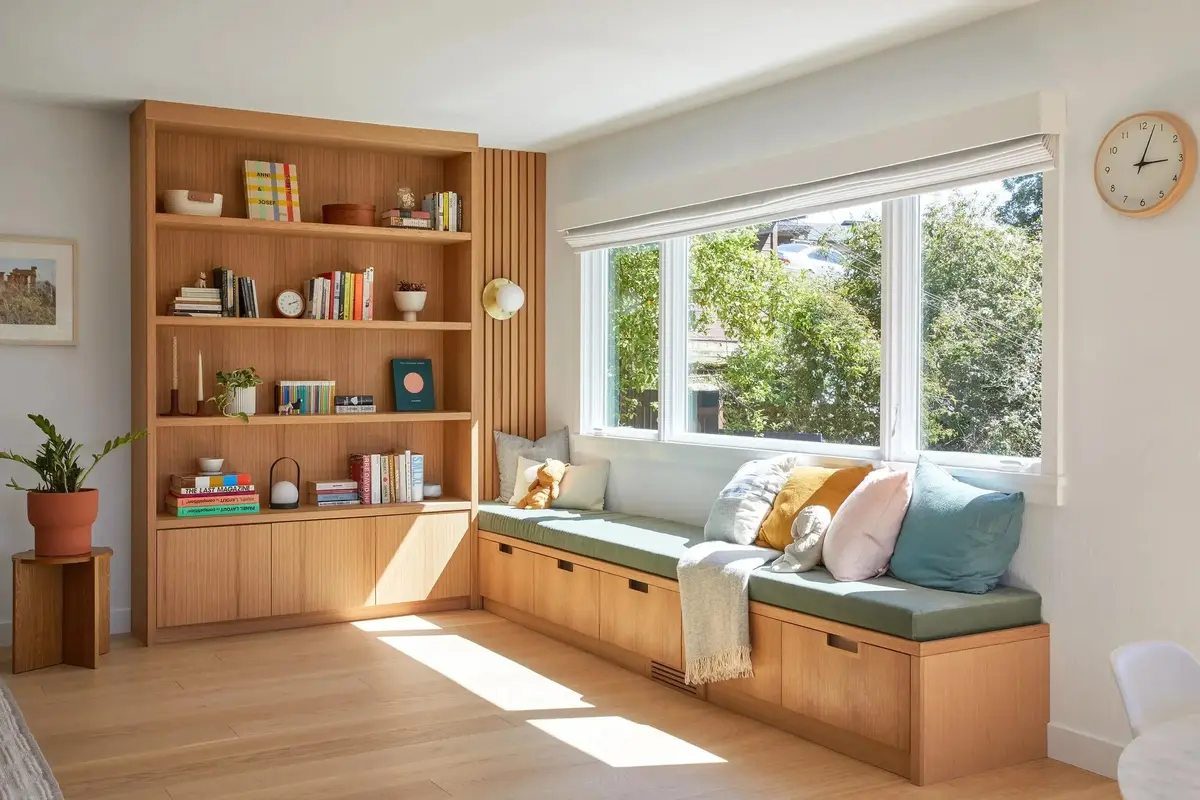

A kids reading nook bench with bookshelf creates a dedicated space where children can explore books, enjoy quiet moments, and develop a lifelong love of reading. By combining comfortable seating with accessible book storage, this multifunctional furniture piece transforms an unused corner, bedroom wall, or playroom area into an inviting reading retreat. It also helps families organize books, reduce clutter, and encourage independent reading without sacrificing valuable floor space.
The best reading nooks balance comfort, accessibility, safety, and visual appeal. Whether we are designing a small reading corner in a shared bedroom or a complete literary retreat in a playroom, a bench with an integrated bookshelf offers a practical foundation for a child-friendly space.
With thoughtful furniture selection, soft lighting, comfortable cushions, and carefully organized books, we can create a reading nook that grows alongside children and adapts to their changing interests.
Table of Contents
What Is a Kids Reading Nook Bench With Bookshelf?
A kids reading nook bench with bookshelf is a multifunctional furniture piece that combines a seat with integrated or attached book storage. Depending on the design, it may include open shelves, side bookcases, cubbies, drawers, or a storage compartment beneath the seat.
Unlike a conventional bookshelf placed against a wall, this furniture arrangement brings books and seating together in one convenient location. Children can select a favorite story, settle onto the bench, and return the book to its designated place when they finish reading.
These designs are available in different sizes, materials, and styles to accommodate toddlers, preschoolers, elementary-school children, and growing readers.
Some models feature a simple wooden bench with low shelves underneath. Others incorporate tall bookcases on either side, creating an enclosed reading alcove that feels like a small personal library.
The right configuration depends on the available room, the child’s age, the number of books to store, and whether the furniture will serve additional purposes.
For families who value practical interior design, a reading nook bench with bookshelf storage offers an effective way to combine everyday functionality with an attractive, organized environment.
Benefits of a Reading Nook Bench With Bookshelf for Kids
1. Encourages Independent Reading
Children are more likely to engage with books when reading materials are easy to see and reach. A low bookshelf allows young readers to browse their collection independently rather than relying on adults to retrieve every book.
Forward-facing book displays are particularly useful for younger children because they can recognize familiar covers before they can read titles confidently.
When books remain within reach, choosing a story becomes a natural part of the daily routine. A child might explore a picture book after breakfast, enjoy a bedtime story, or spend a quiet afternoon discovering a new subject.
We can strengthen this habit by keeping a small selection of appealing books in the nook and rotating them regularly.
2. Maximizes Space in Small Bedrooms
Bedrooms and playrooms often need to accommodate several activities, including sleeping, dressing, playing, studying, and reading. Adding separate chairs, bookshelves, and storage units can quickly consume valuable floor space.
A kids reading bench with built-in bookshelf combines two essential functions in a single footprint.
Some designs also provide hidden storage beneath the seat, making room for blankets, soft toys, puzzles, or reading accessories. This arrangement is especially useful in apartments, shared bedrooms, and compact homes.
For the best results, we should measure the intended location before purchasing furniture. The bench must leave enough clearance for doors, drawers, wardrobes, and comfortable movement around the room.
3. Keeps Children’s Books Organized
An inviting reading corner works best when books have a clear place to live.
Open shelves make it easy to separate picture books, early readers, educational titles, and favorite bedtime stories. Lower cubbies can accommodate baskets for small toys, while a storage compartment beneath the bench can hold extra cushions or seasonal reading materials.
We can simplify organization further by grouping books according to theme, reading level, or size.
However, an overly complicated system may discourage younger children from putting things away. A few accessible categories and clearly defined spaces are usually more practical than a rigid organizational structure.
4. Creates a Comfortable Quiet Retreat
Children benefit from having a dedicated place to relax away from busy play areas. A reading nook provides a familiar environment for quiet activities, independent exploration, and shared storytelling.
A padded bench, soft cushions, and a warm reading light can make the space feel welcoming without requiring an elaborate renovation.
For children who share a bedroom, a small reading corner can also provide a distinct activity zone. A rug, a change in wall color, or a simple canopy may help define the area without physically separating the room.
5. Adapts to Changing Needs
Children’s interests and reading abilities change as they grow. A well-chosen bench can remain useful long after picture books give way to chapter books.
We can select adjustable shelves, neutral furniture finishes, and replaceable cushions to make the nook easier to update.
As children get older, the same bench may become a comfortable place to read independently, listen to audiobooks, write in a journal, or relax after school.
Choosing versatile furniture from the beginning helps reduce the need for frequent replacements.
Best Kids Reading Nook Bench With Bookshelf Design Ideas
The most successful reading corners reflect both the available space and the child’s personality. We can create an attractive nook with built-in furniture, a freestanding bench, or a simple combination of shelving and comfortable seating.
1. Built-In Reading Bench With Side Bookshelves
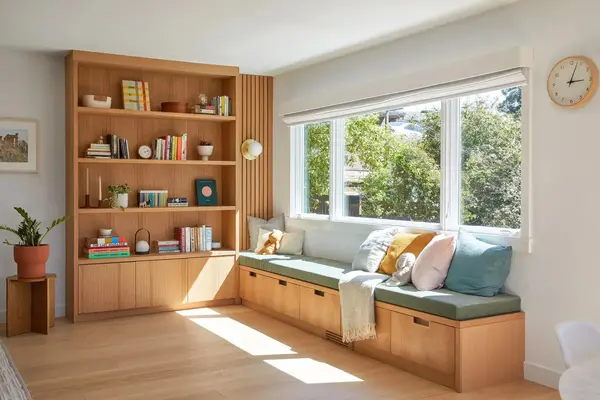
A built-in reading bench with bookshelves on either side creates a defined architectural feature. The shelving frames the seating area, giving it the appearance of a small personal library.
This design works particularly well beneath a window, along an unused bedroom wall, or inside a recessed alcove.
We can use painted wood, natural oak, or a warm neutral finish to complement the existing furniture. A fitted seat cushion adds comfort, while removable pillows introduce color and texture.
Built-in designs can also incorporate drawers underneath the bench for extra storage. Because the furniture is fitted to the room, careful planning and professional installation may be necessary.
Best for: Families seeking a permanent, integrated reading corner with generous book storage.
2. Window Reading Nook With Built-In Bookshelf Bench
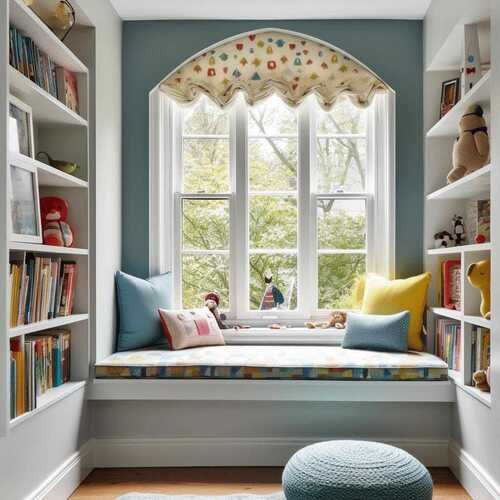
A window bench can transform an overlooked part of a bedroom into a bright and inviting reading area.
Natural daylight makes books easier to read during the day, while the view outside can provide a pleasant backdrop for quiet moments. A bookshelf integrated beneath or beside the seat keeps favorite stories close at hand.
For a cohesive look, we can coordinate the cushion fabric with the room’s curtains, bedding, or accent colors. Neutral upholstery creates a timeless foundation, while patterned cushions can add a playful touch.
Window placement requires particular attention to safety. Furniture should not create an easy climbing route to an unsecured window, and window locks, guards, and other protections should be appropriate for the room.
We should also avoid positioning delicate books where direct sunlight or moisture could damage them.
Best for: Bedrooms with suitable windows and enough space for a comfortable bench.
3. Montessori-Inspired Reading Bench With Front-Facing Bookshelves
A Montessori-inspired reading nook emphasizes accessibility, simplicity, and independence.
Low shelves allow children to see book covers clearly and select their own reading materials. A low bench or floor-level seating arrangement makes it easier to settle down without adult assistance.
We can keep the design uncluttered by displaying a limited selection of books and leaving room for children to move freely. Natural wood, soft rugs, and muted colors create a calm atmosphere without overwhelming the space.
The furniture should be stable, appropriately sized, and free from sharp edges or accessible pinch points.
Best for: Toddlers and preschoolers who are learning to choose and return books independently.
4. Kids Reading Bench With Hidden Storage
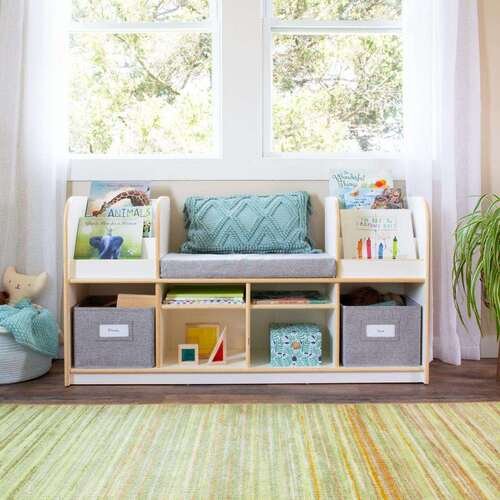
A storage bench is especially practical when a bedroom or playroom serves several purposes.
The seat provides a comfortable place to read, while the storage area underneath can accommodate extra books, blankets, stuffed animals, and reading accessories. Open shelves keep frequently used titles visible, allowing the furniture to combine accessible and concealed storage.
We should consider how the storage compartment opens. Hinged lids need suitable safety features to reduce the risk of trapped fingers, and the lid should not close unexpectedly.
Pull-out drawers or open cubbies may be easier for younger children to use, depending on the design.
To maintain an organized appearance, we can reserve the open shelves for books and use the hidden compartment for less frequently used items.
Best for: Small bedrooms, shared spaces, and families who need additional storage.
5. Corner Reading Nook With L-Shaped Bookshelves
An L-shaped reading nook makes efficient use of an empty corner that might otherwise remain unused.
The bench follows two adjoining walls, creating more seating space than a narrow straight bench. Bookshelves can extend along one wall, beneath the seat, or around the corner to provide additional storage.
This layout can also accommodate siblings who enjoy reading together. A shared cushion arrangement, a small throw blanket, and individual book baskets make the space more inviting.
We should leave enough room for children to enter and exit comfortably without climbing over furniture. For compact rooms, a shorter bench with shallow shelves may be more practical than a large wraparound installation.
Best for: Bedrooms and playrooms with unused corners or space for shared reading.
6. Minimalist Wooden Reading Bench With Open Shelving
A minimalist wooden bench is a versatile option for families who prefer understated interiors.
Natural oak, birch, and other suitable wood finishes can complement Scandinavian, contemporary, and traditional bedroom styles. Open shelving keeps books visible, while a simple upholstered seat adds comfort without making the furniture appear bulky.
This design can remain relevant as children grow because it does not rely on cartoon characters, bright novelty colors, or age-specific decorative features.
We can introduce personality through book covers, removable cushions, artwork, and small decorative accents rather than choosing furniture that may quickly feel outdated.
Best for: Modern family homes and parents who value timeless furniture.
How to Choose the Right Kids Reading Nook Bench With Bookshelf
Selecting the right bench involves more than choosing an attractive design. We should evaluate dimensions, safety, storage capacity, comfort, and construction quality before making a purchase.
Measure the Available Space
Begin by measuring the wall, corner, or alcove where the reading nook will sit.
Record the available width, depth, and height. Consider nearby windows, radiators, electrical outlets, wardrobes, and doors that need to open fully.
A bench that fits the wall but blocks a walkway will make the room less practical. We should also leave enough room for a child to sit comfortably, turn around, and reach books without stretching awkwardly.
For a small bedroom, a compact bench with shallow shelves may be more useful than a large unit with extensive storage.
Choose Child-Friendly Dimensions
The seat should suit the intended age group and allow children to sit down and stand up comfortably.
A seat that is too high can make getting on and off difficult, while a very shallow seat may not provide adequate support. Seat depth, back support, cushion thickness, and overall stability all affect comfort.
We should check the manufacturer’s recommended age range, weight limits, and dimensions rather than assuming that all children’s benches are interchangeable.
For shared reading, the bench should accommodate the number of children who will regularly use it without overcrowding.
Prioritize Safety and Stability
Safety should guide every furniture decision in a child’s bedroom or playroom.
Look for a sturdy frame, smooth surfaces, rounded or protected edges, secure hardware, and a design that remains stable during normal use.
Anchor tall bookshelves and other tip-prone furniture securely to the wall according to the manufacturer’s instructions. A low bench does not eliminate the risks associated with unstable shelving or climbing.
We should also check that the unit has no exposed screws, loose components, splintered wood, or gaps that could trap fingers.
If the bench includes drawers, lids, or sliding components, inspect their closing mechanisms carefully.
Consider Materials and Durability
Wooden reading benches are popular because they offer a solid appearance and can complement many interior styles.
Solid wood can be durable, while quality plywood and engineered-wood products may provide practical alternatives at different price points. Construction quality, joinery, hardware, and the finish are often more important than the material label alone.
We should look for smooth, durable finishes suitable for indoor furniture and follow manufacturer guidance on cleaning and maintenance.
For upholstered seats, removable, washable covers can make everyday care easier. Fabrics should withstand regular use without becoming difficult to clean.
Evaluate Bookshelf Capacity
The number and type of books a child owns should influence the shelf design.
Picture books often benefit from front-facing displays, while taller chapter books fit more easily on conventional horizontal shelves. Adjustable shelving offers flexibility as the collection changes.
We can reserve the lowest shelves for books children use independently and place heavier items lower down to support stability.
Avoid overloading shelves beyond their stated capacity. Books should be easy to remove and replace without pulling other items down.
Select a Design That Complements the Room
A reading nook should feel like part of the room rather than an unrelated piece of furniture.
Natural wood, white finishes, beige upholstery, and soft green accents work well in many contemporary interiors. Brighter colors can make the area more playful, particularly in dedicated playrooms.
We can coordinate the bench with existing storage units, bed frames, and flooring for a consistent appearance.
The most flexible approach is to keep the main furniture relatively timeless and use books, cushions, rugs, and artwork to reflect the child’s changing interests.
How to Style a Cozy Kids Reading Nook
Once the bench and bookshelf are in place, a few thoughtful additions can turn the furniture into a complete reading destination.
Add Comfortable Cushions and Soft Textiles
A firm, appropriately supportive seat cushion can make longer reading sessions more comfortable.
We can add a small back cushion or a few removable pillows, provided they do not interfere with safe seating or access. A washable throw blanket can introduce warmth during cooler months.
Choose fabrics that are durable, easy to maintain, and suitable for the child’s age.
For younger children, avoid loose decorative items that could create a hazard during unsupervised use.
Create a Well-Lit Reading Area
Good lighting helps children see text clearly and makes the nook usable after sunset.
Position the bench near suitable natural light when possible, then supplement it with an appropriate reading lamp. A wall-mounted light can save space, while a securely installed lamp may work well in larger rooms.
Lighting should minimize glare and harsh shadows across the pages. Cords must be managed safely, and electrical products should be installed and used according to their instructions.
Warm-white lighting can create a relaxing atmosphere, but adequate brightness remains essential for comfortable reading.
Use a Soft Rug to Define the Space
A rug can visually separate the reading nook from the rest of the room.
Choose a size that fits beneath the bench and leaves enough clearance around it. A nonslip backing or suitable rug pad helps reduce movement, particularly on smooth flooring.
Neutral rugs create a calm foundation, while stripes, subtle patterns, or playful designs can add personality.
We should avoid thick edges or curled corners that could become tripping hazards.
Organize Books by Interest
A thoughtfully arranged bookshelf makes browsing more enjoyable.
We can group books into simple categories, such as animals, adventure, fairy tales, nature, science, and bedtime stories. For younger children, displaying a few covers facing outward makes the collection easier to explore.
Rotating books every few weeks can renew interest without purchasing new titles constantly.
A small basket for library books or books waiting to be returned can also help keep the shelves organized.
Add Personal Touches Without Creating Clutter
Personal details make the nook feel special, but the space should remain practical.
A framed print, a child’s artwork, or a small name plaque can personalize the area. Wall-mounted decorations should be securely installed and positioned away from climbing hazards.
We can also create a simple reading ritual, such as choosing a bedtime story together or spending a few minutes reading after school.
These small habits help the nook become a meaningful part of everyday family life.
Small Kids Reading Nook Ideas for Apartments and Compact Bedrooms
Limited space does not prevent us from creating an attractive reading corner.
A compact bench with vertical shelving can provide seating and storage without occupying an entire wall. A low bookcase placed beside an existing bench may achieve a similar result at a lower cost than custom-built furniture.
In a shared bedroom, we can use an unused corner between storage units or position a narrow bench along a suitable wall. The design should leave clear walking paths and avoid interfering with the primary functions of the room.
For especially small spaces, we can consider these practical solutions:
- Use vertical storage: Taller shelving can increase capacity, provided it is securely anchored and appropriate for the room.
- Choose a bench with drawers: Hidden compartments reduce visual clutter and make better use of the available footprint.
- Keep the color palette light: White, pale wood, and soft neutral tones can help a small reading area feel visually open.
- Limit decorative accessories: A few cushions and a small rug are often enough to create a welcoming space.
- Use a portable book basket: A lightweight basket can supplement the main bookshelf without requiring additional permanent furniture.
- Select multifunctional furniture: A bench that also provides storage may eliminate the need for a separate toy chest.
The goal is not to fit as much furniture as possible into a small room. It is to create a comfortable, accessible place to read without making the room difficult to navigate.
DIY Kids Reading Nook Bench With Bookshelf
A do-it-yourself reading nook can offer greater flexibility when standard furniture does not fit the available space.
A simple design may consist of a sturdy bench, a low bookcase, a fitted cushion, and a few wall-mounted decorative elements. Families with suitable woodworking experience can customize the width, finish, and storage arrangement to suit the room.
Before starting, we should measure the space carefully and prepare a plan that accounts for the bench’s intended load, structural support, shelf dimensions, and attachment points.
Use appropriate materials, suitable fasteners, and a finish intended for indoor furniture. Any paint or coating should be used according to its safety instructions and allowed to cure fully before children use the furniture.
DIY furniture must be structurally sound, stable, and securely installed. Tall bookcases require appropriate anti-tip anchoring, and a homemade bench should not rely on decorative panels or unsupported shelves to carry the weight of its occupants.
For families without woodworking experience, purchasing a tested bench and pairing it with a separate bookshelf may be a simpler and more reliable alternative.
Common Mistakes to Avoid When Designing a Kids Reading Nook
Even attractive reading corners can become impractical when the furniture or layout does not reflect how children actually use the space.
Choosing Furniture That Is Too Large
Oversized benches can dominate small bedrooms and leave insufficient room for movement.
We should prioritize comfortable seating and accessible storage rather than selecting the largest unit available.
Placing Books Too High
Shelves that children cannot reach independently make the reading nook less convenient.
Frequently used books should remain within easy reach, while taller storage should be securely anchored and reserved for items that require adult assistance.
Ignoring Lighting
A beautiful corner with insufficient light may be uncomfortable to use in the evening.
We should evaluate both natural and artificial lighting before deciding where the bench belongs.
Overloading the Shelves
Too many books can make browsing difficult and place unnecessary stress on the furniture.
A manageable selection of current favorites, supplemented by occasional rotation, often creates a more inviting display.
Prioritizing Appearance Over Safety
Soft cushions, decorative canopies, and attractive finishes cannot compensate for unstable furniture or unsafe placement.
We should inspect the bench, shelves, hardware, and surrounding area before allowing children to use the nook independently.
Making the Design Too Age-Specific
Furniture covered in novelty graphics or built around a very specific theme may lose its appeal quickly.
A simple bench and bookshelf can last longer when decorative elements are easy to change.
Frequently Asked Questions About Kids Reading Nook Benches With Bookshelves
What Is the Best Age for a Kids Reading Nook Bench?
A reading nook can be introduced during toddlerhood when children begin exploring books, provided the furniture and surrounding environment are appropriate for their age and developmental stage.
For toddlers, low seating and accessible book displays are particularly useful. Older children may prefer a deeper bench, additional storage, and space for chapter books.
We should always follow the manufacturer’s age and weight recommendations and supervise young children as needed.
How Much Space Does a Kids Reading Nook Need?
The required space depends on the furniture dimensions and the number of children using it.
A compact bench with a small bookshelf can fit into an unused bedroom corner, while a built-in reading alcove may require a wider wall section.
We should measure the area before purchasing furniture and preserve clear access to doors, windows, and other essential parts of the room.
Is a Built-In Reading Bench Better Than a Freestanding Bench?
A built-in bench can maximize awkward spaces and provide a cohesive appearance. It may also allow customized storage and seating dimensions.
A freestanding bench offers greater flexibility because it can be moved, rearranged, or reused in another room.
The better option depends on the room layout, budget, installation requirements, and whether we expect the furniture to move as the child’s needs change.
What Should We Store Under a Reading Bench?
The storage compartment can hold spare cushions, blankets, reading accessories, and books that are not currently on display.
If the bench includes a hinged lid, we should check that the mechanism is appropriate for children’s use and does not create a finger-trapping hazard.
Frequently used books are generally easier to manage on open shelves than inside a closed compartment.
How Can We Make a Reading Nook Appealing to Reluctant Readers?
We can begin by displaying books that match the child’s current interests, including animals, sports, vehicles, art, humor, or adventure.
Comfortable seating, accessible book covers, and a calm environment can make reading feel more inviting. Short shared reading sessions may also help children associate books with enjoyable experiences rather than pressure.
The collection should reflect the child’s interests and reading level rather than focusing exclusively on educational targets.
Can a Reading Nook Bench Work in a Shared Bedroom?
Yes. A compact bench can create a distinct activity zone without requiring a separate room.
We can place it against an unused wall, use vertical shelving to conserve floor space, and keep decorative elements minimal.
If siblings share the space, a bench wide enough for comfortable shared reading can encourage interaction while giving both children access to the book collection.
How Do We Keep a Kids Reading Nook Organized?
Use a simple shelving system, keep frequently used books within reach, and return each item to a designated location after reading.
Small baskets can hold accessories, while periodic book rotation prevents shelves from becoming overcrowded.
The organization system should be easy enough for children to maintain independently as their abilities develop.
Final Thoughts: Creating a Reading Nook Children Will Love
A kids reading nook bench with bookshelf offers more than a convenient place to store books. It creates a dedicated environment where children can explore stories, develop reading habits, and enjoy quiet moments in a space designed around their needs.
The best design combines comfortable seating, accessible book storage, durable materials, and a layout that suits the room. Whether we choose a built-in window bench, a minimalist wooden seat, an L-shaped corner unit, or a compact storage bench, the priorities remain the same: functionality, safety, and everyday comfort.
We can complete the space with soft cushions, appropriate lighting, a nonslip rug, and a carefully selected collection of books. These simple additions help transform ordinary furniture into a welcoming personal library.
By choosing adaptable furniture and keeping the arrangement uncluttered, we can create a reading nook that remains useful as children grow. Most importantly, we give them a comfortable place to discover stories, follow their curiosity, and develop a lasting connection with reading.
Leave a Reply