
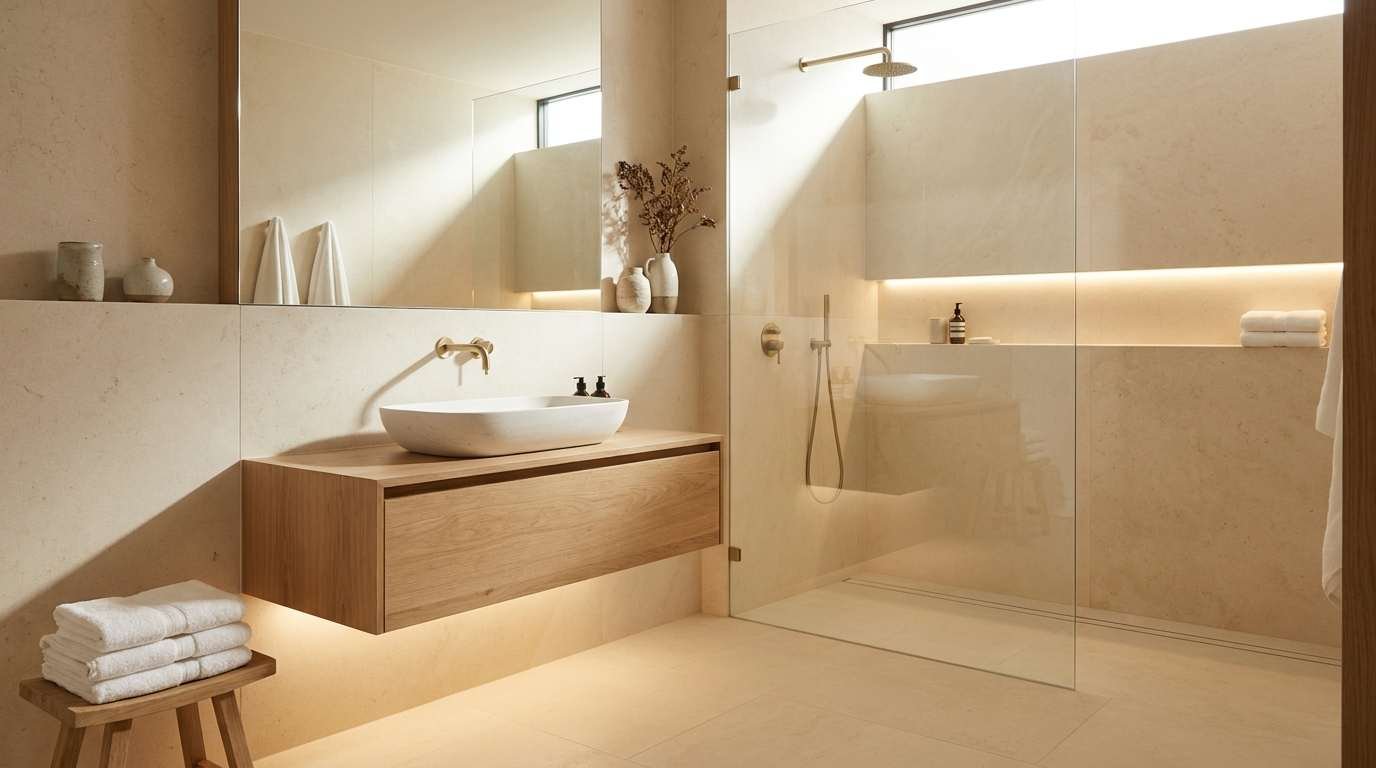

A minimalist bathroom combines clean architecture, thoughtful storage, restrained materials, and a carefully edited palette to create a room that feels calm and expensive. The strongest minimalist bathrooms rely on proportion, natural textures, concealed storage, warm lighting, and high-quality finishes rather than excessive decoration.
For a luxury lifestyle approach, minimalism works especially well because it creates visual calm while giving beautiful materials room to speak. A limestone vanity, brushed metal fittings, sculptural basin, or beautifully veined stone wall can become the focal point without competing with a dozen decorative objects.
Table of Contents
What Defines a Minimalist Bathroom?
A minimalist bathroom uses fewer visual elements and gives each one a clear purpose. The design usually centers on simple geometry, uninterrupted surfaces, practical storage, and a restrained material palette.
A successful scheme often includes:
- A floating vanity or wall-mounted basin
- Concealed bathroom storage
- Frameless or minimally framed shower glass
- Simple geometric fixtures
- Large-format tiles or continuous wall finishes
- Neutral colors
- Natural stone, timber, microcement, or plaster-style finishes
- Warm, layered lighting
- Minimal countertop accessories
- Carefully selected decorative pieces
The result should feel considered rather than empty.
The difference comes down to editing. When every visible object has a reason to be there, the bathroom gains a sense of order that makes even a relatively small room feel more spacious.
Minimalist Bathroom Color Ideas
Color has an enormous effect on the atmosphere of a minimalist bathroom. Rather than relying on a long list of shades, we can build the entire room around two or three closely related tones.
Warm White Minimalist Bathroom
Warm white works beautifully with natural stone, oak, travertine, and brushed brass.
A creamy white wall paired with pale limestone flooring can create a soft, refined atmosphere. Warm LED lighting prevents the room from appearing clinical.
Beige and Sand Tones
Beige bathrooms have become particularly appealing for interiors inspired by luxury hotels and spas.
Combine:
- Sand-colored stone
- Cream walls
- Light oak
- Off-white ceramics
- Brushed bronze or brass fixtures
This palette works particularly well when we want a bathroom that feels sophisticated without becoming formal.
Gray Minimalist Bathroom
Gray can create a cooler architectural appearance. Pale gray stone, concrete-effect surfaces, and matte gray cabinetry give the bathroom a contemporary character.
For a warmer result, introduce timber or aged metal rather than adding multiple accent colors.
Black and White Minimalist Bathroom
Black-and-white bathrooms provide strong contrast while keeping the overall design restrained.
A white stone basin, black tapware, pale walls, and dark-framed shower glass can create a graphic look. We should use black selectively because too much dark surface can make a compact bathroom feel smaller.
Choose Materials That Carry the Design
Minimalist interiors depend heavily on material quality because there are fewer decorative elements to distract from the surfaces.
Natural Stone
Marble, limestone, travertine, and other natural stones can provide subtle variation through veining, texture, and tone.
For a luxurious bathroom, we can use the same stone across several surfaces to create continuity. For example, stone can appear on the vanity, shower wall, and floor while the remaining surfaces stay quiet.
Wood
Timber introduces warmth into an otherwise hard environment.
A floating oak vanity is particularly effective because the wood softens the appearance of tile, glass, and stone. In a bathroom, properly finished and moisture-appropriate materials should always be selected.
Microcement
Microcement-style finishes create a continuous appearance across walls and floors. Their lack of obvious grout lines can make the room appear visually larger.
The finish also works well with sculptural basins, timber cabinetry, and understated metal fixtures.
Large-Format Tile
Large-format tiles reduce the number of grout lines visible across a wall or floor.
This can be especially useful in smaller bathrooms where excessive visual divisions make surfaces feel busy. Stone-look porcelain can provide a similar visual effect while offering practical maintenance advantages.
Minimalist Bathroom Vanity Ideas
The vanity is often the largest piece of furniture in the bathroom, so its design can determine the character of the entire room.
A floating vanity is one of the strongest choices for minimalist bathrooms. Raising the cabinetry from the floor exposes more of the flooring and creates a lighter visual footprint.
Handleless cabinetry works particularly well. Push-to-open doors, integrated pulls, or recessed finger grooves keep the front of the vanity visually clean.
For a more luxurious appearance, consider a combination such as:
Natural stone countertop + oak cabinetry + wall-mounted basin mixer + oversized mirror.
This gives us several layers of texture without introducing visual clutter.
Concealed Storage for a Cleaner Bathroom
Storage is one of the most important practical elements in minimalist bathroom design.
A bathroom can have beautiful architecture and still look chaotic when bottles, towels, grooming products, and cleaning supplies remain visible.
We can solve much of this problem through concealed storage.
Consider:
- Mirrored medicine cabinets
- Recessed shower niches
- Full-height vanity cabinetry
- Built-in linen storage
- Recessed wall cupboards
- Drawer organizers
- Concealed toilet shelving
- Under-vanity storage
A mirrored cabinet is particularly useful because it combines two functions while keeping everyday items hidden.
Inside the shower, a built-in niche can eliminate the need for freestanding shelves. When the niche uses the same material as the surrounding wall, it almost disappears into the architecture.
Minimalist Shower Design
The shower should have a simple visual structure.
A frameless glass enclosure can help maintain sightlines across the room, making the bathroom feel more open. A concealed shower valve and wall-mounted controls can reduce the number of visible mechanical elements.
For a sophisticated shower, we can combine:
- Large-format stone-effect walls
- A recessed niche
- Ceiling-mounted or minimalist showerhead
- Hand shower
- Frameless glass
- Linear drain
- Warm recessed lighting
The floor should also provide sufficient slip resistance and appropriate drainage. Beauty needs to work alongside everyday practicality.
Lighting Ideas for Minimalist Bathrooms
Good lighting can transform minimalist bathroom design.
Rather than relying on one ceiling fixture, we can layer several forms of illumination.
Ambient Lighting
Recessed ceiling lights provide general illumination. Their placement should correspond with the room’s layout rather than simply being distributed in a rigid grid.
Vanity Lighting
Lighting around the mirror is essential for grooming.
Vertical lighting at both sides of the mirror can produce more even illumination than a single light positioned directly above the head.
Accent Lighting
A soft LED strip beneath a floating vanity can create a subtle evening glow.
Lighting inside a recessed niche or beneath architectural elements can also introduce depth without adding decorative objects.
A warmer color temperature generally supports a more relaxing atmosphere, particularly in bathrooms intended to feel spa-like.
Minimalist Bathroom Mirror Ideas
The mirror should complement the architecture.
A large frameless mirror creates a quiet appearance and can visually expand the room. For a more decorative approach, a softly rounded mirror introduces contrast against rectangular tiles and cabinetry.
Backlit mirrors can also work well, provided the lighting is sufficiently useful for grooming.
For double vanities, one wide mirror can create a continuous appearance, while two individual mirrors can provide more symmetry and definition.
Add Luxury Through Texture
Minimalism doesn’t require a completely flat or sterile interior.
Texture gives a restrained bathroom depth.
Think about the contrast between:
- Honed stone and polished metal
- Rough plaster and smooth ceramic
- Ribbed timber and glass
- Matte cabinetry and glossy tile
- Soft towels and hard stone
- Brushed brass and warm wood
These combinations create interest while keeping the palette controlled.
A particularly elegant approach is to use one dominant texture and two supporting textures throughout the room.
Minimalist Bathroom Fixtures
Fixtures should have a strong relationship with the architecture.
Wall-mounted faucets can reduce countertop clutter and create a cleaner vanity arrangement. A simple cylindrical tap can provide a subtle contemporary appearance, while squared fixtures work well with more architectural interiors.
Metal finishes worth considering include:
- Brushed brass
- Aged brass
- Brushed nickel
- Chrome
- Matte black
- Bronze
We should generally select one primary metal finish and use it consistently across the taps, shower fittings, cabinet hardware, and other visible details.
How to Make a Small Bathroom Feel Minimalist
Small bathrooms benefit greatly from minimalist planning.
Use large-format wall surfaces, a wall-mounted vanity, clear shower glass, and concealed storage to reduce visual interruptions.
A consistent floor and wall palette can also make the room feel more connected.
Keep the countertop nearly empty. One attractive soap dispenser, a folded hand towel, and perhaps a small natural object are often enough.
Mirrors can increase the perception of space, while carefully positioned lighting prevents dark corners from making the bathroom feel enclosed.
Minimalist Bathroom Decor
Decoration should be selective.
Instead of filling open shelves with accessories, choose a handful of objects with visual weight.
A minimalist bathroom might contain:
- A sculptural ceramic vessel
- A small stone tray
- A single branch or understated plant
- High-quality folded towels
- A framed architectural print
- A beautiful soap dispenser
The goal is to create quiet luxury through selection.
A single handmade object can have more impact than a collection of inexpensive accessories.
Common Minimalist Bathroom Mistakes
Too Much White
An entirely white bathroom can appear flat when there is little variation in texture.
Introduce stone, timber, plaster finishes, or warmer metal details to give the room depth.
Insufficient Storage
Visible toiletries quickly undermine a minimalist appearance.
Plan storage before selecting decorative elements.
Too Many Materials
Minimalism depends on visual consistency. Five different tile patterns, several metals, and multiple wood tones can make the room feel fragmented.
A smaller material palette usually produces a more refined result.
Poor Lighting
A beautifully designed bathroom can feel cold when the lighting is harsh or poorly positioned.
Use multiple layers of illumination and give particular attention to the vanity area.
Ignoring Function
A bathroom needs to withstand water, humidity, cleaning, and daily use.
Select surfaces and fittings according to their maintenance requirements as well as their appearance.
Minimalist Bathroom Checklist
Before finalizing the design, review the room using this checklist:
- Color: Are the main colors limited and coordinated?
- Storage: Can everyday products be hidden?
- Vanity: Does the cabinetry provide enough storage?
- Lighting: Is the mirror properly illuminated?
- Materials: Do the stone, tile, wood, and metals work together?
- Shower: Is the glass enclosure visually light?
- Fixtures: Are taps and shower fittings consistent?
- Decor: Does every visible accessory have a purpose?
- Maintenance: Can the chosen materials be cleaned easily?
- Atmosphere: Does the finished room feel calm and comfortable?
Key Takeaways
- Minimalist bathrooms rely on restraint, proportion, and purposeful design.
- Warm neutrals create a particularly inviting luxury-bathroom atmosphere.
- Natural stone and timber add depth without creating clutter.
- Floating vanities make bathrooms appear lighter and more spacious.
- Concealed storage is essential for maintaining visual calm.
- Frameless shower glass helps preserve open sightlines.
- Layered lighting creates both practical illumination and a relaxing evening atmosphere.
- A small number of high-quality accessories generally works better than numerous decorative objects.
- Consistency in metals, materials, and colors creates a polished appearance.
- The most successful minimalist bathroom combines beautiful design with practical everyday function.
Frequently Asked Questions About Minimalist Bathrooms
What is a minimalist bathroom?
A minimalist bathroom uses a restrained palette, clean architectural lines, concealed storage, simple fixtures, and carefully selected materials. The design prioritizes functionality, visual calm, and quality over excessive decoration.
How do we make a bathroom look minimalist?
Use a limited color palette, hide everyday products, choose simple fixtures, reduce countertop objects, and use continuous or large-format surfaces. Warm lighting and natural materials can prevent the room from feeling sterile.
What colors work best for minimalist bathrooms?
Warm white, cream, beige, sand, taupe, pale gray, and muted earth tones are excellent choices. Natural stone and timber can add subtle contrast without introducing visual noise.
Are minimalist bathrooms expensive?
They can range from budget-friendly to highly luxurious. The design principle itself doesn’t require expensive materials. A simple layout, restrained palette, concealed storage, and thoughtful lighting can create the minimalist appearance at many price levels.
What type of vanity is best for a minimalist bathroom?
Wall-mounted, handleless vanities are particularly effective because they provide storage while maintaining a visually light appearance. Natural timber, matte cabinetry, and stone countertops work especially well.
How do we keep a minimalist bathroom organized?
Use concealed drawers, mirrored cabinets, recessed niches, vanity storage, and built-in shelving. Store everyday products inside cabinets and keep only a few attractive items visible.
Can a minimalist bathroom feel luxurious?
Absolutely. Luxury can come from natural stone, excellent lighting, carefully chosen hardware, generous proportions, quality towels, custom cabinetry, and disciplined material selection.

Leave a Reply