

A corner freestanding bathtub can turn an awkward bathroom corner into the room’s defining feature. With the right tub shape, surrounding materials, lighting, and floor plan, we can create a bathroom that feels spacious, comfortable, and deliberately designed.
Corner placement works especially well in bathrooms where a traditional freestanding tub would interrupt the central floor area. It gives the bathtub a clear visual position while preserving walking space around the vanity, shower, and entrance.
Whether we are designing a compact ensuite or a large luxury bathroom, these corner freestanding bathtub ideas offer practical ways to create a polished space without sacrificing comfort.
Table of Contents
1. Create a Soft, Spa-Like Corner With a White Tub
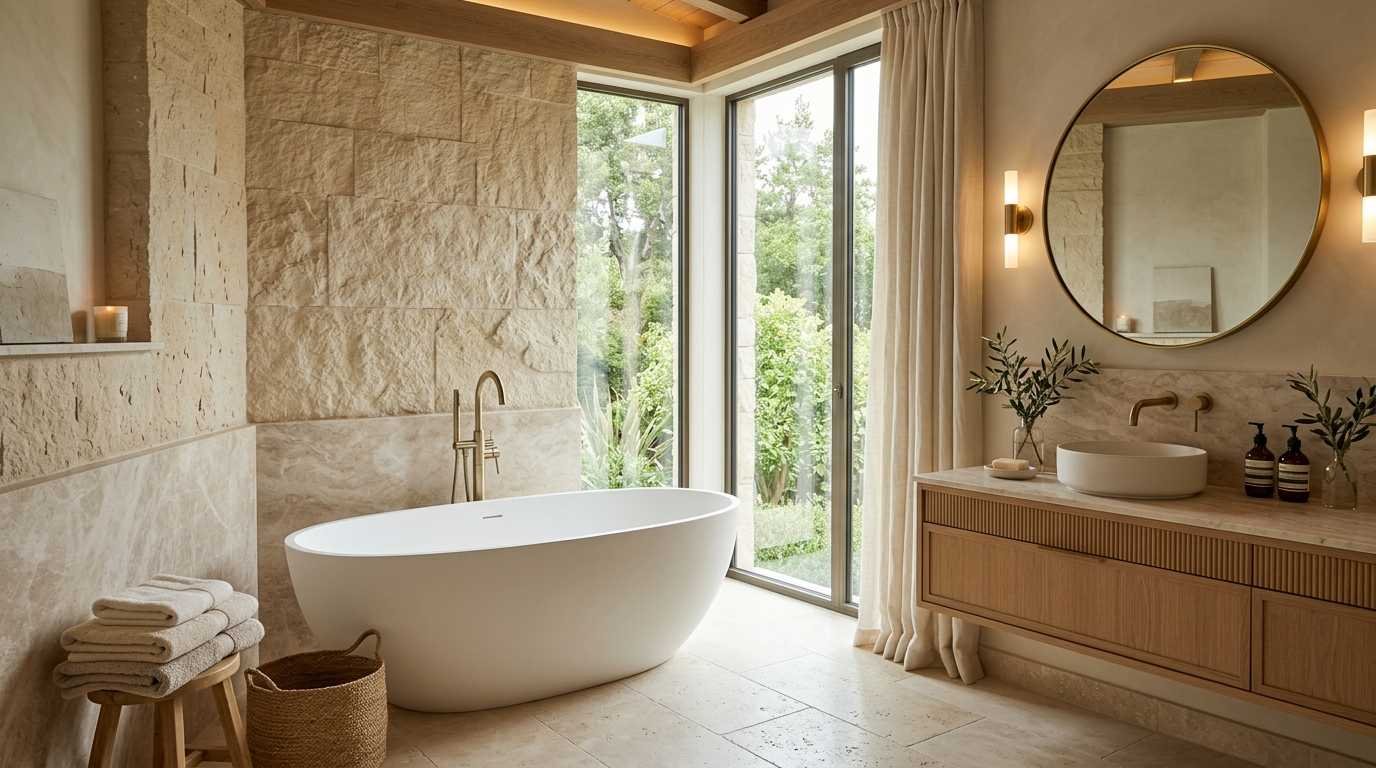
A classic white freestanding bathtub remains one of the easiest choices for a sophisticated bathroom.
Positioning a smooth white tub against two walls creates a calm focal point while allowing the surrounding surfaces to carry more of the decorative character. We can pair the tub with warm limestone, travertine-look porcelain, pale marble, or textured beige tile.
For a relaxed spa aesthetic, use:
- A white oval or slipper-style bathtub
- Brushed brass or aged brass fixtures
- Pale stone-effect flooring
- Warm white wall lighting
- Natural wood cabinetry
- Soft neutral towels and textiles
The result feels luxurious without relying on excessive decoration.
2. Use a Freestanding Tub With a View
If the bathroom has a large window in or near the corner, the bathtub can be positioned to take advantage of the view.
A corner near a window can become an especially inviting bathing area. Garden views, trees, architectural details, or even a private courtyard can provide a natural backdrop.
Privacy should guide the placement. Frosted glass, plantation shutters, linen curtains, or strategically positioned landscaping can provide screening while preserving natural light.
A low-profile tub works particularly well beside large windows because its shape keeps the sightline open.
3. Try a Corner Tub Against Marble Walls
Marble and marble-look porcelain create an instantly refined backdrop for a freestanding bathtub.
Rather than covering every bathroom surface with dramatic veining, we can reserve statement marble for the two walls surrounding the tub. This gives the corner a strong visual identity while keeping the rest of the bathroom quieter.
White marble with subtle gray veining works beautifully with:
- Chrome fixtures
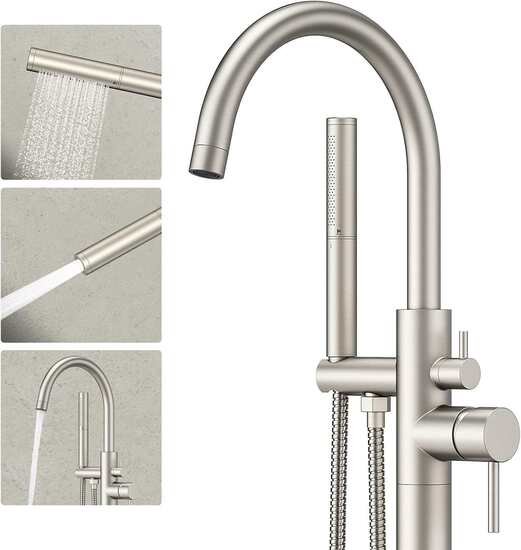
- Brushed nickel
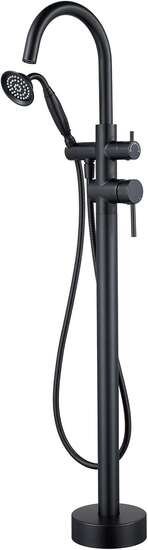
- Matte black
- Brushed brass
- Natural oak
For a warmer appearance, creamy marble or beige stone-look surfaces can be combined with bronze or brass fittings.
4. Choose a Black Tub for a Dramatic Bathroom
A black freestanding bathtub creates a very different mood.
In a large bathroom, a matte black tub can act as a strong architectural element. Pairing it with light walls and pale flooring prevents the room from becoming visually heavy.
For a sophisticated modern scheme, consider:
- Matte black bathtub
- Light limestone-look walls
- Black-framed shower glass
- Dark hardware
- Pale oak vanity
- Warm pendant lighting
The contrast gives the bathroom depth and makes the bathtub immediately noticeable.
5. Build a Boutique-Hotel Bathroom Around the Tub
Many of the most successful luxury bathrooms use one clear focal point. A corner freestanding bathtub can perform that role beautifully.
We can create a boutique-hotel feeling by combining a sculptural tub with carefully selected materials rather than filling the room with accessories.
Consider a restrained palette of three or four finishes:
- Stone or marble
- Warm metal
- Natural wood
- Soft white ceramics
Large-format wall tiles can reduce visual interruptions and make the corner feel more expansive.
6. Use a Slipper Bathtub for a Classic Look
A slipper bathtub has one or both ends raised higher than the center. Its distinctive profile makes it particularly attractive when the tub is visible from the bathroom entrance.
A traditional slipper tub works well with:
- Period-style homes
- Cottage bathrooms
- French-inspired interiors
- Transitional bathrooms
- Classic luxury schemes
Pair it with a floor-mounted tub filler when space allows. The vertical fixture adds height and gives the bathtub a more established architectural presence.
7. Add a Freestanding Tub to a Small Bathroom Corner
A freestanding bathtub can work in a smaller bathroom when the proportions are carefully selected.
The key is choosing a compact model that leaves adequate clearance around doors, cabinets, toilets, and shower entrances.
Before buying the tub, measure:
- Overall bathroom length and width
- Door swing
- Window position
- Plumbing locations
- Vanity depth
- Shower footprint
- Required walking paths
- Tub length, width, and height
A visually compact oval tub can sometimes work better than a bulky rectangular model because its curved edges soften the room.
8. Frame the Tub With Vertical Wall Paneling
Vertical wall paneling behind a corner bathtub introduces texture and height.
Water-resistant bathroom wall panels, stone slabs, porcelain tile, or properly sealed architectural materials can create a similar effect.
Vertical lines draw the eye upward, which can make a bathroom with a low ceiling feel taller.
For a warm luxury bathroom, combine light wall paneling with:
- Oak cabinetry
- Cream-colored stone
- A sculptural white tub
- Aged brass fixtures
- Warm lighting
The combination feels residential and elegant rather than overly clinical.
9. Make the Bathtub the Center of a Modern Organic Bathroom
Modern organic interiors rely on natural-looking materials, soft shapes, and restrained colors.
A corner freestanding bathtub fits naturally into this style.
Choose a tub with a rounded silhouette and surround it with earthy materials such as limestone-look porcelain, travertine, oak, microcement, or textured plaster-effect finishes suitable for bathrooms.
Plants can add life if the bathroom receives enough natural light and humidity is suitable for the selected species.
Keep accessories simple. A wooden stool, stone bath tray, woven basket, and soft neutral textiles can provide enough decoration.
10. Add a Built-In Niche Beside the Tub
A recessed wall niche can provide useful storage without introducing another piece of furniture.
The niche can hold:
- Bath salts
- Candles
- Small bottles
- Decorative objects
- Folded washcloths
The dimensions should be planned around the actual items that will be stored there.
For a refined result, use the same tile or stone inside the niche as on the surrounding wall. A contrasting material can also work when we want the niche to become a deliberate design detail.
11. Pair the Tub With a Statement Chandelier
Lighting can dramatically change how a corner bathtub feels.
A chandelier or sculptural pendant above or near the bathtub can establish a luxury focal point. The fixture should be suitable for bathroom use and positioned according to applicable electrical and safety requirements.
For a classic bathroom, consider a traditional chandelier with warm metal details.
For contemporary spaces, a sculptural globe, linear pendant, or minimalist ceiling fixture can create a cleaner effect.
Layered lighting works best. Combine general ceiling illumination with wall sconces, vanity lighting, and softer accent lighting where practical.
12. Create a Warm Japandi-Inspired Bathroom
A Japandi-inspired bathroom can make a freestanding bathtub feel especially peaceful.
The design usually benefits from simple forms, natural materials, and restrained decoration.
A suitable palette might include:
- Warm white
- Sand
- Beige
- Light oak
- Stone gray
- Soft charcoal
A rounded bathtub placed into a quiet corner can become the room’s main sculptural feature.
Avoid filling the surrounding area with unnecessary objects. The visual calm comes from proportion, texture, and carefully chosen materials.
13. Use a Freestanding Tub With a Wood Vanity
Wood adds warmth to bathrooms dominated by ceramic, stone, and glass.
A natural oak or walnut vanity positioned opposite or near the bathtub can balance the coolness of the bathroom’s harder surfaces.
The strongest combinations usually repeat the wood tone in at least one additional detail, such as a stool, shelving, framed mirror, or storage cabinet.
This repetition makes the room feel coordinated without requiring matching furniture throughout.
14. Give the Tub Its Own Accent Wall
An accent wall can make a corner bathtub appear more intentional.
Instead of decorating every wall differently, choose one material or color behind the tub and keep adjacent surfaces relatively quiet.
Strong possibilities include:
- Veined marble
- Deep green tile
- Handmade-look ceramic tile
- Textured beige porcelain
- Dark stone
- Limewash-inspired waterproof finishes
- Vertical fluted surfaces
The bathtub should remain visually connected to the wall rather than appearing randomly placed in the corner.
15. Combine the Tub With a Walk-In Shower
A corner bathtub can share a bathroom with a generous walk-in shower when the layout is planned carefully.
The shower can occupy the opposite side of the room, leaving the bathtub as a separate destination.
Glass shower panels help maintain visual openness. Frameless or minimally framed glass can be especially effective when the bathroom has limited floor space.
Use consistent finishes between the tub and shower areas. Repeating the same wall tile, floor material, and metal finish creates continuity throughout the bathroom.
How to Choose the Right Corner Freestanding Bathtub
The bathtub’s shape should follow the room rather than the other way around.
Oval Bathtubs
Oval tubs have soft edges and suit contemporary, organic, transitional, and classic interiors. Their curved profile can make tight circulation areas feel less restrictive.
Rectangular Bathtubs
Rectangular models have a stronger architectural appearance and can work particularly well with modern interiors.
Slipper Bathtubs
Slipper tubs bring a traditional and luxurious character. Their raised back can also make extended bathing more comfortable.
Sculptural Bathtubs
Sculptural tubs function almost like pieces of furniture. They work particularly well in bathrooms where the bathtub is visible immediately upon entering.
How Much Space Should We Leave Around a Freestanding Tub?
The available clearance depends on the bathroom layout, tub dimensions, plumbing configuration, and local building requirements.
As a design principle, we should leave enough open floor area for comfortable movement around the tub and ensure that doors, drawers, shower doors, and other fixtures operate freely.
A beautifully styled tub can become frustrating when it blocks circulation.
Before installation, create a scaled floor plan showing the actual tub dimensions rather than estimating its footprint visually.
Best Materials for a Corner Bathtub Surround
The wall materials surrounding the bathtub should tolerate bathroom moisture and suit the home’s overall design.
Popular options include:
| Material | Style | Maintenance | Best For |
|---|---|---|---|
| Porcelain tile | Versatile | Low | Most bathrooms |
| Marble | Luxury | Higher | Classic interiors |
| Limestone-look porcelain | Natural | Low | Organic bathrooms |
| Travertine-look porcelain | Warm | Low | Mediterranean styles |
| Stone slabs | High-end | Medium | Statement walls |
| Waterproof wall panels | Contemporary | Low | Quick, clean finishes |
| Mosaic tile | Decorative | Medium | Accent areas |
The practical choice depends on moisture exposure, installation requirements, budget, maintenance preferences, and the existing architecture.
Freestanding Bathtub Plumbing Considerations
A freestanding bathtub still requires careful plumbing planning.
The tub’s waste connection must be coordinated with the floor structure and drain location. A floor-mounted tub filler may also require plumbing beneath the finished floor.
This makes the bathtub position particularly important before flooring and plumbing work begins.
When renovating, we should confirm the exact tub model and technical specifications before finalizing pipe locations. Small differences in tub dimensions or drain placement can affect installation.
Common Corner Freestanding Bathtub Mistakes
Choosing the Tub Before Measuring the Room
A tub that looks compact online can feel enormous once installed.
Measure the room and map the complete floor plan first.
Ignoring the Door Swing
Bathroom doors, shower doors, and cabinet doors need enough clearance to open comfortably.
Using Too Many Finishes
A bathroom already contains numerous materials. Tub, vanity, tile, hardware, glass, mirrors, lighting, and flooring can quickly become visually busy.
A limited material palette usually produces a more sophisticated result.
Forgetting the Tub Filler
The faucet needs to be planned alongside the bathtub. Its position affects both plumbing and usability.
Making the Corner Too Dark
A corner can naturally receive less light than the center of the room. Wall sconces, ceiling lighting, and reflected natural light can keep the bathtub area inviting.
How to Style a Corner Freestanding Bathtub
The area around the bathtub should feel intentional while remaining practical.
A simple arrangement might include:
- One small wooden or stone stool
- A folded towel
- A bath tray
- One decorative vessel
- A candle or suitable bathroom-safe accent
- A plant suited to the room’s conditions
The goal is to create a comfortable bathing environment without covering the tub’s sculptural form.
Frequently Asked Questions About Corner Freestanding Bathtubs
Key Takeaways
- Corner freestanding bathtub ideas work particularly well when the bathtub becomes a deliberate focal point.
- Oval tubs are excellent for soft, contemporary interiors.
- Slipper tubs suit classic and traditional bathrooms.
- Black tubs create dramatic contrast in modern spaces.
- Marble, stone-look porcelain, and natural wood can create a high-end bathroom atmosphere.
- Always measure the complete floor plan before selecting a bathtub.
- Plumbing and tub-filler locations should be planned before installation.
- Lighting matters because corners can receive less natural illumination.
- A limited material palette usually creates a more polished bathroom.
- The most successful designs balance beauty, clearance, comfort, storage, and practical maintenance.
A corner freestanding bathtub gives us an opportunity to transform an underused part of the bathroom into a purposeful architectural feature. With careful measurements, a well-proportioned tub, complementary materials, and layered lighting, even an awkward corner can become the most inviting part of the room.
Can a freestanding bathtub go in a corner?
Yes. A freestanding bathtub can be positioned near two walls when the room provides sufficient clearance for installation, cleaning, plumbing, and comfortable movement. Compact oval and sculptural tubs can work particularly well in corner layouts.
Are corner freestanding bathtubs suitable for small bathrooms?
They can be. The bathtub dimensions and surrounding clearance are the deciding factors. Compact models with curved profiles can preserve circulation space better than oversized rectangular tubs.
What type of bathtub looks best in a corner?
Oval, slipper, and sculptural freestanding bathtubs are particularly effective because their shapes soften the transition between two walls. The best choice depends on the bathroom’s architectural style and available floor area.
Should a freestanding bathtub touch the wall?
Some models are designed to sit close to a wall, while others require more open space. The manufacturer’s installation requirements should determine the final position.
What should we put beside a corner bathtub?
A small stool, bath tray, towel stand, plant, or narrow storage piece can work well. Keep the area relatively open so the bathtub remains the primary feature.
Can we put a shower next to a freestanding bathtub?
Yes. A walk-in shower can be positioned beside or opposite the bathtub. Glass panels help preserve visual openness, particularly in smaller bathrooms.
Are freestanding tubs difficult to clean around?
Cleaning access depends heavily on the tub’s position. Leaving sufficient clearance around the sides and back makes routine cleaning easier.
What color bathtub works best for a luxury bathroom?
White remains highly versatile, while black, soft gray, cream, and other muted finishes can create distinctive luxury interiors. The ideal color should relate to the flooring, walls, vanity, and metal finishes.
Leave a Reply