
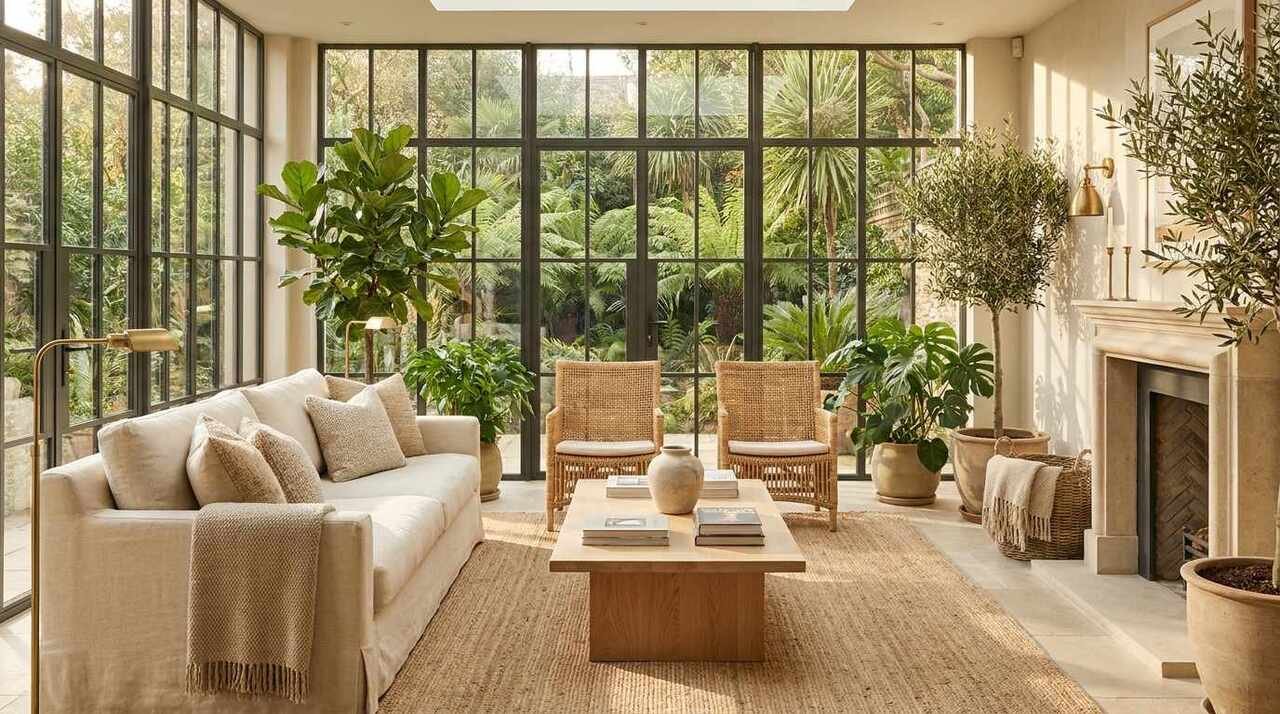

An indoor sunroom can completely transform the way we experience our homes. With abundant natural light, comfortable furnishings, and thoughtful décor, even an ordinary room can become a peaceful retreat for reading, relaxing, entertaining, or enjoying the outdoors without actually stepping outside.
The best indoor sunroom ideas focus on more than simply adding chairs near a window. We can create a space that feels intentional by combining natural materials, practical furniture, greenery, layered lighting, and colors that complement the sunlight throughout the day.
Whether we are working with a dedicated sunroom, enclosed porch, conservatory, bay-window area, or a bright corner of the house, there are plenty of ways to create a sophisticated and inviting interior.
Table of Contents
1. Create a Cozy Indoor Sunroom Lounge
One of the easiest ways to design a sunroom is to treat it like a comfortable living room surrounded by natural light.
We can start with a compact sofa or loveseat positioned toward the brightest windows. Add two comfortable accent chairs, a small coffee table, and a soft area rug to establish a defined seating zone.
For a polished look, we should choose furniture that doesn’t visually overwhelm the room. Low-profile sofas, slim-leg chairs, and glass or light-colored coffee tables can help maintain an open feeling.
Soft cushions and textured throws can make the space feel warmer without blocking the beautiful views outside.
2. Use Natural Materials for a Relaxed Look
Sunrooms naturally connect indoor and outdoor environments, making natural materials particularly effective.
Wood, rattan, wicker, bamboo, linen, cotton, jute, and stone can all reinforce that connection.
A rattan lounge chair paired with a linen cushion and a light wooden side table can create an elegant coastal atmosphere. Alternatively, darker wood furniture can give the same room a more traditional or sophisticated appearance.
We can also introduce natural textures through baskets, woven rugs, ceramic planters, and handmade accessories.
The goal is to create visual depth while keeping the room relaxed.
3. Bring Plenty of Plants Into the Sunroom
Few decorating choices work better in a bright sunroom than indoor plants.
Large plants can fill empty corners, while smaller plants can be arranged on side tables, shelves, and window ledges.
Some attractive choices include:
- Fiddle-leaf figs
- Bird of paradise
- Rubber plants
- Snake plants
- Monstera
- Areca palms
- Pothos
- Peace lilies
- Herbs in small containers
Before choosing plants, we should consider how much direct sunlight each area receives. Strong afternoon sun can be excellent for some plants but too intense for others.
Decorative planters can also become part of the room’s design. Terracotta creates a warm Mediterranean feeling, while white ceramic planters produce a cleaner contemporary appearance.
4. Design a Small Indoor Sunroom
A small space doesn’t prevent us from creating an impressive sunroom.
In fact, compact rooms often benefit from a simpler furniture arrangement.
Instead of trying to fit a full-size sofa, we can use a small loveseat, two occasional chairs, or a comfortable chaise lounge. A round coffee table can make movement easier than a large rectangular table.
Wall-mounted shelves can provide storage without consuming floor space.
We can also use mirrors strategically to reflect natural light and make the room appear larger.
When decorating a small sunroom, every piece should have a purpose. Avoid filling the room with unnecessary furniture simply because there is available floor space.
5. Add a Comfortable Reading Corner
A sunroom can become an exceptional reading retreat.
Place a comfortable armchair near a window, add a small side table, and provide a dedicated reading lamp for evenings.
A footstool or ottoman can make the chair considerably more comfortable. We can also add a lightweight throw for cooler mornings.
A narrow bookcase against one wall can complete the arrangement while providing practical storage.
For an especially relaxing atmosphere, we can incorporate soft neutral colors such as cream, beige, warm white, taupe, and pale gray.
6. Choose a Light and Neutral Color Palette
Because sunrooms already receive significant natural light, neutral colors can enhance their airy character.
White walls create a crisp and timeless appearance. Warm beige and cream produce a softer atmosphere, while pale green and muted blue can reinforce the connection with nature.
We don’t need to make every surface white.
A balanced palette might include:
- Warm white walls
- Natural oak furniture
- Beige upholstery
- Green plants
- Textured cream rugs
- Black or bronze accents
This combination provides enough contrast to prevent the room from feeling flat.
7. Use Curtains to Control Sunlight
Large windows are one of the greatest advantages of a sunroom, but too much sunlight can make the space uncomfortable.
Window treatments allow us to control brightness, glare, temperature, and privacy.
Sheer curtains are ideal when we want to soften strong sunlight while preserving the outdoor view. Woven shades can provide additional texture and create a more natural aesthetic.
For a more sophisticated appearance, full-length curtains can frame the windows beautifully.
We should avoid heavy treatments that make the room feel dark unless the room receives excessive direct sunlight.
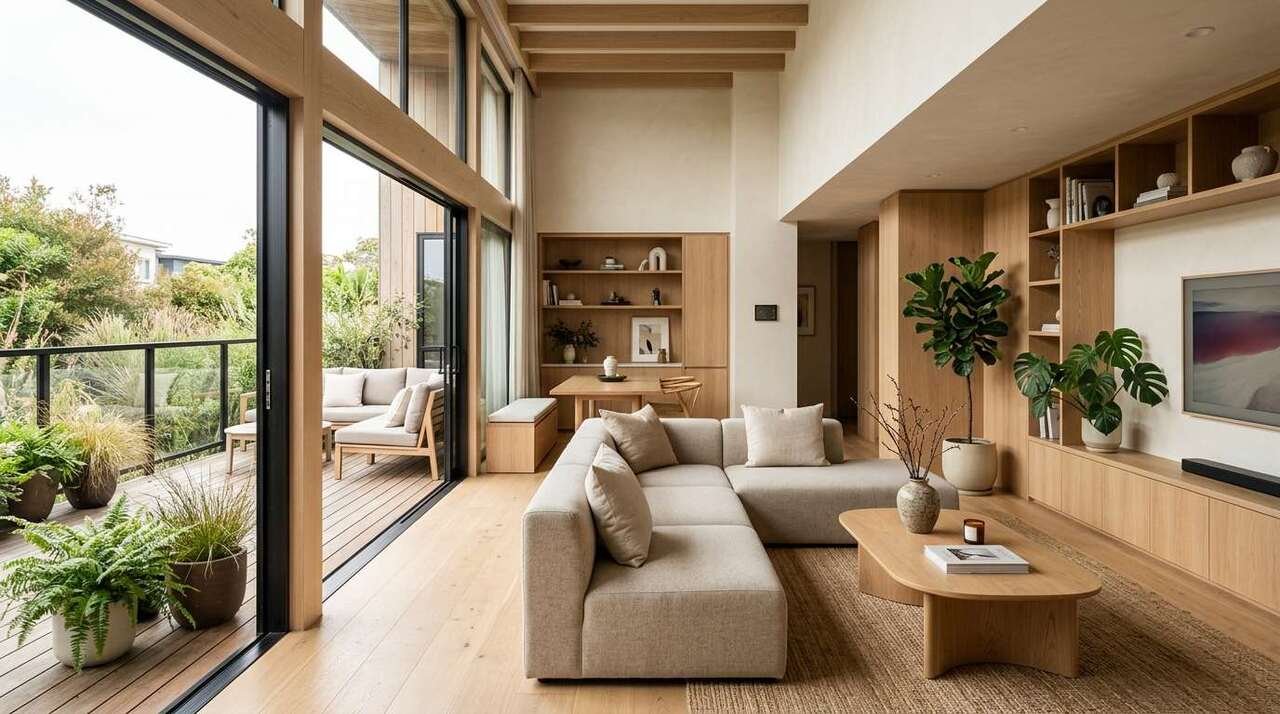
8. Create an Indoor-Outdoor Connection
A well-designed sunroom should feel connected to the garden, patio, terrace, or surrounding landscape.
We can strengthen this connection by using similar colors and materials indoors and outdoors.
For example, if the adjacent patio contains natural wood furniture, we can repeat wood tones inside the sunroom. Green textiles and botanical artwork can visually connect the room to the garden.
Large windows and glass doors should remain visually unobstructed whenever possible.
The result is a room that feels like a transition between the home and nature.
9. Add an Elegant Dining Area
A sunroom doesn’t have to function solely as a lounge.
If space allows, we can create a beautiful dining area with a small round table and four comfortable chairs.
A dining table near large windows creates an especially pleasant setting for breakfast, afternoon coffee, or dinner.
Natural wood tables work particularly well because they complement greenery and outdoor views.
For a more refined appearance, we can add linen table runners, ceramic dinnerware, simple glassware, and a low floral arrangement.
10. Turn the Sunroom Into a Breakfast Nook
For smaller homes, a sunroom can become an inviting breakfast nook.
A built-in bench along one wall can maximize seating while keeping the center of the room open. Add a compact table and a pair of chairs opposite the bench.
Storage drawers beneath the bench can provide a useful place for table linens, cushions, or other household items.
This approach works particularly well when the sunroom is connected to the kitchen.
11. Try a Modern Indoor Sunroom Design
Modern sunrooms typically emphasize clean lines, minimal decoration, and a restrained color palette.
We can combine:
- Streamlined furniture
- Neutral upholstery
- Black metal accents
- Simple lighting
- Large plants
- Minimal artwork
- Smooth wood finishes
Avoid excessive ornamentation.
The beauty of a modern sunroom often comes from the architecture itself, particularly expansive windows and clean views.
12. Create a Farmhouse-Inspired Sunroom
For a warmer and more traditional atmosphere, farmhouse design is an excellent option.
White or cream walls can be paired with distressed wood furniture, woven baskets, linen cushions, and vintage-inspired accessories.
A farmhouse sunroom doesn’t need to look rustic.
We can create a more refined version by choosing high-quality upholstery, sophisticated lighting, and carefully selected decorative pieces.
Fresh flowers in a simple ceramic vase can provide the finishing touch.
13. Design a Coastal Sunroom
A coastal-inspired sunroom can feel bright, relaxed, and sophisticated without becoming overly themed.
Start with a palette of white, sand, pale blue, and soft gray. Add natural woven materials, linen upholstery, and light wood.
Striped cushions can introduce subtle coastal character.
Instead of covering the room with obvious nautical decorations, we can let the colors, textures, and natural light create the coastal atmosphere.
14. Add a Touch of Luxury
A sunroom can also become a luxurious extension of the home.
Comfortable upholstery, elegant lighting, quality rugs, sculptural furniture, and carefully selected accessories can immediately elevate the space.
A marble-topped side table beside a boucle chair can create a sophisticated focal point. Brass or brushed-metal accents can add subtle glamour.
Luxury doesn’t require filling the room with expensive objects.
Often, a few carefully chosen pieces look more elegant than a large collection of accessories.
15. Install a Statement Light Fixture
Although natural sunlight is the defining feature of the room, artificial lighting becomes essential after sunset.
A statement pendant light can provide a strong visual focal point.
For smaller sunrooms, a simple pendant or flush-mount fixture may be more appropriate.
We can also layer lighting with:
- Floor lamps
- Table lamps
- Wall sconces
- Picture lights
- Small accent lights
Layered lighting allows the atmosphere to change from bright and energetic during the day to warm and intimate at night.
16. Use Rugs to Define the Space
A rug can visually anchor furniture and make a sunroom feel more like a finished interior room.
Natural-fiber rugs made from jute or sisal complement botanical and coastal styles particularly well.
For a softer feeling, wool or cotton rugs can provide additional comfort.
We should choose a rug large enough for at least the front legs of the primary seating to sit comfortably on it. This creates a stronger sense of cohesion.
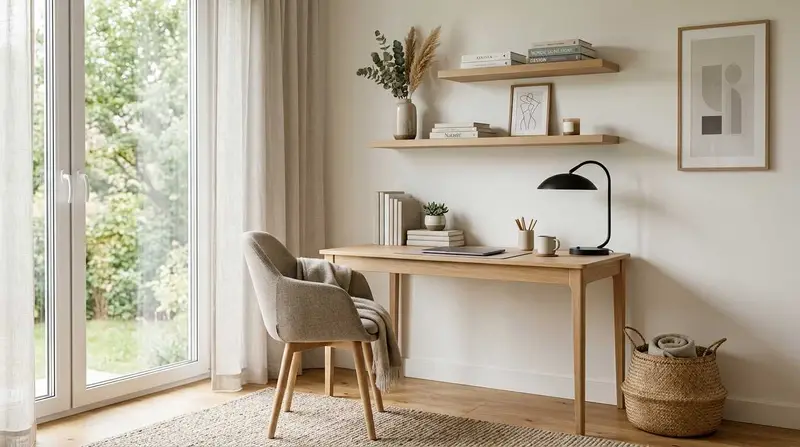
17. Create a Sunroom Home Office
With more people using flexible workspaces at home, a bright sunroom can make an attractive office.
A compact desk positioned near—but not directly against—the window can provide natural light without creating excessive glare on a computer screen.
A comfortable ergonomic chair is essential.
We can keep the décor simple with a few plants, a desk lamp, concealed cable management, and limited accessories.
When the workday ends, the room can easily transition back into a relaxing space.
18. Add Built-In Seating
Built-in benches are particularly useful for narrow or awkwardly shaped sunrooms.
They can make use of otherwise difficult areas while providing generous seating.
Storage can be incorporated underneath the bench, creating a practical solution for blankets, cushions, books, and seasonal accessories.
Add custom cushions in a durable fabric to create a comfortable and polished finish.
19. Make the Windows the Main Feature
Sometimes the best indoor sunroom idea is to keep the design simple and allow the windows to dominate.
If the surrounding landscape is attractive, we should avoid placing tall furniture directly in front of the glass.
Instead, position seating so that people can comfortably enjoy the view.
The furniture becomes a supporting element rather than competing with the architecture.
20. Choose Furniture That Can Handle Sunlight
Sunrooms expose furniture and textiles to significantly more sunlight than many other rooms.
Over time, intense UV exposure can cause certain fabrics and finishes to fade.
When selecting furniture, we should consider durable upholstery and materials designed to tolerate bright environments.
Window treatments can also reduce direct exposure.
This small amount of planning can help preserve the appearance of the room for considerably longer.
21. Use Botanical Décor
Plants aren’t the only way to introduce botanical elements.
We can add botanical prints, floral artwork, nature-inspired cushions, pressed botanical displays, or leafy patterns.
The key is moderation.
One large botanical artwork can be more sophisticated than covering every wall with floral decoration.
22. Add Personal Accessories
A beautiful sunroom should still feel connected to the people who use it.
Personal accessories can include favorite books, travel finds, family photographs, handmade ceramics, artwork, or objects with sentimental value.
These details prevent the space from feeling like a staged showroom.
We can keep surfaces relatively uncluttered while displaying a few meaningful objects.
23. Create a Multi-Purpose Sunroom
If space is limited, we can design a sunroom to perform several functions.
For example, the room might include:
- A reading chair
- A compact dining table
- A small desk
- A storage cabinet
- Several plants
Flexible furniture makes this easier.
A lightweight side table can be moved when necessary, while an ottoman can function as both a footrest and extra seating.
24. Make the Room Comfortable Year-Round
A sunroom can become extremely warm during summer and chilly during winter depending on its construction and climate.
Comfort should therefore be considered alongside aesthetics.
Insulated window treatments can help regulate temperatures. Ceiling fans can improve air circulation, while appropriate heating or cooling solutions can make the room more usable throughout the year.
We should also consider flooring. Rugs can make hard surfaces feel warmer and more comfortable during cooler seasons.
25. Use Symmetry for a Sophisticated Look
Symmetry can make a sunroom feel particularly polished.
Try placing two matching chairs on either side of a small table or positioning identical lamps on both ends of a console.
Symmetry isn’t mandatory, but it can provide a strong foundation for a more formal decorating style.
For a relaxed look, we can deliberately mix furniture while keeping colors and materials coordinated.
26. Decorate With Soft Textures
Sunrooms can sometimes feel visually hard because of all the glass.
Soft materials help balance that effect.
Layer cushions, throws, upholstered seating, rugs, curtains, and woven accessories to introduce warmth.
The contrast between hard glass surfaces and soft textiles creates a more comfortable and inviting environment.
27. Use Mirrors Strategically
A mirror can amplify the feeling of brightness in an indoor sunroom.
Place one opposite or adjacent to a window so that it can reflect available daylight.
Large mirrors can make a small room feel more spacious, while decorative mirrors can serve as wall art.
We should avoid placing mirrors where they create uncomfortable glare.
28. Create a Relaxing Evening Atmosphere
A sunroom shouldn’t lose its appeal once the sun goes down.
Warm lamps, candles, soft textiles, and dimmable lighting can transform the room into an intimate evening retreat.
A comfortable chair positioned beside a floor lamp can become the perfect place to read.
Meanwhile, low lighting around plants or architectural features can create subtle visual interest.
29. Keep the Décor Clutter-Free
Because sunrooms typically contain large areas of glass, clutter becomes particularly noticeable.
We should focus on quality rather than quantity.
Choose a few beautiful accessories instead of filling every surface.
Closed storage can hide everyday items while maintaining a clean appearance.
The more visually open the room remains, the more dramatic the natural light and outdoor views become.
30. Finish With a Cohesive Design
The most successful indoor sunrooms feel intentional from floor to ceiling.
Furniture, wall colors, window treatments, lighting, rugs, plants, and accessories should work together rather than appearing as unrelated purchases.
A simple design formula can help:
Natural light + comfortable seating + natural textures + greenery + functional lighting + restrained décor = a beautiful indoor sunroom.
The exact style can be modern, traditional, coastal, farmhouse, minimalist, bohemian, or luxurious. What matters most is creating a space that feels comfortable and connected to the surrounding environment.
Final Thoughts on Indoor Sunroom Ideas
The best indoor sunroom ideas don’t require a huge budget or an enormous space. A thoughtful furniture arrangement, comfortable textiles, beautiful plants, appropriate window treatments, and a cohesive color palette can completely change the character of a bright room.
We can use the space as a peaceful reading retreat, an elegant dining area, a home office, a breakfast nook, or a flexible lounge for family and guests.
Most importantly, we should design around the natural light and views that make a sunroom special in the first place. Keep the windows visually open, introduce natural materials, choose furniture for comfort, and use décor to enhance rather than compete with the architecture.
With the right balance of comfort, functionality, natural textures, greenery, and personal style, an indoor sunroom can become one of the most beautiful and enjoyable spaces in the home.


Leave a Reply