
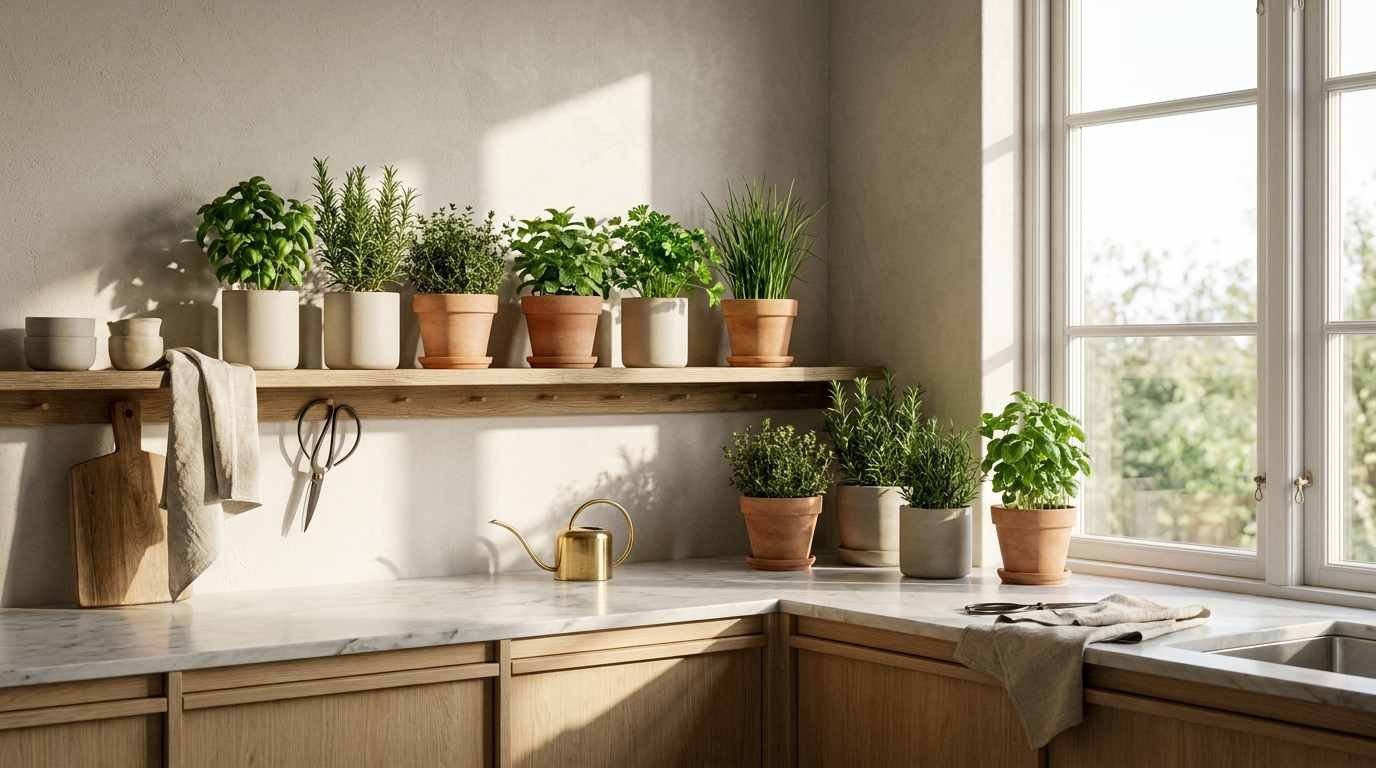

An indoor herb garden design can bring fresh greenery, fragrance, and everyday convenience into almost any home. We do not need a large kitchen, greenhouse, or dedicated gardening room to grow useful herbs indoors. With the right combination of containers, lighting, placement, and styling, an herb garden can become an attractive part of the interior rather than something that looks purely functional.
From a compact kitchen windowsill to a sophisticated wall-mounted display, we can create an indoor herb garden that complements the architecture and décor of the room while keeping fresh herbs within easy reach.
Table of Contents
Choose the Right Location for an Indoor Herb Garden
The first decision in any indoor herb garden design is location. Most culinary herbs appreciate several hours of bright light, so we should begin by looking for the brightest practical area in the home.
A sunny kitchen windowsill is one of the simplest choices. South-facing windows generally provide strong natural light, while east- and west-facing windows can also work well. If the available window receives limited sunlight, we can supplement it with a quality grow light.
The kitchen is particularly convenient because herbs such as basil, parsley, thyme, rosemary, chives, mint, and oregano can be harvested while preparing meals.
However, the kitchen is not the only option. We can place a small herb collection near a dining area, breakfast nook, home office, balcony door, or another bright location. The key is to combine adequate light with easy access for watering and harvesting.
Minimalist Windowsill Herb Garden
For smaller homes, a minimalist windowsill herb garden can provide maximum impact without occupying valuable counter space.
We can use three to five matching pots arranged in a simple row. Identical ceramic, terracotta, stone, or matte-finish containers create a more cohesive appearance than a collection of unrelated pots.
A restrained arrangement works particularly well in modern and Scandinavian interiors. We can select herbs with different leaf shapes and heights to introduce visual variation without making the display feel cluttered.
For example, a combination of basil, thyme, rosemary, and chives offers different textures while remaining practical for everyday cooking.
A narrow wooden tray beneath the containers can also help define the arrangement and protect the windowsill from excess water.
Modern Wall-Mounted Herb Garden
When horizontal space is limited, we can move the garden upward.
A wall-mounted indoor herb garden can turn an unused wall into a functional botanical feature. Vertical planters, individual wall pots, hanging containers, and modular planting systems all provide opportunities to grow herbs without taking over countertops.
For a refined appearance, we can choose containers that match existing finishes in the room. Black metal works beautifully with contemporary kitchens, while natural wood can soften minimalist interiors.
We should avoid overcrowding the wall. A carefully spaced arrangement of several planters often looks more sophisticated than dozens of small containers packed together.
Labels can be kept discreet. Small wooden, brass, or ceramic labels provide useful information while maintaining the decorative character of the display.
Floating Shelves for a Stylish Herb Display
Floating shelves offer another attractive solution for indoor herb garden design.
A narrow shelf installed near a bright window can hold several herb pots while creating an intentional decorative composition. We can combine plants with a few carefully selected accessories, such as a small vase, cookbook, wooden cutting board, or ceramic container.
The goal is to maintain enough space between the herbs so that each plant receives sufficient light and air circulation.
We should also consider shelf material carefully. Natural wood shelves create warmth, while stone or metal can provide a more contemporary appearance.
Because herbs require watering, the containers should have appropriate drainage and the shelf should be protected from moisture.
Hanging Indoor Herb Garden Ideas
A hanging herb garden can introduce greenery at different heights and make use of otherwise overlooked vertical space.
We can install individual hanging planters near a kitchen window or create a compact arrangement using several suspended containers. Macramé hangers work particularly well with relaxed interiors, while metal and minimalist ceramic systems suit contemporary spaces.
Hanging planters should be positioned where they can be watered and harvested comfortably. We should also avoid placing them directly above cooking surfaces where heat, grease, and steam may affect the plants.
A hanging arrangement can become a strong visual feature when the containers are kept consistent in color or material.
Indoor Herb Garden on a Kitchen Counter
Not every indoor herb garden needs to be elaborate. A small countertop herb garden can be both practical and attractive.
We can group several herbs together on a tray near the food preparation area. This creates a defined zone and makes the garden easier to move when cleaning the counter.
For a high-end appearance, we can use coordinated ceramic planters rather than inexpensive plastic nursery pots. A stone tray, wooden board, or metal stand can further elevate the presentation.
The arrangement should still prioritize the plants. Decorative objects should not block light or make watering difficult.
Create a Small Herb Garden Station
For households that use herbs frequently, we can create a dedicated indoor herb garden station.
A narrow console, rolling cart, plant stand, or small shelving unit can accommodate several plants along with gardening supplies. Pruning scissors, plant markers, a small watering can, and potting materials can be stored underneath.
This approach works particularly well when there is no suitable windowsill.
A plant stand positioned near a bright window can become an attractive part of the room while keeping the herbs organized. If natural light is insufficient, a discreet grow light can be integrated into the shelving.
Use Grow Lights When Natural Light Is Limited
Light is one of the most important factors in successful indoor herb gardening.
When a room does not receive enough sunlight, we can use LED grow lights to supplement natural light. This allows us to grow herbs in locations that would otherwise be unsuitable.
Grow lights should be positioned according to the manufacturer’s recommendations, since excessive distance can reduce effectiveness while excessive intensity can stress some plants.
For design-conscious interiors, we can choose compact fixtures with a clean profile and position them beneath shelves or inside a dedicated plant display. This allows the lighting to serve a practical purpose without dominating the room.
Select Herbs According to Your Space
Not every herb has identical growing requirements, so plant selection should reflect the available environment.
Basil generally appreciates warmth and strong light. Thyme and oregano can tolerate relatively dry conditions once established, while mint tends to appreciate consistent moisture. Parsley and chives can also work well indoors when provided with suitable light.
Rosemary can become quite large, so we should allow enough space for it to grow rather than treating it like a small decorative plant indefinitely.
Choosing herbs that we regularly use in cooking also makes the garden more worthwhile. There is little advantage in dedicating valuable indoor space to plants that rarely make it onto the plate.
Choose Containers That Complement the Interior
The containers are an important part of the overall indoor herb garden design.
Terracotta creates a warm, traditional look. White ceramic works beautifully in minimalist spaces. Dark planters can create contrast against light cabinetry, while natural stone and textured ceramics can introduce a more sophisticated organic feel.
We should make sure every container provides proper drainage. Decorative cachepots can be used around nursery pots, but excess water should not be allowed to remain trapped inside.
A consistent container palette is one of the easiest ways to make a collection of herbs look intentional.
Create a Luxury-Inspired Indoor Herb Garden
A refined herb garden does not need expensive materials. The sense of sophistication comes primarily from proportion, organization, consistency, and restraint.
We can use a limited color palette, quality-looking containers, natural materials, and simple plant groupings. Instead of filling every available surface with greenery, we can create one carefully composed botanical moment.
A marble or stone tray, handmade ceramic pots, brushed-metal labels, and a simple wooden shelf can transform an ordinary herb collection into an elegant kitchen feature.
The plants themselves remain the focus.
Small-Space Indoor Herb Garden Design
Apartment kitchens and compact homes can benefit especially from vertical solutions.
We can use:
- Narrow windowsill planters
- Wall-mounted pots
- Hanging planters
- Magnetic containers
- Slim plant stands
- Tiered shelves
- Under-cabinet grow lights
- Small countertop trays
The most effective design uses unused vertical or narrow spaces rather than competing with essential work areas.
Even a three-pot arrangement can provide enough fresh herbs for everyday cooking while adding natural texture to a compact room.
How to Keep an Indoor Herb Garden Looking Beautiful
An indoor herb garden needs regular maintenance to remain attractive.
We should remove yellowing leaves, prune overgrown stems, rotate containers when necessary, and harvest herbs regularly. Plants that become excessively crowded can quickly make an otherwise beautiful arrangement appear untidy.
Watering should be based on each plant’s needs rather than following one rigid schedule. Containers need good drainage, and the growing medium should be appropriate for indoor herbs.
We should also periodically clean the leaves and inspect plants for signs of pests or stress.
A well-maintained herb garden can look more like intentional interior greenery than a collection of struggling plants.
Final Thoughts on Indoor Herb Garden Design
The best indoor herb garden design combines practicality with visual simplicity. Whether we work with a single windowsill or an entire vertical planting wall, the same principles apply: provide suitable light, choose appropriate herbs, use containers with drainage, and create an arrangement that fits naturally into the room.
A thoughtfully designed herb garden can make a kitchen feel fresher, add organic texture to modern interiors, and put fresh ingredients within easy reach.
We do not need a large space to make an impression. A few healthy herbs, attractive containers, and a well-chosen location can turn an ordinary corner into a useful and stylish feature.

Leave a Reply