
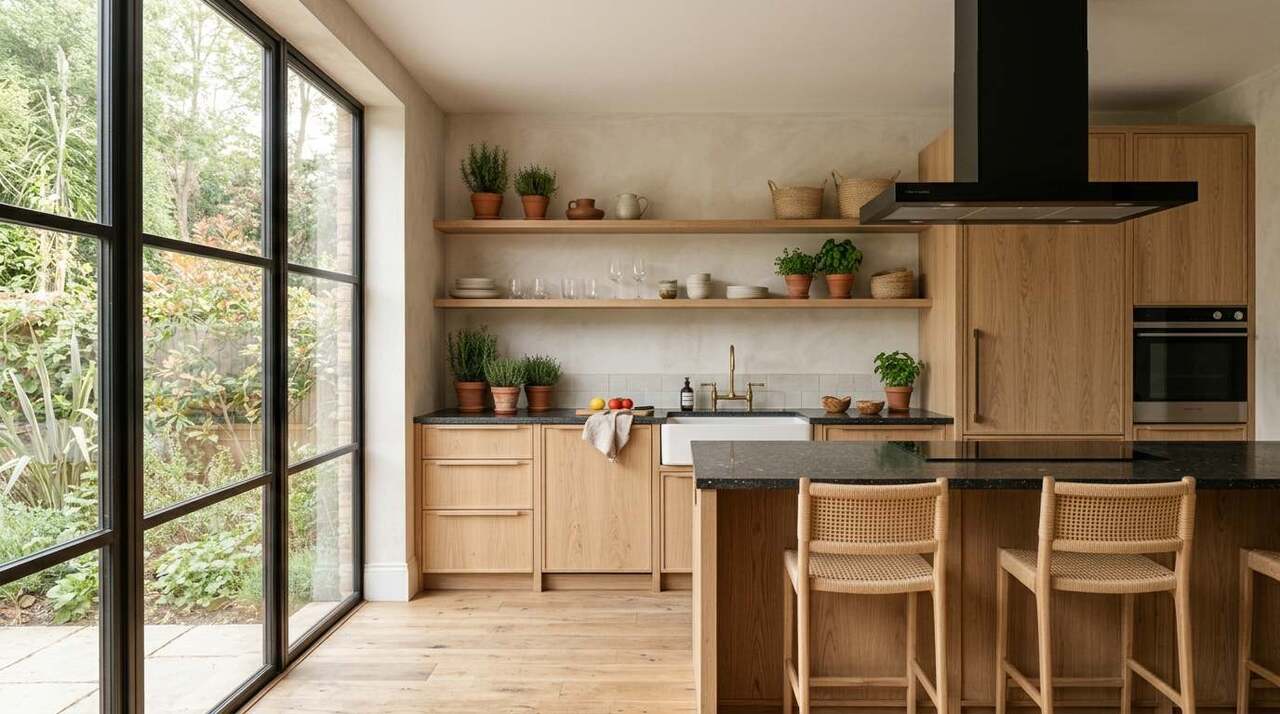

A sustainable kitchen can be beautiful, practical, and comfortable without relying on disposable trends or excessive materials. By choosing durable finishes, energy-efficient appliances, responsible materials, efficient storage, and thoughtful layouts, we can create a kitchen that works well today and continues to perform for years.
The most effective sustainable kitchen design ideas do not require turning the room into a completely rustic or minimalist space. Sustainability can fit almost any aesthetic, from contemporary and Scandinavian to traditional, farmhouse, transitional, or refined modern design. The goal is to make deliberate choices that reduce waste, conserve resources, and extend the useful life of the kitchen.
Suggested reads: Elegant Table Settings: Beautiful Ideas & Guide
Table of Contents
1. Choose Durable Kitchen Cabinets
Cabinetry represents one of the largest investments in a kitchen, so durability should be a priority. Replacing cabinets every few years creates unnecessary material waste and additional costs.
We can make a more sustainable choice by selecting well-constructed cabinets designed for long-term use. Solid wood, quality plywood, and durable engineered materials can all work well when manufactured responsibly.
Instead of choosing cabinets purely because a particular color or door style is currently popular, we can consider timeless proportions and finishes. Neutral cabinetry, simple shaker doors, natural wood, and understated contemporary designs are less likely to feel dated.
Another useful option is refacing existing cabinets. If the cabinet boxes remain structurally sound, replacing doors, drawer fronts, handles, or finishes can dramatically change the appearance without sending an entire kitchen to the landfill.
2. Use Reclaimed and Responsibly Sourced Materials
One of the strongest sustainable kitchen design ideas is to reuse materials whenever possible.
Reclaimed wood can become shelving, an island surface, decorative beams, or accent cabinetry. Reclaimed materials bring natural texture and character while giving existing resources another useful purpose.
For new materials, we can look for products made from responsibly sourced wood, recycled content, or manufacturers with transparent environmental practices. Certifications can also provide useful information about sourcing and manufacturing standards.
The most sustainable material is not necessarily the one with the most impressive marketing description. Longevity, repairability, transportation, manufacturing, and eventual disposal all matter.
3. Install Energy-Efficient Kitchen Appliances
Appliances account for a significant portion of household kitchen energy use. Choosing efficient models can therefore contribute to a more sustainable kitchen while potentially reducing operating costs.
When replacing an appliance, we can compare its energy consumption rather than focusing only on the purchase price. Refrigerators, dishwashers, ovens, induction cooktops, and ventilation systems can have very different long-term energy requirements.
An efficient dishwasher can also reduce water consumption compared with repeatedly washing large quantities of dishes by hand, particularly when it is operated with full loads and appropriate cycles.
The same principle applies to refrigerators. A correctly sized refrigerator with efficient insulation and controls can provide the required storage without consuming more energy than necessary.
4. Consider an Induction Cooktop
Induction cooking has become an increasingly popular option for modern kitchens. It provides rapid, precise heating while transferring energy directly into compatible cookware.
For a sustainable kitchen, induction can be particularly appealing when combined with an efficient electricity supply. It also avoids producing combustion gases inside the kitchen that can accompany gas cooking.
Its smooth surface is another practical advantage. The cooktop is generally easier to wipe clean, which can reduce the need for aggressive cleaning products.
Before switching, we should make sure existing cookware is induction-compatible or budget for suitable replacements.
5. Select Sustainable Kitchen Countertops
Countertops have a major visual impact, but they should also be selected according to durability and maintenance requirements.
Natural stone, recycled-content surfaces, responsibly manufactured engineered materials, wood, and other long-lasting options can all work depending on the kitchen.
Durability is an important part of sustainability. A countertop that remains attractive and functional for decades may be a better long-term choice than an inexpensive surface that needs replacement after only a few years.
We should also consider maintenance. Materials that can be repaired, refinished, resealed, or restored offer advantages over surfaces that must be completely replaced when damaged.
6. Add Recycled or Reclaimed Kitchen Elements
Small design decisions can make a noticeable difference.
Recycled glass can be incorporated into certain countertop and decorative surfaces. Reclaimed timber can create open shelves or an island detail. Recycled metal may work beautifully for lighting, handles, or architectural accents.
Rather than making every element match perfectly, we can combine complementary materials to create a kitchen with depth, texture, and individuality.
This approach also prevents sustainability from becoming visually predictable. An eco-conscious kitchen does not have to look unfinished, rustic, or overly natural.
7. Design a Kitchen That Maximizes Natural Light
Natural light is one of the simplest sustainable kitchen features.
Where the architecture allows it, larger windows, skylights, glass doors, or carefully positioned openings can reduce dependence on artificial lighting during daylight hours.
We can reinforce this effect with light-reflective surfaces and carefully chosen colors. Pale cabinetry, warm neutral walls, reflective backsplashes, and strategically positioned mirrors can help distribute available daylight.
Window treatments should also balance daylight with heat control. In warm climates, appropriate shading can prevent excessive solar heat from entering the kitchen and reduce cooling demands.
8. Choose Energy-Efficient Kitchen Lighting
When artificial lighting is necessary, LED fixtures are a practical choice for a sustainable kitchen.
Instead of illuminating the entire room with a single powerful fixture, we can create layers of lighting:
- Ambient lighting for general illumination
- Task lighting over counters and preparation areas
- Accent lighting for shelves, cabinetry, or architectural details
This arrangement allows us to illuminate only the areas that need light.
Motion sensors, timers, and dimmers can further improve efficiency in appropriate locations. Under-cabinet LEDs, for example, can provide excellent task lighting without requiring the main kitchen lights to be switched on.
9. Reduce Kitchen Water Consumption
Water efficiency should be considered alongside energy efficiency.
A sustainable kitchen can include low-flow faucets, efficient dishwashers, and fixtures designed to reduce unnecessary water use.
A pull-out or pull-down faucet can also improve control during food preparation and cleaning. Some modern faucets include adjustable flow settings, allowing us to use a stronger stream only when necessary.
We should avoid designing the sink area around excessive size alone. A larger sink may be useful for certain households, but the right dimensions depend on cooking habits, cookware, and available counter space.
10. Create an Efficient Kitchen Layout
Sustainability is not only about materials and appliances. Good kitchen planning can reduce waste and unnecessary movement.
A well-designed kitchen places frequently used items near the areas where they are needed. Cutting boards, knives, mixing bowls, spices, and cooking utensils should be easy to access from preparation zones.
Waste, recycling, and composting stations should also be integrated into the layout rather than treated as an afterthought.
When the kitchen works efficiently, we are less likely to purchase duplicate equipment, leave appliances running unnecessarily, or waste food because storage is difficult to manage.
11. Design Better Food Storage
Food waste is a major sustainability concern, making storage an important part of kitchen design.
Transparent containers, pull-out pantry shelves, drawer organizers, and adjustable shelving can make ingredients easier to see and use.
A well-organized refrigerator can serve the same purpose. Designated areas for fresh produce, leftovers, dairy products, and frequently used ingredients make it easier to remember what is available.
We can also include a dedicated pantry or pantry cabinet where dry goods can be stored visibly and systematically.
12. Include a Dedicated Recycling and Composting Area
Recycling becomes easier when the kitchen is designed around it.
Instead of keeping multiple waste containers scattered around the room, we can incorporate a pull-out system into a base cabinet or island.
A practical station might include separate compartments for:
- General waste
- Paper and cardboard
- Glass
- Metal and plastics
- Food scraps or compost
The exact categories depend on local waste-collection systems, but the design principle remains the same: make responsible disposal convenient.
13. Choose Low-VOC Paints and Finishes
Indoor air quality deserves attention when selecting kitchen finishes.
Low-VOC or zero-VOC paints can reduce emissions from certain finishing products. We can also consider the finishes used on cabinetry, flooring, furniture, and other surfaces.
A sustainable kitchen should ideally support both environmental responsibility and a comfortable indoor environment.
Before purchasing any finish, it is useful to check the manufacturer’s technical information rather than relying solely on broad terms such as “green” or “natural.”
14. Select Long-Lasting Kitchen Flooring
Kitchen floors experience heavy traffic, spills, dropped cookware, and frequent cleaning.
A sustainable flooring choice should therefore be durable enough to withstand everyday use.
Depending on the design, suitable options may include responsibly sourced hardwood, cork flooring ,bamboo, stone, ceramic tile, porcelain tile, or other durable materials.
Repairability matters too. A floor that can be refinished or repaired selectively may avoid the need for complete replacement.
The best choice depends on climate, household use, moisture exposure, maintenance requirements, and the existing structure.
15. Install Open Shelving Strategically
Open shelving can reduce the amount of material required for certain storage areas while making frequently used items easy to access.
However, sustainable design does not mean removing all cabinetry. Open shelves work best when used strategically.
We can reserve them for everyday dishes, glassware, cookbooks, or attractive kitchen accessories. Less frequently used items can remain behind closed doors.
Using a few carefully positioned shelves can create a lighter visual appearance without sacrificing practical storage.
16. Buy Fewer but Better Kitchen Products
Sustainable design extends beyond the built-in elements of the room.
Instead of filling cabinets with single-purpose gadgets, we can prioritize versatile, durable kitchen tools that perform multiple functions.
Quality cookware, reusable food-storage containers, sturdy utensils, washable cloths, and repairable appliances can reduce reliance on disposable alternatives.
Before purchasing something new, it is worth considering whether an existing tool can perform the same job.
17. Use Timeless Design Instead of Fast Trends
One of the most sustainable kitchen design ideas is also one of the simplest: design for longevity.
Highly specific trends can look appealing when they first appear but may become visually dated. Constantly remodeling a kitchen because its style has changed creates unnecessary consumption.
A timeless foundation allows us to introduce personality through replaceable elements such as pendant lights, stools, textiles, artwork, hardware, and accessories.
This approach makes it possible to refresh the room without replacing cabinets, countertops, flooring, or major appliances.
18. Consider a Sustainable Kitchen Island
A kitchen island can be designed with sustainability in mind from the beginning.
We can use reclaimed wood, responsibly sourced timber, durable stone, or recycled-content materials depending on the design.
The island can also improve functionality by combining food preparation, storage, seating, and waste sorting in one central structure.
However, the island should be appropriately sized. An oversized island can make circulation difficult and consume materials without providing meaningful additional functionality.
19. Incorporate Indoor Herbs and Edible Plants
A small herb garden can add greenery while providing fresh ingredients close to the cooking area.
Basil, mint, parsley, thyme, rosemary, and chives can work well in suitable indoor conditions.
A sunny windowsill, wall-mounted planter, or dedicated shelf can create a compact growing area without requiring a large garden.
The benefit is not simply decorative. Growing small quantities of frequently used herbs can make them readily available while reducing the likelihood of unused bunches being forgotten in the refrigerator.
20. Plan for Repair, Replacement, and Adaptability
A truly sustainable kitchen should be designed with its future in mind.
Cabinet hardware should be replaceable. Shelving should be adjustable where practical. Appliances should be accessible for servicing rather than permanently enclosed. Fixtures should be selected with replacement parts and maintenance in mind when available.
Adaptability extends the useful life of the entire kitchen.
A kitchen that can accommodate changing household needs is less likely to require a complete renovation. Adjustable storage, flexible work areas, and durable finishes can make the room useful for many years.
How to Create a Sustainable Kitchen on a Budget
Sustainable kitchen design does not require replacing everything at once.
We can begin with the changes that have the greatest practical impact. Improving lighting, organizing storage, repairing existing cabinets, reducing food waste, and replacing inefficient appliances as they reach the end of their useful life can all be approached gradually.
Painting existing cabinetry can provide a dramatic transformation without purchasing new cabinet boxes. New handles, a backsplash update, better lighting, and carefully selected accessories can also refresh the room.
When buying new products, we should consider total lifetime value rather than the lowest initial price. A durable product that lasts considerably longer may reduce replacement waste and long-term spending.
Sustainable Kitchen Design Ideas for Small Kitchens
Small kitchens can actually make sustainable choices easier because they require fewer materials and less energy to illuminate and operate.
We can maximize vertical storage, use multifunctional furniture, install compact appliances where appropriate, and choose light-reflective finishes.
Pull-out pantry systems, drawer organizers, wall-mounted rails, foldable surfaces, and integrated recycling bins can make a small kitchen considerably more functional.
The key is to avoid filling limited space with unnecessary products. Every element should have a clear purpose.
Modern Sustainable Kitchen Design
A modern sustainable kitchen can combine clean lines with natural textures and responsible materials.
A particularly effective approach is to pair simple cabinetry with warm wood, stone-inspired surfaces, efficient appliances, integrated lighting, and uncluttered countertops.
Sustainability does not require sacrificing sophistication. In fact, durable materials, restrained design, natural textures, and high-quality craftsmanship can create an elegant kitchen that remains relevant for years.
Final Thoughts
The most successful sustainable kitchen design ideas combine environmental responsibility with everyday practicality.
We can start by building for longevity, choosing durable materials, reducing unnecessary consumption, improving energy and water efficiency, and designing storage around real household habits. Reusing existing cabinetry, selecting efficient appliances, incorporating natural light, and creating convenient recycling and food-storage systems can further reduce the kitchen’s environmental footprint.
A sustainable kitchen does not need to announce that it is sustainable. The strongest designs simply feel efficient, durable, comfortable, timeless, and thoughtfully considered.
By making fewer but more deliberate choices, we can create a kitchen that looks beautiful today while remaining useful, adaptable, and easier to maintain for many years to come.


Leave a Reply