

Corners are often the most overlooked areas in a home. They can feel too small for substantial furniture, too awkward for decoration, or simply too difficult to arrange. Yet with the right approach, unused corner space can become one of the most useful parts of a room.
Whether we are working with a compact apartment, a large open-plan home, or a room with an unusual layout, there are plenty of ways to turn empty corners into attractive and functional spaces. The key is to choose solutions that match the room’s purpose while keeping the overall design comfortable and uncluttered.
Here are 10 practical ways to better use corner space while making the room feel more intentional.
Table of Contents
1. Create a Comfortable Reading Corner
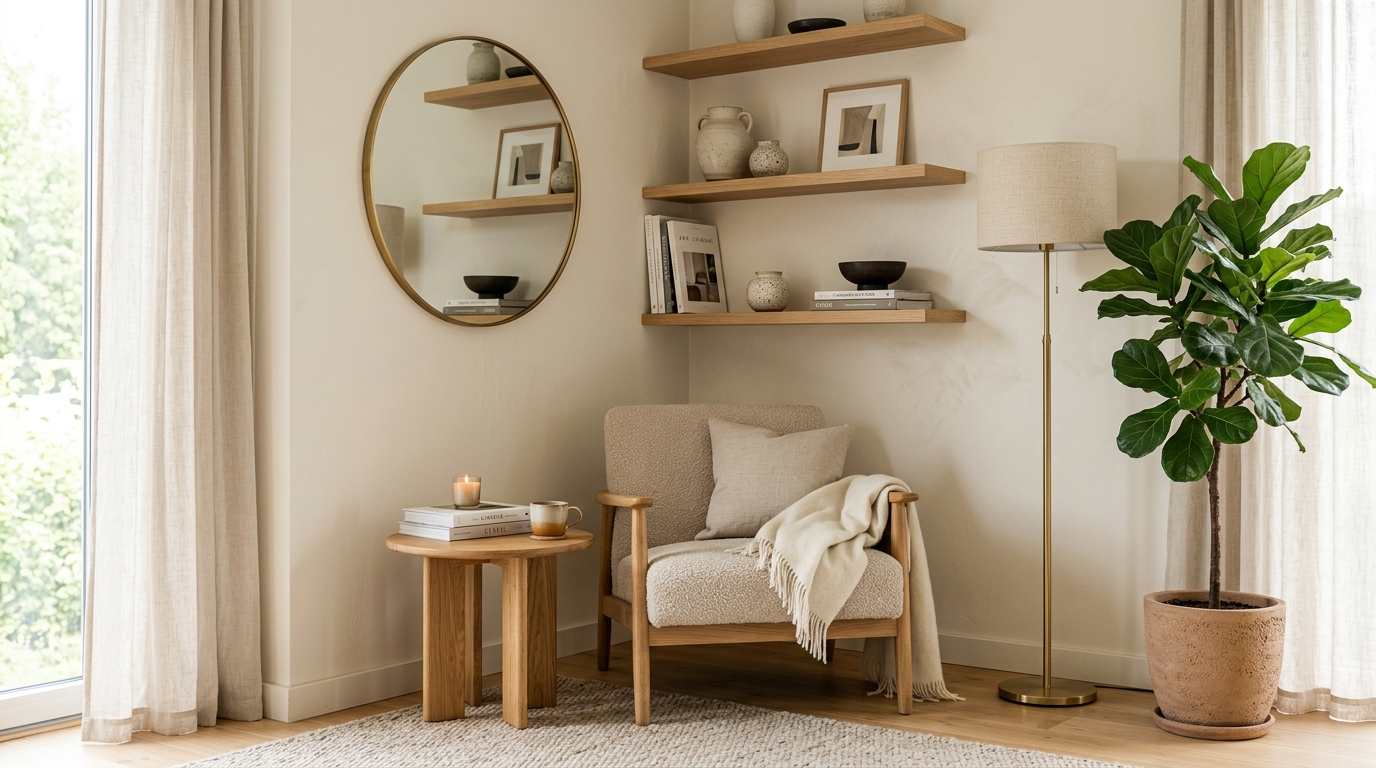
One of the easiest ways to use an empty corner is to turn it into a small reading area. A corner naturally creates a sense of separation without requiring a wall or room divider.
We can place a comfortable armchair at an angle, add a small side table, and finish the area with a floor lamp. A soft throw and a cushion can make the space feel warmer without taking up much room.
For a narrow corner, we should avoid oversized seating. A compact lounge chair or armless chair can provide the same function while preserving walking space.
A wall-mounted reading light can be particularly useful because it eliminates the need for a large floor lamp. A small bookshelf nearby can complete the arrangement.
2. Add Corner Shelving
Corner shelving is one of the most versatile solutions for awkward spaces. Instead of leaving vertical space unused, we can use shelves to display books, artwork, plants, ceramics, photographs, or everyday objects.
Floating corner shelves work particularly well in small rooms because they provide storage without creating the visual weight of a large cabinet.
For a more substantial look, a tall corner shelving unit can become a decorative focal point. We can keep frequently used items at accessible heights and use the upper shelves for decorative pieces.
To maintain a refined appearance, it is better to leave some shelf space empty rather than filling every surface.
3. Build a Small Home Office
An unused corner can become a surprisingly effective workstation. This is especially useful when a separate home office is not available.
A compact corner desk can provide enough room for a laptop, monitor, notebook, and a few essential accessories. Wall-mounted shelves above the desk can provide additional storage without consuming valuable floor space.
When designing a corner workspace, we should prioritize comfortable proportions. The desk should provide enough legroom, while the chair should be easy to move in and out without blocking the rest of the room.
Cable management also matters. Keeping wires organized prevents the corner from looking cluttered and makes even a very small workspace feel polished.
4. Use a Corner Cabinet for Hidden Storage
Not everything needs to be displayed. Sometimes the best way to use corner space is with closed storage.
A corner cabinet can hide books, electronics, household supplies, table linens, toys, or other items that would otherwise create visual clutter.
In dining rooms, a corner cabinet can store serving pieces and glassware. In living rooms, it can hold media accessories or board games. In bedrooms, a narrow corner wardrobe can provide additional clothing storage.
For a cohesive interior, we can choose a cabinet that shares a similar color or material with existing furniture. This helps the storage blend naturally into the room.
5. Turn the Corner Into a Green Plant Display
Plants can transform an empty corner without requiring complicated furniture. A collection of greenery can add texture, height, and natural character to an otherwise forgotten area.
A tall indoor plant can fill a vertical corner beautifully. Fiddle-leaf figs, rubber plants, palms, and other architectural varieties can work particularly well when the available light suits them.
For darker corners, we should select plants according to their actual light requirements rather than choosing them solely for appearance.
Another option is to combine plants at different heights. A tall plant on the floor, a smaller plant on a stand, and a trailing plant on a nearby shelf can create a layered arrangement.
6. Install a Corner Banquette
In kitchens and dining areas, corners can be valuable opportunities for additional seating.
A corner banquette can turn an awkward area into a comfortable breakfast nook or casual dining space. It can also provide storage underneath the seating, making the solution both decorative and practical.
We can pair a built-in bench with a small round or square table. Rounded tables are particularly useful when circulation is tight because they eliminate sharp corners that can interfere with movement.
Soft upholstery can make the space feel inviting, while durable fabrics are preferable in busy family areas.
7. Create a Stylish Entryway Drop Zone
Entryways often contain awkward corners that could serve a practical purpose. A small console, wall hooks, and a basket can transform an unused area into a useful entryway organization station.
A narrow console table can hold keys, sunglasses, mail, and decorative accessories. Above it, hooks can provide a convenient place for coats or bags.
If floor space is limited, we can use a floating shelf instead of a conventional console. A mirror above the shelf can make the entryway feel larger while adding another useful element.
The goal is to give everything a designated place without turning the corner into a storage pile.
8. Make a Cozy Conversation Area
A corner does not always need to have a single obvious purpose. It can become part of a larger seating arrangement.
Instead of pushing every piece of furniture against the walls, we can use an empty corner to create a small conversation zone. Two compact chairs positioned toward each other with a small table between them can establish an intimate seating area.
This works particularly well in large living rooms where the furniture arrangement otherwise feels disconnected.
An area rug can help visually define the zone. We should choose a rug large enough to connect the chairs and table rather than placing several small rugs throughout the room.
9. Use a Corner Mirror to Add Depth
A strategically placed mirror can make an unused corner feel brighter and more purposeful.
A large decorative mirror can reflect natural light and create the impression of additional depth. This can be especially effective in small living rooms, bedrooms, hallways, and entryways.
Instead of automatically hanging the mirror flat against the wall, we can consider a corner-friendly design or position it so that it reflects an attractive part of the room.
The reflection matters. A mirror facing a beautiful window, artwork, plant arrangement, or architectural feature can enhance the room. A mirror reflecting clutter can have the opposite effect.
10. Design a Dedicated Hobby or Creative Corner
An unused corner can become a personalized creative space for activities such as painting, writing, sewing, crafting, music, or collecting.
A small hobby station does not need to occupy an entire room. A narrow desk, comfortable chair, storage drawers, and a few wall organizers may be enough.
For creative activities, vertical organization is particularly valuable. Pegboards, rails, shelves, and wall-mounted containers can keep supplies accessible without covering the desk surface.
We can also use the corner to display finished projects or favorite objects. This makes the space feel personal rather than simply functional.
How to Make Corner Space Feel Intentional
The biggest mistake with corner decorating is treating the area as an afterthought. Adding a random chair or decorative object simply because the corner is empty does not necessarily improve the room.
Instead, we should consider how the corner relates to the rest of the space.
Start by asking what the room actually needs. If storage is limited, prioritize shelving or cabinets. If the room lacks seating, create a small lounge area. If there is no workspace, consider a compact desk.
Scale is equally important. Oversized furniture can make a corner feel cramped, while pieces that are too small may look disconnected from the room.
Think Vertically
When floor space is limited, the walls become valuable real estate.
Tall shelving, artwork, mirrors, wall-mounted lighting, and vertical plants can make better use of the full height of a corner.
This approach also helps draw the eye upward, which can make a compact room feel more spacious.
Keep the Area Uncluttered
A useful corner should not become a place where miscellaneous items accumulate.
We can maintain a cleaner appearance by choosing furniture with built-in storage, using baskets for smaller objects, and limiting decorative pieces to those that genuinely contribute to the room.
Negative space is part of the design. Leaving some breathing room around furniture and accessories often makes a corner look more sophisticated.
Match the Existing Interior
A corner solution should feel connected to the rest of the room.
We can repeat existing materials, finishes, colors, or textures to create continuity. For example, a wooden corner shelf can complement a wooden coffee table, while black metal shelving can connect with black lighting fixtures.
This does not mean everything needs to match perfectly. Coordinated elements are usually enough to make the arrangement feel deliberate.
Small Corner Space Ideas for Apartments
Small homes require especially thoughtful use of corners. Fortunately, many of the solutions above can be adapted to compact rooms.
A floating desk can create a workspace without taking up much floor area. Floating shelves can provide storage without the footprint of a bookcase. A narrow cabinet can add hidden storage, while a wall-mounted mirror can provide both decoration and depth.
Multifunctional furniture is particularly useful. A bench with storage, for example, can provide seating while keeping blankets, shoes, books, or other belongings organized.
When space is extremely limited, we should favor furniture with a slim profile and avoid blocking doors, windows, radiators, or major circulation paths.
Make Every Corner Count
An awkward corner does not have to remain empty. With a little planning, it can become storage, seating, a workspace, a reading nook, a plant display, or a beautiful decorative feature.
The best solution depends on the needs of the room. Rather than filling every empty space, we should identify what is missing and use the corner to provide it.
By combining appropriate scale, practical storage, thoughtful lighting, and a restrained selection of accessories, even the most overlooked corner can become an intentional part of the home.
A well-designed room is not simply about having beautiful furniture. It is about making the available space work beautifully for everyday life.


Leave a Reply