
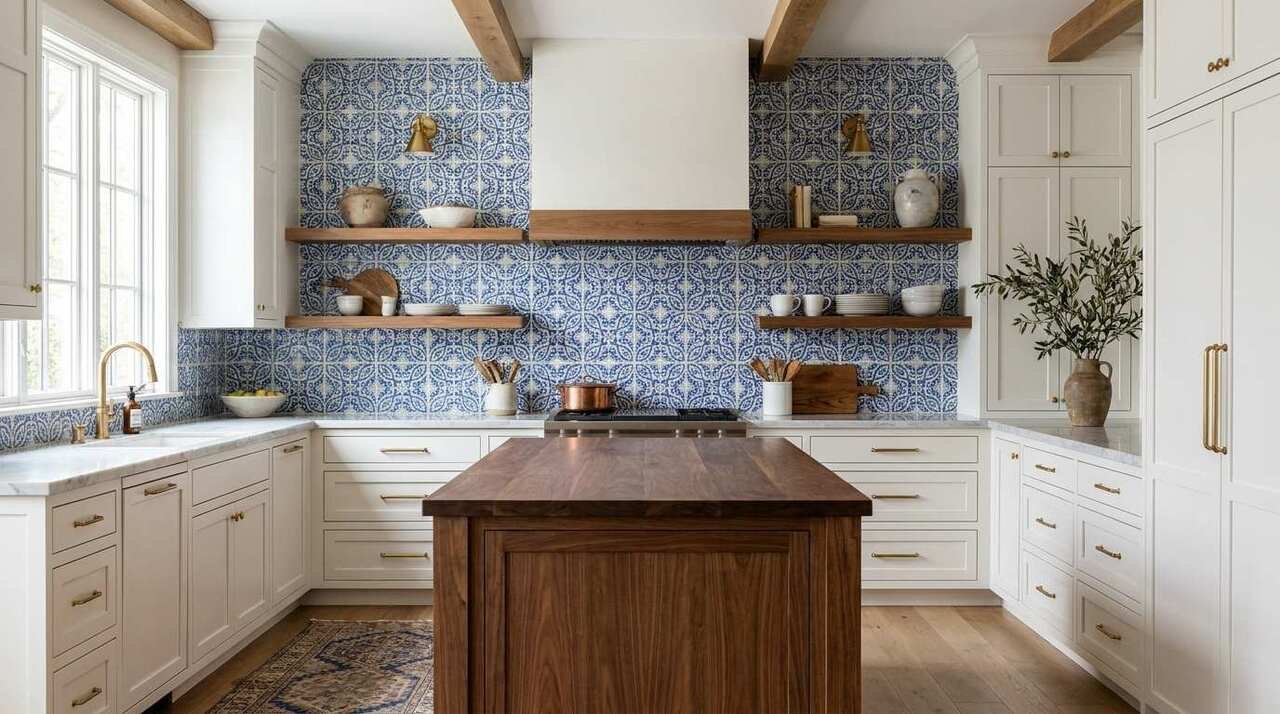

Azulejo tile backsplash ideas bring together color, pattern, craftsmanship, and personality in a way few other kitchen finishes can match. Traditionally associated with decorative ceramic tiles, azulejos can transform an ordinary backsplash into a distinctive architectural feature.
From classic blue-and-white patterns to modern geometric designs, azulejo-inspired tile works beautifully in traditional, Mediterranean, coastal, farmhouse, Spanish, Portuguese, and contemporary kitchens.
The best part is that we don’t have to cover an entire wall with elaborate patterns. A carefully chosen backsplash behind the range, sink, or countertop can provide all the visual impact we need.
Table of Contents
What Is Azulejo Tile?
Azulejo refers to decorative glazed ceramic tile traditionally associated with Portugal and Spain. These tiles are often recognized for intricate patterns, repeating motifs, rich colors, and hand-crafted character.
Classic azulejos frequently feature blue and white designs, although contemporary interpretations can include green, terracotta, cream, black, yellow, and muted neutral tones.
For a kitchen backsplash, we can use authentic decorative tiles, reproduction tiles, or modern tiles inspired by traditional azulejo patterns.
This flexibility makes azulejo tile particularly useful when we want a backsplash with personality without committing to a completely traditional kitchen.
1. Classic Blue and White Azulejo Backsplash
A blue and white azulejo backsplash is one of the most timeless choices.
The combination creates a crisp, sophisticated appearance while adding more character than plain white subway tile. Deep cobalt blue works especially well with white cabinets, natural wood, marble countertops, and brushed brass hardware.
For a traditional look, we can install repeating patterned tiles across the entire backsplash.
For a more contemporary approach, we can use decorative blue-and-white tiles only behind the cooktop while keeping the remaining backsplash simple.
2. Mediterranean-Inspired Kitchen Backsplash
Mediterranean kitchens are a natural setting for azulejo tile.
We can combine patterned backsplash tiles with warm wood cabinetry, natural stone countertops, aged brass fixtures, and textured plaster walls to create a relaxed European atmosphere.
Look for patterns featuring:
- Botanical motifs
- Geometric shapes
- Star patterns
- Floral details
- Hand-painted effects
- Blue, cream, and terracotta combinations
The goal is to create warmth rather than make every surface compete for attention.
3. Modern Azulejo Tile Backsplash
Azulejo doesn’t have to make a kitchen look old-fashioned.
Modern interpretations use simplified patterns, restrained colors, larger tile formats, and subtle geometric designs.
A muted gray-and-white pattern can provide visual interest without overwhelming a minimalist kitchen. Similarly, black-and-cream patterned tiles can create a sophisticated backsplash when paired with sleek cabinetry.
We can also choose a single repeating motif rather than a highly detailed patchwork pattern.
This keeps the historical inspiration while giving the kitchen a distinctly contemporary appearance.
4. Small Azulejo Tiles for a Detailed Look
Small-format tiles are particularly effective when we want the backsplash to become a focal point.
Because smaller tiles create more grout lines and repeated visual details, they naturally attract attention.
A compact backsplash area behind the range is an excellent place to experiment with this approach.
For example, a small blue floral pattern can sit between simple white cabinets and a neutral countertop. The result feels decorative without making the entire kitchen visually busy.
5. Azulejo Tile Behind the Stove
The wall behind the range is one of the best locations for a statement backsplash.
Instead of installing patterned tile across the entire kitchen, we can create a decorative range backsplash framed by simpler surrounding tiles.
This approach works particularly well when the kitchen already contains several strong materials.
A decorative panel behind the stove can function almost like artwork while still providing a practical, wipeable surface.
6. Portuguese-Inspired Azulejo Kitchen
For a distinctly European atmosphere, we can draw inspiration from traditional Portuguese tilework.
Portuguese-inspired designs often feature elaborate geometric and floral patterns, particularly in shades of blue and white.
Pairing these tiles with natural wood, white cabinetry, ceramic accessories, and warm metal finishes creates an inviting kitchen with plenty of character.
We don’t need every element to look historically authentic. Mixing traditional-looking tile with contemporary appliances and cabinetry can actually create a more balanced result.
7. Spanish-Inspired Patterned Tile
Spanish-style kitchens offer another excellent opportunity for azulejo-inspired backsplashes.
Instead of relying exclusively on blue and white, we can introduce terracotta, mustard, olive green, cream, and warm brown tones.
These colors work especially well with natural wood cabinets and terracotta flooring.
For a relaxed Spanish aesthetic, consider combining patterned backsplash tiles with exposed wood beams, textured walls, wrought-iron details, or handmade ceramics.
8. Neutral Azulejo Tile Backsplash
Pattern doesn’t always have to mean bold color.
Neutral azulejo-inspired tiles can deliver the same decorative quality in a softer palette.
Consider:
- Ivory and beige
- Cream and taupe
- Soft gray and white
- Sand and terracotta
- Charcoal and off-white
This is an excellent option for kitchens where we want architectural interest without introducing a strong accent color.
Neutral patterned tile also makes it easier to change cabinet hardware, accessories, or wall colors later.
9. Blue Azulejo Backsplash With White Cabinets
White cabinets provide a clean background for almost any azulejo pattern.
A rich blue backsplash immediately adds contrast and gives the kitchen a more curated appearance.
We can use blue in different ways depending on the desired mood. Navy creates a sophisticated effect, cobalt feels energetic and traditional, while dusty blue produces a softer coastal atmosphere.
Natural wood accessories can prevent a blue-and-white kitchen from feeling too cool.
10. Green Azulejo Tile for a Fresh Kitchen
Green is an increasingly appealing alternative to traditional blue.
Muted sage, olive, emerald, and deep forest green can all work beautifully with decorative tile patterns.
Green patterned tiles pair especially well with warm white cabinets, walnut wood, brass hardware, and natural stone countertops.
For a sophisticated look, choose a tile where green is the dominant color and the pattern uses cream or beige as the secondary shade.
11. Azulejo Backsplash With Wood Cabinets
Patterned tile and natural wood make an especially attractive combination.
Wood introduces warmth and organic texture, while azulejo tile provides color and decorative detail.
Light oak cabinets can soften a colorful backsplash, while darker walnut cabinetry creates a richer, more dramatic kitchen.
When working with strongly patterned tiles, we should generally let the wood retain a relatively natural finish rather than introducing another competing pattern.
12. Azulejo Tile as a Kitchen Focal Point
A backsplash doesn’t necessarily have to be the same throughout the entire kitchen.
We can use decorative azulejo tile as a focal point while surrounding it with a simpler tile or painted wall.
One effective arrangement is a patterned tile panel behind the range with plain ceramic tile on the remaining walls.
Another option is to create a framed decorative section above the countertop.
This strategy provides the visual impact of statement tile while keeping the overall kitchen balanced.
13. Mix Azulejo Patterns Carefully
Mixing patterns can produce a beautiful result, but restraint is important.
If the backsplash contains an elaborate pattern, we should keep other kitchen finishes relatively quiet.
For example, patterned azulejo tile can be paired with:
- Plain shaker cabinets
- Simple countertops
- Minimal hardware
- Solid-color rugs
- Natural wood accents
When multiple patterns are necessary, keeping them within the same color family helps create visual cohesion.
14. Handmade-Look Azulejo Tile
For a more authentic and collected appearance, consider tiles with subtle variations in color, texture, and finish.
Handmade-look ceramic tiles can create the impression that the backsplash has developed character over time.
Slight imperfections can actually make the kitchen feel warmer and more personal.
This style works particularly well in Mediterranean, European farmhouse, rustic, and old-world-inspired kitchens.
15. Azulejo Backsplash With Marble Countertops
Marble and decorative ceramic tile can work together beautifully, but we should avoid creating too many competing patterns.
If the countertop has prominent veining, choose an azulejo design with a relatively controlled pattern.
For quieter marble, we can afford to be more adventurous with the backsplash.
White marble with blue patterned tile is a classic combination, while warmer stone works particularly well with cream, terracotta, olive, and brown-toned azulejo designs.
16. Small Kitchen Azulejo Backsplash Ideas
A small kitchen doesn’t mean we have to avoid patterned tile.
In fact, a carefully selected decorative backsplash can make a compact kitchen feel more intentional.
For smaller spaces, consider using:
- A limited color palette
- Repeating patterns
- Light background colors
- Smaller decorative sections
- Glossy surfaces that reflect light
Instead of covering every available wall with an intricate design, we can use azulejo tile strategically behind the sink or range.
17. Farmhouse Kitchen With Azulejo Tile
Azulejo can add unexpected personality to a farmhouse kitchen.
White or cream cabinets, wood countertops, open shelving, and vintage-inspired fixtures provide a simple backdrop for patterned tile.
Blue-and-white designs are especially effective, but muted green and earthy patterns can create an equally attractive result.
The combination works because traditional decorative tile adds craftsmanship without requiring the entire kitchen to look historically themed.
18. Coastal Kitchen With Blue Azulejo
Blue-and-white azulejo tiles can also complement coastal interiors.
Choose lighter blue shades, sandy neutrals, white cabinetry, and natural materials for a relaxed coastal interpretation.
Rather than using nautical decorations, let the tile provide the color and personality.
Natural rattan, light oak, linen textiles, and simple ceramic accessories can complete the look without making the kitchen feel overly themed.
How to Choose the Right Azulejo Backsplash
Before choosing a tile, we should consider the existing elements in the kitchen.
Start with the cabinet color, countertop material, flooring, lighting, and hardware finish.
If these elements are already visually strong, a simpler azulejo pattern will usually create a more balanced result.
We should also decide whether the backsplash is intended to blend into the kitchen or serve as the primary focal point.
For a subtle appearance, choose neutral colors and smaller patterns.
For a statement backsplash, choose stronger contrast, larger motifs, or a more elaborate repeating design.
Should We Use Patterned Tile Throughout the Kitchen?
There is no requirement to use decorative tile everywhere.
In many kitchens, less is more.
A concentrated backsplash behind the range can create a dramatic focal point while keeping the rest of the kitchen calm.
For larger kitchens, however, extending the pattern across multiple walls can create a stronger architectural statement.
The right choice depends on the amount of visual activity already present in the room.
Final Thoughts on Azulejo Tile Backsplash Ideas
The best azulejo tile backsplash ideas combine decorative beauty with the practical needs of a working kitchen.
Whether we prefer classic Portuguese-inspired blue and white, warm Spanish patterns, modern geometric designs, or subtle neutral tiles, there is an azulejo-inspired style that can complement almost any interior.
The key is balance.
Let the backsplash provide personality while allowing cabinets, countertops, lighting, and architectural details to support the overall design. A thoughtfully selected patterned tile can become more than a practical kitchen surface—it can become the defining detail that gives the entire room its character.


Leave a Reply