
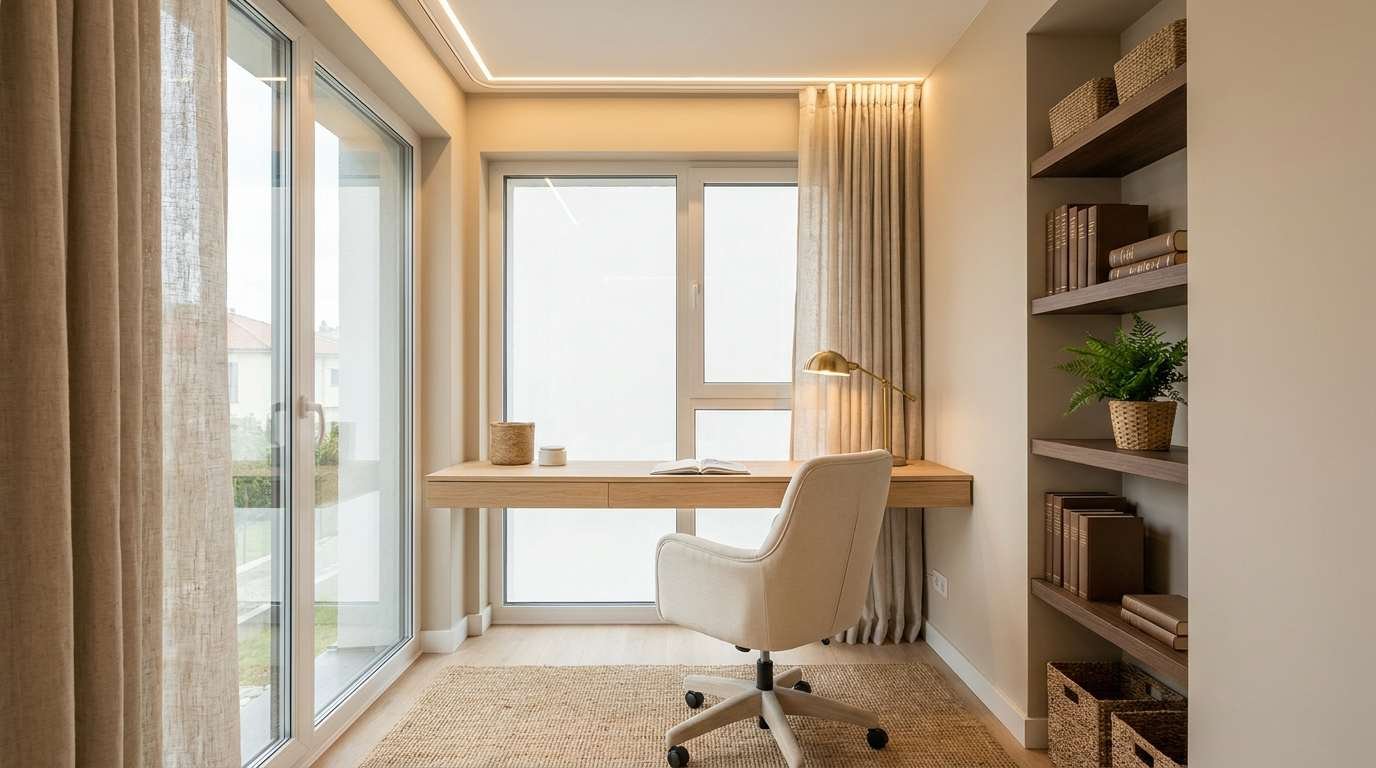

A small home office can be surprisingly functional when every inch has a purpose. You don’t need a dedicated room or a large desk to create a workspace that feels comfortable, organized, and stylish. A quiet corner, unused closet, bedroom nook, hallway, or even the space behind a sofa can become an effective home office with the right layout and furniture.
The best small home office ideas focus on three things: using vertical space, choosing furniture that fits the room, and keeping the workspace visually uncluttered. When floor space is limited, smart storage and multifunctional furniture become more important than simply buying smaller versions of everything.
From floating desks and built-in shelving to hidden workstations and cozy bedroom office corners, these ideas can help you turn an awkward or overlooked area into a workspace you’ll actually enjoy using.
Table of Contents
What Makes a Small Home Office Work?
A successful small home office isn’t simply a large office squeezed into a smaller footprint. It’s a workspace designed around the space you actually have.
The most effective setups usually combine a compact work surface, comfortable seating, accessible storage, adequate lighting, and a clear boundary between work and the rest of the room.
Before buying furniture, measure the available area and consider the full footprint of the setup—including the chair when you pull it away from the desk. Current small-office design guidance increasingly emphasizes planning the working footprint rather than shopping for furniture first.
Quick Small Home Office Formula
Small footprint + vertical storage + multifunctional furniture + good lighting + clutter control = functional home office.
The goal isn’t to fit as much furniture as possible. It’s to create enough room for the tasks you perform most often while keeping the surrounding space usable.
25+ Small Home Office Ideas to Try
1. Turn an Unused Corner Into a Home Office
An empty corner is one of the easiest places to create a small workspace.
Use a compact rectangular desk or a corner desk, then add a slim chair that can slide underneath when you’re finished. Floating shelves above the desk can provide storage without taking up valuable floor space.
This arrangement works particularly well in:
- Living rooms
- Bedrooms
- Guest rooms
- Large hallways
- Studio apartments
Keep the palette simple so the office feels like part of the room rather than an object placed inside it.
2. Install a Floating Desk
A wall-mounted desk eliminates the legs and supports that make traditional desks visually heavy.
This is particularly useful in very narrow rooms because the floor underneath remains open. You can use the area beneath the desk for a small drawer unit, basket, or simply leave it clear.
A floating desk also makes cleaning easier and can create a more minimalist appearance.
3. Create a Closet Office
An unused closet can become an excellent micro office.
Remove unnecessary storage, install a work surface at a comfortable height, and use the existing vertical walls for shelves or pegboards. When the office isn’t being used, you can close the doors and hide the workspace.
This approach is especially useful when your home doesn’t have a spare room.
4. Hide a Desk Behind a Door
If you don’t have enough space for a permanent office, consider creating a workstation that can be concealed.
A shallow desk positioned inside a cabinet, closet, or built-in storage wall can disappear when the doors are closed. The concept is particularly useful in multipurpose rooms where the office needs to visually disappear after working hours.
Fold-away and hidden workstations are increasingly relevant to small-space living because they allow one area to perform several functions.
5. Use the Space Behind the Sofa
The wall behind a sofa is often overlooked.
A slim console-style desk can transform this unused strip into a functional workstation. Choose a desk that doesn’t project too far into the walking area and use baskets or drawers to keep office supplies organized.
This is a practical solution when your living room needs to serve as both lounge and office.
6. Build a Bedroom Office Nook
A small bedroom can accommodate a workspace without sacrificing its relaxing atmosphere.
Position a narrow desk beside the wardrobe, near a window, or along an unused wall. Choose furniture that complements the bedroom instead of looking like traditional office equipment.
For a calmer appearance, use:
- Warm wood
- Soft neutrals
- Natural textures
- Minimal desk accessories
- One or two decorative pieces
The result should feel intentional rather than temporary.
7. Go Vertical With Office Storage
When floor space is limited, look upward.
Wall-mounted shelves, pegboards, narrow bookcases, cabinets, and rail systems can dramatically increase storage capacity without consuming much floor area.
Use the lower portion of the wall for frequently used items and reserve higher shelves for things you don’t need every day.
8. Install Shelves Above the Desk
A wall directly above your desk is valuable real estate.
Two or three floating shelves can hold books, notebooks, storage boxes, plants, and decorative objects.
For a polished look, avoid filling every inch. Leave some open space between objects so the arrangement doesn’t become visually overwhelming.
9. Choose a Desk With Built-In Storage
A compact desk with drawers can be more useful than a larger desk paired with a separate storage cabinet.
Look for designs with:
- One or two drawers
- Shelving
- A cable-management opening
- A narrow side compartment
- Hidden storage
In a small office, every piece of furniture should ideally solve more than one problem.
10. Try a Fold-Down Desk
A fold-down desk is ideal when you only need a workspace for part of the day.
Mounted to the wall, it can function as a desk when open and become nearly invisible when folded.
Add a small wall-mounted shelf above it for stationery and chargers. When the desk closes, the entire setup can read more like a decorative wall feature.
11. Use an L-Shaped Desk in a Corner
An L-shaped desk can be surprisingly efficient if the corner is large enough.
Instead of wasting the corner, the desk wraps around it and provides two work surfaces.
However, don’t choose an L-shaped desk simply because it offers more surface area. In a genuinely tiny room, its footprint can make movement difficult.
Best for: corners with enough clearance around the chair and entryway.
12. Create an Under-Stair Office
The awkward area beneath a staircase can become one of the most useful work zones in a small home.
Install a custom or compact desk underneath the stairs and use the sloping wall for shelves.
The lower ceiling height is less of an issue when you’re seated, making this an excellent example of turning an otherwise difficult architectural space into something useful.
13. Turn a Hallway Nook Into a Workspace
A wider hallway or landing can accommodate a shallow desk.
Choose a narrow work surface and mount storage directly to the wall. Keep the chair compact and make sure the setup doesn’t interfere with normal circulation.
A hallway office works best when the design remains visually light.
14. Use a Slim Desk Beside a Wardrobe
The space beside a wardrobe is often just wide enough for a compact workstation.
A narrow desk paired with a small chair can create a dedicated office without requiring an additional room.
This is particularly effective in bedrooms and rental apartments.
15. Add a Room Divider
When your office shares space with a living room or bedroom, a room divider can create a stronger sense of separation.
Try:
- Open shelving
- Folding screens
- Curtains
- Slatted wood panels
- Tall plants
- Freestanding bookcases
An open shelf has the added advantage of providing storage while defining the office zone.
16. Use a Bookcase as a Room Divider
A bookcase can perform two jobs at once: storage and zoning.
Place it perpendicular to the wall to visually separate your workspace from the rest of the room.
Choose an open-backed design if you want light to pass through. A closed cabinet works better when you want to hide office clutter.
Suggested Reads: Bookshelf Room Dividers: Stylish Ideas for Every Room
17. Make the Most of Natural Light
If possible, position the desk where you can benefit from daylight without creating screen glare.
A side-on window position can often provide useful natural light while reducing direct reflections on a monitor.
Keep window treatments simple so they don’t make a small workspace feel enclosed.
18. Add a Dedicated Task Light
A small office still needs good lighting after sunset.
Instead of relying entirely on overhead lighting, add a desk lamp or wall-mounted task light.
Wall-mounted and clamp-style lamps are particularly useful because they provide illumination without consuming valuable desk space.
Use layered lighting when possible:
- General room lighting
- Focused task lighting
- Optional ambient lighting
19. Mount Your Monitor
A monitor arm can free up valuable desk surface.
Instead of using a large monitor stand, mount the screen to the back or side of the desk.
The freed-up area can then hold a notebook, keyboard, lamp, or small organizer.
20. Control Cable Clutter
Cable clutter becomes much more noticeable in a small office because there are fewer visual distractions to hide it.
Use:
- Cable clips
- Under-desk cable trays
- Velcro ties
- Cable sleeves
- A charging station
- A small cable box
Plan cable routes before positioning your furniture. A tidy cable system can make a compact office look significantly more finished.
21. Use Matching Storage Boxes
Open shelves can quickly become messy when every item is visible.
Matching boxes or baskets create visual consistency while hiding small office supplies.
Use labels if you need to retrieve items frequently.
22. Choose a Light, Cohesive Color Palette
Color can dramatically affect how a small office feels.
Light neutrals, soft whites, warm beige, pale wood, and muted colors can help create an airy appearance. That doesn’t mean your office needs to be completely white.
You can introduce personality through:
- Artwork
- A patterned chair
- A small rug
- Decorative objects
- Plants
- One accent wall
The key is controlling visual clutter rather than avoiding color altogether.
23. Add a Mirror to Reflect Light
A strategically positioned mirror can help bounce light around a small workspace and make the area feel more open.
A large mirror isn’t always necessary. Even a small decorative mirror can add depth and become part of the office styling.
24. Bring in Greenery Without Losing Desk Space
Plants can make a workspace feel more welcoming, but don’t sacrifice valuable work surface for large planters.
Instead, try:
- Hanging plants
- Wall-mounted planters
- A small plant on a shelf
- Narrow floor plants
- Trailing plants
Use greenery as a visual accent rather than another source of clutter.
25. Combine the Office With a Guest Room
A guest room doesn’t need to remain empty most of the year.
Use one wall for a compact desk and storage while keeping the rest of the room available for guests.
A sofa bed, daybed, or compact sleeper can make the room perform double duty without requiring a dedicated office.
26. Create a Disappearing Home Office
One of the smartest small home office ideas is designing the workspace for both work mode and off-duty mode.
Your office shouldn’t necessarily remain visually active 24 hours a day.
A disappearing office might use:
- A fold-down desk
- Cabinet doors
- A rolling cart
- Hidden cable storage
- Stackable accessories
- A desk that doubles as a console
This is especially valuable in bedrooms, living rooms, and dining areas that serve multiple purposes. Recent small-office design advice increasingly treats the “packed-away” footprint as part of the original design rather than an afterthought.
Best Small Home Office Layouts by Space
| Available Space | Best Office Solution | Main Advantage |
|---|---|---|
| Empty corner | Compact corner desk | Uses dead space |
| Closet | Built-in or fold-down desk | Can be hidden |
| Bedroom wall | Slim desk | Minimal footprint |
| Living room | Sofa-back desk | Uses existing circulation zone |
| Under stairs | Custom desk | Turns awkward space into workspace |
| Hallway nook | Floating desk | Preserves floor area |
| Guest room | Multifunctional desk | Dual-purpose room |
| Very narrow room | Wall-mounted desk | Maximum floor clearance |
| Shared room | Room divider + desk | Creates visual separation |
How to Make a Tiny Home Office Feel Bigger
You don’t need to physically increase the room to make the workspace feel more spacious.
Keep the Floor Visible
Furniture with exposed legs or wall-mounted furniture can make the floor appear more continuous.
Use Vertical Lines
Tall shelving and vertical storage draw the eye upward and take advantage of unused wall space.
Reduce Visual Noise
A small office can look crowded even when it isn’t physically full. Limit the number of visible objects and group similar items together.
Choose Furniture Proportionally
A huge executive chair and deep desk can overwhelm a small room. Compact doesn’t mean uncomfortable, but the furniture should be scaled to the space.
Use One Visual Focal Point
Instead of decorating every wall, choose one feature—a piece of art, accent wall, shelving arrangement, or beautiful lamp—to give the office personality.
Small Home Office Storage Ideas
Storage is often the biggest challenge in a compact office.
A useful approach is to divide storage into three levels:
Daily-use storage: Keep these items within arm’s reach.
Weekly-use storage: Place these on nearby shelves or in drawers.
Occasional storage: Use higher shelves, cabinets, or another room.
This simple hierarchy prevents the desk from becoming a storage surface.
Smart Storage Options
- Floating shelves
- Pegboards
- Narrow bookcases
- Rolling carts
- Drawer organizers
- Wall-mounted cabinets
- Storage ottomans
- Under-desk drawers
- Matching baskets
- Vertical file holders
Small Home Office Ideas for a Stylish Look
A functional workspace doesn’t need to look clinical.
Modern Minimalist
Choose a slim desk, neutral colors, simple lighting, and minimal accessories.
Warm Scandinavian
Combine light wood, soft neutrals, natural textures, and greenery.
Modern Farmhouse
Use warm wood, black accents, woven baskets, and simple wall decor.
Quiet Luxury
Choose refined materials, understated colors, elegant lighting, and fewer but better accessories.
Dark and Cozy
A darker wall color can create a dramatic study-like atmosphere. Balance it with warm lighting and lighter furniture where necessary.
The best style is the one that connects naturally with the surrounding room.
Common Small Home Office Mistakes to Avoid
Buying the Desk Before Measuring
In a small room, a few inches can determine whether the chair fits comfortably.
Ignoring Chair Clearance
Don’t measure only the desk. Account for the space required to sit, stand, and move around the chair.
Using Every Wall for Storage
More storage isn’t always better. Too many shelves can make a small room feel visually crowded.
Choosing Furniture That Is Too Bulky
A large executive chair or oversized desk may dominate the entire room.
Forgetting Cable Management
Messy cables can instantly make a compact workspace feel disorganized.
Treating Lighting as an Afterthought
A beautiful office that becomes uncomfortable at night isn’t a successful workspace.
Overdecorating
A few intentional accessories usually look better than dozens of small decorative objects.
A Simple Small Home Office Planning Checklist
Before buying anything, ask:
- What work will I actually do here?
- How much desk surface do I need?
- Where will the chair go?
- Where are the power outlets?
- How will cables reach my devices?
- Where will office supplies be stored?
- Can I use the wall instead of the floor?
- Does the workspace need to disappear after work?
- How will natural light affect my screen?
- What should the room look like when I’m not working?
These questions help you design around your real habits instead of copying an office setup that may not fit your lifestyle.
The Best Small Home Office Idea Is the One That Solves Your Biggest Problem
There isn’t one perfect small home office layout for every home.
If floor space is your biggest problem, choose a floating or fold-down desk. If storage is the issue, prioritize vertical shelving. If your office shares a living space, focus on zoning and hidden storage. If the room feels dark, improve lighting before adding more furniture.
The most successful small offices aren’t necessarily the most expensive or elaborate. They’re the ones where every element has a clear job.
Start with the space you already have, measure it carefully, identify your biggest constraint, and build the workspace around that constraint. A tiny corner can become a genuinely useful office when the layout is intentional.
Key Takeaways
- A small home office doesn’t require a dedicated room.
- Floating and fold-down desks are excellent for limited floor space.
- Closets, corners, hallways, and under-stair areas can become productive work zones.
- Vertical storage is one of the easiest ways to increase capacity.
- Choose furniture according to the room’s proportions.
- Plan chair clearance and cable routes before buying furniture.
- Use room dividers to create a dedicated zone in shared spaces.
- Good lighting is essential for a comfortable workspace.
- Keep everyday supplies accessible and occasional items out of sight.
- Design the office so it can disappear when the workday ends.
Frequently Asked Questions
How can I create a home office in a very small space?
Start by identifying an unused area such as a corner, closet, hallway nook, bedroom wall, or space behind a sofa. Use a compact or wall-mounted desk, vertical storage, and a chair that fits the available clearance.
What is the best desk for a small home office?
The best desk depends on the space. Floating desks work well in narrow areas, fold-down desks are useful when the workspace must disappear, and compact corner desks can maximize an unused corner.
How do I make a small home office look bigger?
Keep the floor relatively open, use appropriately scaled furniture, take advantage of vertical storage, control visual clutter, and use light strategically. Mirrors and cohesive colors can also help create a more open appearance.
How do I organize a small home office without clutter?
Separate storage by frequency of use. Keep everyday items within reach, move less-used supplies to shelves or drawers, and store occasional items in higher cabinets or elsewhere. Cable management also makes a major difference.
Can a closet really work as a home office?
Yes. An unused closet can become a compact workstation with a suitable work surface, lighting, and vertical storage. The biggest advantage is that the doors can conceal the office when you’re finished.
How do I create a home office in a bedroom?
Use an unused wall, corner, or area beside a wardrobe. Choose furniture that complements the bedroom’s colors and materials, and avoid making the workspace visually dominate the room.
How do I make a shared home office feel separate?
Create a visual boundary using a bookcase, open shelving, folding screen, curtain, slatted partition, or strategically positioned furniture. The goal is to establish a clear work zone without necessarily building a wall.
What should I prioritize in a tiny home office?
Prioritize the essentials in this order: comfortable workspace, appropriate chair clearance, lighting, storage, cable management, and decoration. A beautiful office is much less useful if the basic working conditions aren’t right.
Leave a Reply