
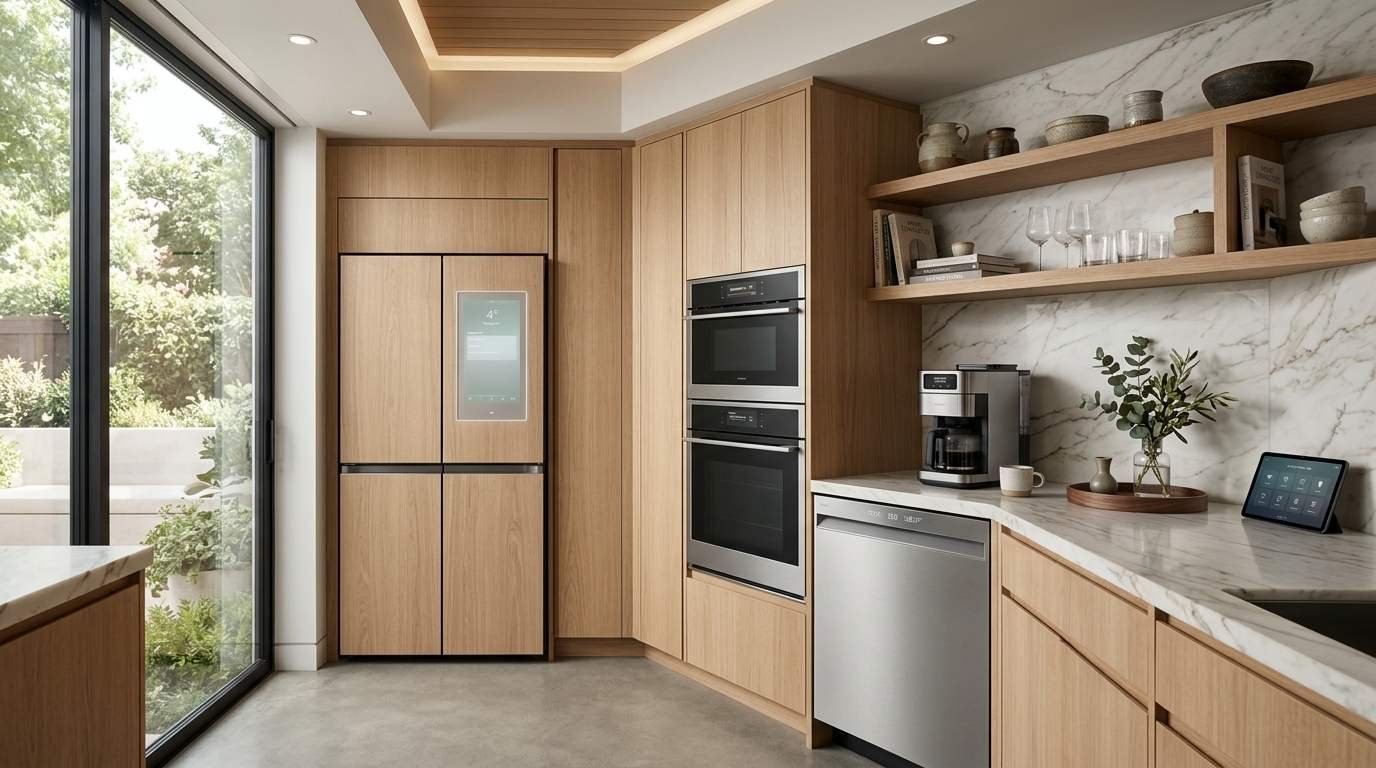

Smart appliances are connected household devices that use technologies such as Wi-Fi, Bluetooth, sensors, artificial intelligence, automation, and mobile applications to provide greater control, convenience, and efficiency. Unlike traditional appliances that simply perform a predefined function, smart appliances can communicate with other devices, collect information, respond to changing conditions, and in many cases be controlled remotely.
We are seeing smart technology become increasingly common across the kitchen, laundry room, living areas, and home climate systems. Smart refrigerators can monitor food storage conditions, smart ovens can adjust cooking settings, smart washing machines can recommend cycles, and smart air conditioners can automatically regulate temperature based on schedules or environmental conditions.
The most useful smart appliances are not simply connected for the sake of connectivity. They combine automation, energy management, convenience, and intelligent control to make everyday household tasks easier.
Suggested reads: Retro Mini Fridge Decor: 15 Stylish Ideas
Table of Contents
How Do Smart Appliances Work?
Smart appliances typically connect to a home network through Wi-Fi or another wireless communication technology. Once connected, the appliance can exchange information with a smartphone, tablet, smart speaker, home hub, or other compatible devices.
A companion mobile app may allow us to:
- Turn appliances on or off remotely
- Monitor appliance status
- Adjust settings
- Create schedules
- Receive maintenance alerts
- Track energy consumption
- Download software updates
- Receive notifications when a cycle is complete
- Integrate appliances with broader smart-home routines
Some modern appliances also use sensors and artificial intelligence. Sensors can detect temperature, humidity, load size, moisture, movement, or other conditions. The appliance then uses this information to select or modify its operation.
For example, a smart washing machine can detect the size of a laundry load and adjust water usage or cycle duration. A smart refrigerator can monitor internal temperatures and notify us if the door has been left open.
Types of Smart Appliances
Smart appliances are available in almost every major household category. Understanding the different types helps us decide which devices provide genuine value.
Smart Refrigerators
Smart refrigerators are among the most recognizable connected kitchen appliances. Depending on the model, they can provide temperature monitoring, door-open alerts, inventory management, internal cameras, water filtration notifications, and integration with smart-home systems.
Some models provide touchscreen interfaces that allow us to access calendars, shopping lists, recipes, or other household information.
The most practical features tend to be temperature alerts and energy monitoring because they can provide useful information without requiring constant interaction.
Smart Ovens and Ranges
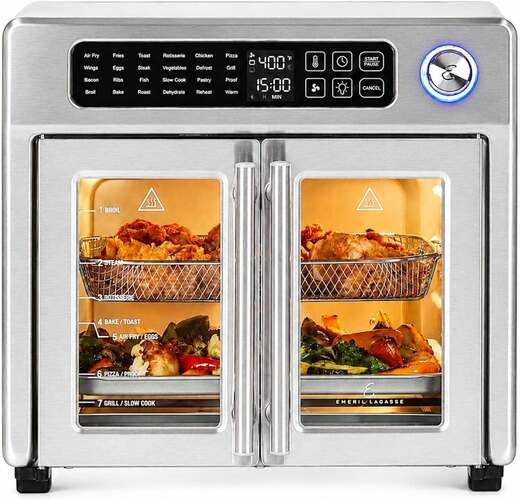
Smart ovens allow us to control cooking settings through a smartphone or compatible voice assistant. Certain models can be preheated remotely, monitored during cooking, or programmed with specific cooking modes.
Advanced ovens may include food-recognition technology, guided cooking programs, temperature probes, and automatic adjustments.
These features can make smart ovens particularly useful for households that want more precise and consistent cooking results.
Smart Dishwashers
Smart dishwashers can provide cycle notifications, remote monitoring, scheduling, and maintenance alerts. Some models can recommend washing programs based on the type or amount of dishes being cleaned.
A connected dishwasher can also notify us when a cycle has finished, reducing the need to repeatedly check the appliance.
Smart Washing Machines
Smart washing machines bring connectivity and automation to laundry. Through an app, we can select cycles, monitor progress, schedule washes, and receive alerts.
Some advanced machines use sensors to determine load characteristics and optimize water, detergent, temperature, and cycle duration.
Smart laundry systems can be especially useful when combined with a smart dryer. Together, they can create a more automated laundry workflow.
Smart Dryers
Smart dryers can monitor moisture levels and automatically adjust drying time. Many connected models also provide notifications when clothing is dry or when maintenance is required.
Remote monitoring can be useful when we start a laundry cycle before leaving home and want to know when the load is ready.
Smart Air Conditioners
Smart air conditioners allow us to control indoor temperatures remotely and create automated schedules. Instead of running continuously, the appliance can be programmed to operate around our daily routine.
Temperature sensors and smart scheduling can help reduce unnecessary operation while maintaining comfortable indoor conditions.
Smart Water Heaters
Connected water heaters can provide temperature control, scheduling, energy monitoring, and diagnostic notifications.
Rather than heating water continuously regardless of household demand, smart controls can help align operation with usage patterns.
Benefits of Smart Appliances
The appeal of smart appliances extends beyond being able to control a device from a phone. When properly selected, connected appliances can provide several practical benefits.
Greater Convenience
Remote control and automation can eliminate many small daily tasks. We can check whether an appliance is running, change a schedule, or receive an alert without physically standing next to the appliance.
This becomes particularly valuable for appliances with long operating cycles, such as washing machines, dryers, dishwashers, and ovens.
Better Energy Management
One of the strongest reasons to consider smart appliances is energy efficiency. Connected appliances can provide information about consumption and help us identify inefficient usage patterns.
Scheduling can also allow appliances to operate when electricity is less expensive where time-based energy pricing is available.
However, connectivity alone does not automatically make an appliance energy efficient. We should still compare energy ratings, operating costs, capacity, and efficiency specifications before purchasing.
Remote Monitoring
Smart notifications provide an additional layer of awareness. A refrigerator can alert us to a temperature problem, a washing machine can tell us when a cycle ends, and an oven can notify us when it reaches the desired temperature.
These alerts can be particularly valuable when appliances are located away from frequently used areas of the home.
Automation
Automation is where smart appliances become considerably more useful. Instead of manually controlling every device, we can create routines based on time, conditions, or household activity.
For example, a home routine could reduce air-conditioning operation when everyone leaves and restore the preferred temperature before the household returns.
Smart Home Integration and Voice Control
Smart home integration allows compatible appliances to work alongside other connected devices and smart-home platforms. This can allow us to create coordinated routines rather than managing every appliance independently.
Many smart appliances can also work with voice assistants. This allows us to perform simple commands without opening a mobile app.
Voice control can be useful for hands-free tasks such as adjusting the temperature, checking appliance status, starting compatible functions, or receiving information.
However, compatibility should be checked carefully. Not every appliance works with every smart-home ecosystem, and some features may require a specific hub, account, or subscription.
Security and Privacy Considerations
Because smart appliances connect to networks and online services, security and privacy should be considered before purchase.
We should choose manufacturers that provide regular software updates and secure account systems. Strong, unique passwords and multi-factor authentication can add another layer of protection when available.
It is also worth checking what information the appliance collects, how long data is retained, and whether certain features require cloud connectivity.
For households that prioritize privacy, appliances with strong local-control options can be particularly attractive.
What to Look for When Buying Smart Appliances
We should avoid choosing a smart appliance simply because it has the largest number of connected features. Instead, the purchasing decision should focus on features that solve genuine household problems.
Important considerations include:
- Energy efficiency: Compare energy consumption and efficiency ratings.
- Smart-home compatibility: Confirm compatibility with the ecosystem we already use.
- App quality: A reliable, intuitive application is more valuable than an impressive feature list.
- Automation: Look for useful scheduling and sensor-based functions.
- Privacy: Review data collection and account requirements.
- Software support: Consider how long the manufacturer is likely to provide updates.
- Repairability: Check warranty coverage, spare parts availability, and service options.
- Manual controls: Make sure essential functions remain usable even if the internet connection fails.
- Total cost: Consider purchase price, energy consumption, subscriptions, and maintenance.
Are Smart Appliances Worth It?
For many households, smart appliances are worth considering when their connected features provide measurable convenience or control. A smart washing machine that automatically manages cycles and sends completion notifications can be genuinely useful. A smart air conditioner that follows a household schedule can potentially reduce unnecessary operation.
On the other hand, paying substantially more for connectivity that we rarely use may not make financial sense.
The best approach is to evaluate the appliance first as a household product and the smart features second. A highly efficient refrigerator with useful temperature alerts is more valuable than an average refrigerator with an impressive touchscreen that adds little practical benefit.
The Future of Smart Home Appliances
The next generation of smart appliances is likely to become increasingly focused on automation, artificial intelligence, predictive maintenance, and energy optimization.
Instead of simply waiting for instructions, appliances can increasingly analyze conditions and recommend or perform appropriate actions. Predictive systems may identify potential maintenance problems before they become serious, while AI-powered controls can learn household patterns and adjust operation accordingly.
As smart-home ecosystems become more integrated, appliances may also communicate with one another. A home energy system could coordinate appliances according to electricity demand, solar generation, battery availability, or household schedules.
This shift could make smart appliances less about individual connected devices and more about creating a coordinated, efficient, and responsive home environment.
Final Thoughts
Smart appliances are transforming everyday household technology by combining traditional appliance functions with connectivity, sensors, automation, and intelligent controls. From refrigerators and ovens to washing machines, dryers, air conditioners, and water heaters, connected technology can make routine tasks easier while providing greater visibility into how our homes operate.
The smartest purchase is not necessarily the appliance with the most technology. We should prioritize reliable performance, energy efficiency, useful automation, security, compatibility, and long-term value.
When these factors come together, smart appliances can become practical tools for creating a more convenient, efficient, connected, and comfortable home.




Leave a Reply