
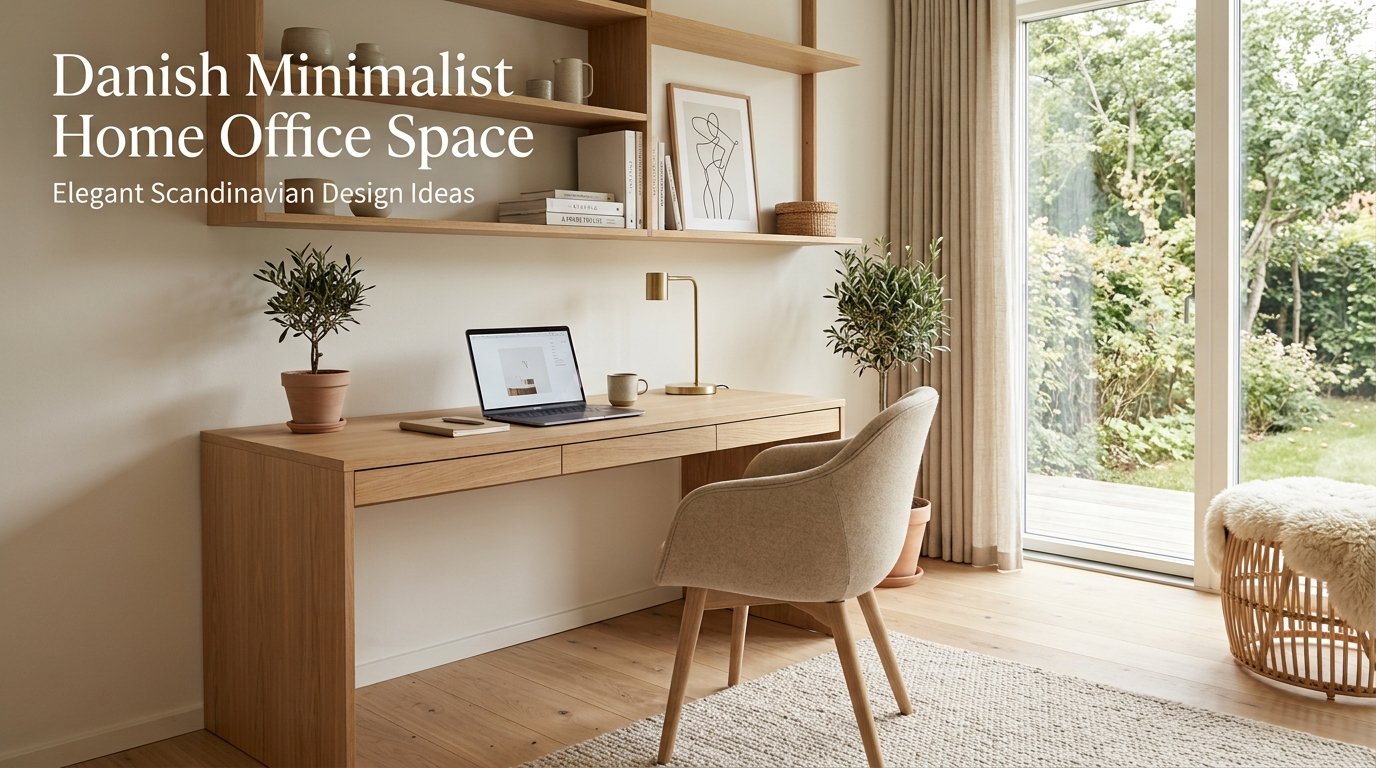

A Danish minimalist home office space combines functional design, natural materials, understated elegance, and everyday comfort. Rooted in Scandinavian design principles, this approach transforms a workspace into a calm, organized environment where productivity and well-being coexist.
Rather than filling an office with unnecessary furniture or decorative objects, we focus on creating an intentional setting that supports concentration while maintaining a warm and inviting atmosphere. Danish minimalism demonstrates that a home office can feel sophisticated without appearing excessive.
Whether we are designing a dedicated study, converting a small bedroom corner, or creating a multifunctional workspace in an apartment, Danish-inspired interiors offer practical solutions for achieving a balanced environment.
In this guide, we explore Danish minimalist home office ideas, furniture selection, lighting, color palettes, organization, and styling techniques to help us create an elegant Scandinavian workspace.
Table of Contents
What Is a Danish Minimalist Home Office Space?
A Danish minimalist home office space is a workspace influenced by Danish interior design, characterized by clean lines, natural materials, practical furniture, and a comfortable atmosphere.
Unlike strict minimalism, which sometimes prioritizes visual simplicity above all else, Danish design places considerable emphasis on comfort, functionality, and human connection. The goal is not simply to remove objects but to ensure that everything within the room serves a meaningful purpose.
Several design principles define this style:
- Functional simplicity: Every furniture piece should contribute to the workspace.
- Natural materials: Wood, linen, wool, and other tactile materials introduce warmth.
- Neutral color schemes: Soft, muted tones create a peaceful visual environment.
- Comfortable furniture: Ergonomics and relaxation remain essential.
- Natural lighting: Daylight supports an open and welcoming atmosphere.
- Intentional organization: Clutter is reduced through thoughtful storage solutions.
A successful Danish minimalist office does not need to look empty. Instead, it should feel carefully curated, allowing essential items to stand out without overwhelming the room.
1. Choose a Soft and Neutral Color Palette
Color plays an important role in establishing the atmosphere of a minimalist Scandinavian home office. Danish-inspired interiors often incorporate neutral shades that create visual continuity and complement natural materials.
We can begin with a foundation of:
- Warm white
- Soft beige
- Light gray
- Pale taupe
- Muted sand
- Natural wood tones
These colors reflect light effectively and help create a spacious appearance, particularly in smaller home offices.
Warm White Walls for a Bright Workspace
Warm white walls provide a versatile background for a Danish minimalist office. Unlike stark white, which can sometimes feel cold, warm white introduces subtle softness while maintaining a clean appearance.
We can pair warm white walls with a light oak desk, a neutral office chair, and linen window treatments. This combination creates a cohesive setting without requiring numerous decorative elements.
For offices with limited natural light, lighter wall colors can help maximize the sense of openness. However, the final appearance will depend on the room’s orientation, artificial lighting, and existing finishes.
Muted Colors for Visual Balance
Although neutral shades form the foundation, incorporating muted colors can add personality.
Consider using:
- Dusty blue in a desk chair or artwork
- Sage green through carefully selected accessories
- Warm charcoal for contrast
- Muted terracotta in small decorative accents
The key is to maintain balance. Instead of introducing several competing colors, we can select one or two complementary accent shades.
A restrained color palette allows architectural details, furniture, and natural textures to become the primary visual features.
2. Select Functional Danish Minimalist Office Furniture
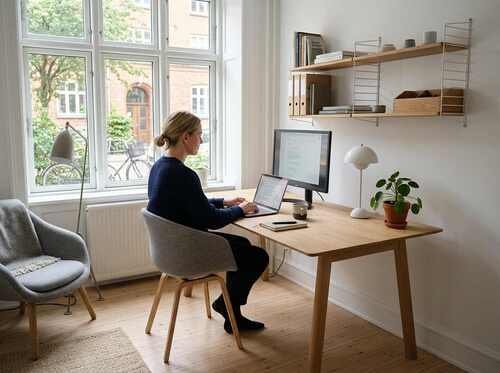
Furniture determines both the practicality and aesthetic quality of a home office. In Danish design, furniture is often appreciated for its proportions, craftsmanship, and everyday usability.
When choosing office furniture, we should consider how each item supports our working habits and available space.
A Simple Wooden Desk
A wooden desk serves as the central element of a Danish minimalist workspace. Light oak, ash, and other natural wood finishes can introduce warmth while complementing neutral walls.
We can choose a desk with:
- A clean, uncomplicated silhouette
- Sufficient surface area for daily work
- Integrated drawers or discreet storage
- A durable, easy-to-maintain finish
- Proportions appropriate to the room
For a compact office, a narrow writing desk may be more practical than a large executive-style workstation. A larger room can accommodate a wider desk while preserving comfortable movement around the furniture.
The ideal desk should provide enough space for the computer, notebook, lighting, and essential accessories without encouraging unnecessary accumulation.
Ergonomic Office Chair
A minimalist appearance should never compromise comfort.
We can select an office chair that combines understated styling with appropriate ergonomic support. Important considerations include:
- Adjustable seat height
- Suitable lumbar support
- Comfortable seat depth
- Stable construction
- Appropriate desk compatibility
A neutral upholstered chair can complement the Danish aesthetic, but ergonomic performance should remain a priority when the workspace is used for extended periods.
Where possible, we can choose materials that provide texture without creating excessive visual complexity.
Open Shelving and Practical Storage
Open shelving can display books, carefully selected objects, and work essentials. However, excessive open storage may create visual clutter.
For a more organized Danish minimalist office, we can combine:
- Closed cabinets for paperwork
- Open shelves for frequently used items
- Desk drawers for small accessories
- Storage boxes in complementary colors
This arrangement allows us to maintain accessibility while keeping the overall environment visually calm.
3. Incorporate Natural Materials for Scandinavian Warmth
Natural materials are central to creating an inviting Danish minimalist home office. They introduce tactile variation and prevent a neutral room from appearing overly sterile.
Light Wood Finishes
Light wood is particularly effective in Scandinavian-inspired interiors. Its natural grain adds character while maintaining a bright and understated appearance.
We can incorporate wood through:
- Desks
- Shelving
- Storage cabinets
- Picture frames
- Desk accessories
- Flooring
The objective is not to use wood in every element but to establish a consistent relationship between furniture and the surrounding environment.
Combining several wood tones requires attention to undertones. Similar or complementary finishes generally create a more harmonious result than numerous unrelated shades.
Linen and Wool Textures
Textiles introduce softness and comfort into the workspace.
A linen curtain can filter daylight while adding subtle texture. A wool cushion or a small woven rug can make the office feel more comfortable, particularly when the room also serves as a reading area.
We should select textiles that are practical and easy to maintain. In a workspace, excessive decorative fabric can collect dust or interfere with movement, so moderation remains useful.
Ceramic and Natural Decorative Objects
Ceramic vases, stone accessories, and handcrafted objects can add understated visual interest.
A single ceramic vessel on a shelf or desk may provide enough decorative character without overwhelming the room.
Danish minimalism values the quality and purpose of individual objects rather than the quantity of decorations.
4. Design a Danish Minimalist Home Office with Natural Lighting
Lighting influences concentration, comfort, and the overall appearance of an interior. A well-designed Danish minimalist office should incorporate natural light whenever possible while providing suitable illumination for evening work.
Position the Desk Near a Window
If the room allows, positioning the desk near a window can provide access to daylight and an outdoor view.
We should consider:
- Screen glare
- Direct sunlight
- Window orientation
- Available desk space
- Comfortable viewing angles
Placing a monitor directly opposite a bright window may create reflections, while direct sunlight can increase heat and discomfort.
A side-on desk position may provide a useful balance between daylight and screen visibility.
Choose a Minimalist Desk Lamp
A desk lamp combines functionality with decorative simplicity. We can select a model with a clean silhouette and an adjustable light direction.
Suitable characteristics include:
- Adjustable positioning
- Comfortable illumination
- A stable base
- A design that complements the desk
- Appropriate brightness for the task
Warm or neutral-white lighting can contribute to a welcoming atmosphere, although the best color temperature depends on personal preference and the type of work being performed.
Layer Different Light Sources
A single overhead fixture may not provide sufficient flexibility.
We can combine:
- Ambient lighting: General illumination for the room.
- Task lighting: Focused light for reading and desk work.
- Accent lighting: Subtle illumination for architectural or decorative features.
This layered approach allows us to adapt the environment throughout the day.
5. Create a Clutter-Free Danish Minimalist Workspace
Organization is one of the most practical aspects of minimalist office design. A visually calm workspace can be easier to maintain when storage solutions are planned around daily routines.
Rather than relying solely on decorative storage boxes, we should evaluate what items we use regularly and where they should be kept.
Keep Frequently Used Items Within Reach
Essential tools such as notebooks, chargers, pens, and headphones should have designated locations.
We can use:
- Small desk organizers
- Drawer dividers
- Cable management systems
- Wall-mounted storage
- Compact filing solutions
The purpose is to reduce unnecessary searching and prevent the desk from becoming crowded.
Manage Cables Discreetly
Cables can disrupt the clean appearance of a minimalist workspace.
We can improve organization by using:
- Cable clips
- Under-desk cable trays
- Cable sleeves
- Charging stations
- Clearly designated power outlets
Cable management should also preserve accessibility and avoid creating hazards.
A tidy workspace does not require hiding every functional component. Instead, we should organize equipment so that it remains practical and visually coherent.
Adopt an Intentional Desk Arrangement
A simple desk arrangement may include a computer, keyboard, mouse, lamp, and notebook.
Additional accessories should be evaluated according to their usefulness. If an item does not support our work, storage, or comfort, we can consider whether it needs to remain on the desk.
6. Introduce Scandinavian-Inspired Biophilic Design
Plants can bring natural color and organic forms into a Danish minimalist home office. They also provide a way to introduce visual variation without relying on excessive decoration.
Select Low-Maintenance Indoor Plants
The right plant depends on the available light, temperature, and maintenance requirements.
Possible choices include:
- Snake plants
- ZZ plants
- Pothos
- Spider plants
- Selected compact foliage plants
Before selecting a plant, we should evaluate its light requirements and ensure that the room provides suitable conditions.
A single medium-sized plant can create a focal point in a compact office. Larger rooms may accommodate several plants, provided they do not interfere with movement or workspace functionality.
Use Natural Planters
Ceramic, terracotta, and understated stone-effect planters can complement the neutral palette.
We can select planters in colors that coordinate with the desk, flooring, or shelving. A consistent material approach helps maintain visual harmony.
Plants should support the design rather than become a source of clutter.
7. Make Small Danish Minimalist Home Offices Feel Spacious
Small rooms require careful planning because every furniture choice affects movement and usable space.
A Danish minimalist approach can be especially effective in compact offices because it emphasizes practical proportions and purposeful furnishings.
Choose Space-Efficient Furniture
For a small office, we can consider:
- Slim writing desks
- Wall-mounted shelves
- Compact ergonomic chairs
- Vertical storage cabinets
- Foldable or multifunctional furniture
A desk that fits the room comfortably is generally more useful than one that dominates the available floor area.
We should also leave sufficient space for chair movement and access to storage.
Use Vertical Space Thoughtfully
Wall-mounted storage can reduce the need for additional floor furniture.
However, shelves should not be filled with numerous objects simply because space is available. A carefully edited arrangement can preserve the minimalist appearance.
We can place books, essential supplies, and a small number of decorative objects on shelves while storing less attractive items in closed compartments.
Create a Multifunctional Workspace
In an apartment, the home office may share space with a bedroom, living room, or dining area.
To maintain visual consistency, we can select furniture that complements the surrounding interior.
A compact desk positioned near a wall or window can function as a dedicated workstation without overwhelming the room.
When possible, storage should help visually distinguish work materials from the rest of the living space.
8. Add Danish Hygge to Your Minimalist Home Office
Danish-inspired interiors are often associated with hygge, a concept connected to comfort, warmth, and a sense of well-being.
In a home office, hygge can be introduced through subtle choices that make the environment more pleasant without compromising productivity.
Comfortable Textiles
A soft rug, comfortable cushion, or textured curtain can make the office feel more inviting.
We should avoid placing textiles where they interfere with chair movement or create unnecessary maintenance requirements.
A Relaxed Reading Corner
If space permits, a small reading corner can add versatility to the office.
A compact lounge chair, a side table, and a reading lamp can create a separate area for reviewing documents or taking a short break.
The design should remain consistent with the rest of the room through coordinated materials and colors.
Meaningful Personal Objects
Minimalism does not require eliminating personality.
We can display a framed photograph, a favorite book, or a meaningful decorative object. These elements can make the workspace feel personal while maintaining visual restraint.
The objective is to create an environment that feels comfortable and authentic rather than overly staged.
9. Choose Wall Art and Decorations Carefully
Wall decorations can enhance a Danish minimalist office when selected with consideration for scale, color, and composition.
Instead of covering every available wall, we can focus on a small number of carefully chosen pieces.
Minimalist Artwork
Suitable options include:
- Abstract line drawings
- Botanical illustrations
- Neutral-toned photography
- Simple geometric prints
- Nature-inspired artwork
Artwork should complement the room’s color palette without competing with the desk or other important visual elements.
A large piece may serve as a focal point, while a small print can add subtle interest to a shelf or workspace wall.
Create Visual Balance
The placement of wall art should reflect the proportions of the furniture and the room.
For example, artwork above a desk should be appropriately scaled to the desk width. Excessively small pieces may appear disconnected, while oversized arrangements can dominate a compact office.
We can use consistent framing materials to create continuity across multiple pieces.
10. Build a Productive and Ergonomic Danish Home Office
A beautiful office must also support healthy working habits and practical comfort.
Danish minimalist design provides an aesthetic foundation, but productivity depends on how the space is arranged and used.
Prioritize Desk and Chair Height
The desk and chair should work together to support a comfortable posture.
We can consider:
- Adjustable chair height
- Suitable monitor positioning
- Comfortable keyboard placement
- Adequate legroom
- Proper support during extended work
Ergonomic needs vary between individuals, so furniture should be adjusted according to personal comfort and working requirements.
Position the Monitor Thoughtfully
A monitor should be positioned to reduce unnecessary neck movement and minimize glare.
We can use a monitor stand or adjustable arm when appropriate, provided the setup remains stable and suitable for the equipment.
The screen should be placed at a comfortable viewing distance, and regular breaks can help reduce prolonged static positioning.
Create a Comfortable Working Routine
Interior design alone cannot guarantee productivity. We can support concentration by establishing a workspace routine, organizing tasks, and taking regular movement breaks.
A well-designed office should make these habits easier rather than encourage uninterrupted sitting for excessive periods.
11. Sustainable Choices for a Danish Minimalist Office
Sustainability can complement the principles of thoughtful Scandinavian design.
Rather than replacing furniture frequently, we can prioritize durable products, repairable materials, and pieces that remain useful over time.
Invest in Long-Lasting Furniture
When selecting a desk or office chair, we should consider:
- Construction quality
- Material durability
- Repairability
- Warranty coverage
- Long-term functionality
A durable piece may offer greater value than an inexpensive item that requires frequent replacement.
Choose Responsible Materials
Where practical, we can explore furniture made from responsibly sourced wood or recycled materials.
However, sustainability claims should be evaluated carefully. Certifications, material information, and manufacturer transparency can help us make more informed choices.
Avoid Trend-Driven Purchases
A minimalist office benefits from furniture that remains relevant beyond short-lived design trends.
We can focus on adaptable shapes, neutral finishes, and practical features that suit changing needs.
This approach supports a more intentional relationship with furniture and home design.
12. Danish Minimalist Home Office Ideas for Different Budgets
Creating a Scandinavian-inspired Home Offices does not necessarily require purchasing expensive designer furniture.
We can approach the design according to our available budget and prioritize the elements that have the greatest practical impact.
Budget-Friendly Approach
For a more affordable office, we can focus on:
- A simple, sturdy desk
- A comfortable ergonomic chair
- Neutral wall colors
- Practical cable management
- A small plant
- One or two carefully selected decorative pieces
Organization and thoughtful arrangement can improve the appearance of a workspace without requiring extensive investment.
Mid-Range Approach
A moderate budget may allow us to invest in:
- A higher-quality wooden desk
- Improved task lighting
- Coordinated storage furniture
- Durable textiles
- Better ergonomic accessories
These upgrades can enhance both comfort and visual consistency.
Premium Danish-Inspired Office
For a more elevated interior, we can consider:
- High-quality natural wood furniture
- Designer lighting
- Custom storage
- Premium ergonomic seating
- Carefully selected artwork
- Durable architectural finishes
Premium design should still be guided by practical needs. Expensive furniture does not automatically create a functional or comfortable office.
13. Common Mistakes to Avoid in Danish Minimalist Home Office Design
Even a simple design can become ineffective when essential details are overlooked.
Using Too Much White
An entirely white office may appear clean but can also feel visually flat or cold.
We can introduce warmth through wood, textiles, natural light, and carefully selected accent colors.
Prioritizing Appearance Over Comfort
A stylish chair that lacks appropriate support may become uncomfortable during extended work.
Ergonomics should remain central to furniture selection.
Adding Too Many Decorative Objects
Minimalist interiors benefit from thoughtful editing. Excessive accessories can undermine the clean and organized appearance we aim to achieve.
We should select objects that serve a functional, emotional, or aesthetic purpose.
Ignoring Storage Requirements
A workspace without adequate storage may quickly become cluttered.
Before purchasing furniture, we should evaluate the supplies, equipment, and documents that need to be accommodated.
Choosing Furniture Without Measuring
A desk that appears attractive online may not fit comfortably in the room.
We should measure available space, consider door and window placement, and account for chair movement before making purchases.
14. How to Style a Danish Minimalist Home Office Step by Step
Creating a cohesive workspace becomes easier when we approach the design in stages.
Step 1: Evaluate the Room
We begin by assessing the room’s dimensions, natural lighting, existing furniture, and available storage.
This helps us identify the most practical location for the desk and other essential pieces.
Step 2: Establish the Color Palette
We select a neutral foundation and determine whether natural wood or a muted accent color will complement the space.
Step 3: Choose the Main Furniture
The desk and office chair should be selected according to the room’s size, work requirements, and ergonomic needs.
Step 4: Organize Storage
We identify where equipment, documents, and daily supplies will be stored.
Step 5: Improve Lighting
We introduce suitable task lighting and assess whether the existing ambient lighting supports comfortable work.
Step 6: Add Natural Textures
Wood, linen, ceramics, and other materials can introduce warmth without excessive decoration.
Step 7: Personalize the Space
We finish with a small selection of artwork, plants, or meaningful objects that reflect our preferences.
Step 8: Review and Edit
Once the office is arranged, we evaluate whether each element contributes to comfort, functionality, or visual harmony.
Removing unnecessary items can be as valuable as adding new ones.
Conclusion: Creating a Timeless Danish Minimalist Home Office
A Danish minimalist home office space combines practical functionality with warmth, simplicity, and understated elegance. Through thoughtful furniture selection, natural materials, neutral colors, and effective organization, we can create a workspace that supports both productivity and comfort.
The most successful Scandinavian-inspired offices are not defined by the number of minimalist objects they contain. Instead, they reflect a deliberate approach to design, where each element contributes to the overall experience.
Whether we are working with a compact apartment corner or a dedicated home office, the principles remain adaptable. A well-proportioned desk, comfortable chair, appropriate lighting, and carefully planned storage can establish a strong foundation.
By incorporating natural textures, subtle personal details, and functional design choices, we can develop a workspace that feels refined without becoming overly formal.
The essence of Danish minimalism lies in creating a space where simplicity and comfort work together—an environment designed not only to look beautiful but also to support everyday living.

Leave a Reply