
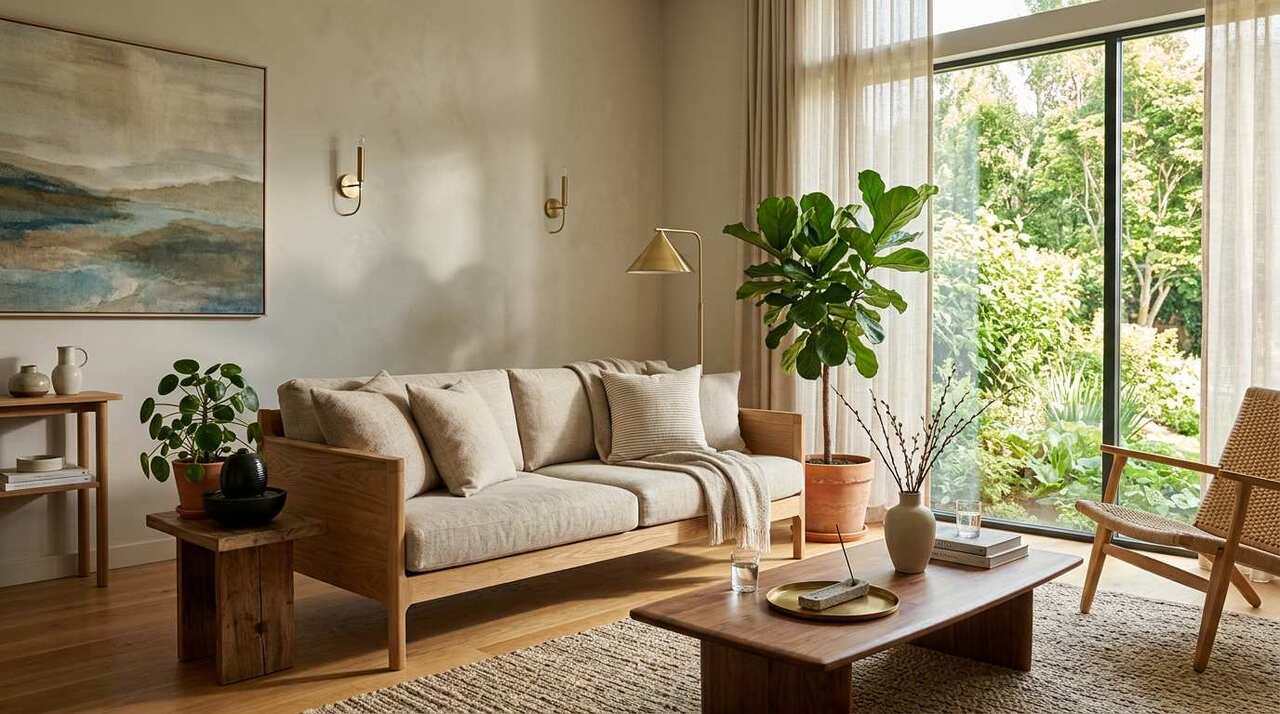

Feng Shui is an ancient approach to arranging living spaces around balance, harmony, energy, and intentional design. Rather than treating a home as a collection of separate rooms and objects, Feng Shui encourages us to consider how the entire environment feels and functions as one connected space.
When we apply Feng Shui principles thoughtfully, we can create interiors that feel more welcoming, organized, calm, and purposeful. The goal is not to fill a room with symbolic objects or follow rigid decorating rules. Instead, we focus on creating an environment where movement feels natural, clutter is controlled, natural elements are represented, and every major piece has a meaningful place.
Suggested Reads: Bedroom Design PDF: Complete Bedroom Guide
Table of Contents
What Are the Core Feng Shui Principles?
The fundamental Feng Shui principles revolve around energy flow, balance, natural elements, proportion, placement, and intention. These principles can be adapted to traditional homes, modern apartments, small spaces, rental properties, and contemporary interiors.
At its heart, Feng Shui asks us to examine how our surroundings influence the way we experience a space. A dark, crowded entrance may feel very different from a bright, organized entryway. A bedroom filled with electronics and unfinished tasks can create a different atmosphere from a calm room designed primarily for rest.
Several concepts form the foundation of Feng Shui:
- Chi or Qi: The concept of vital energy moving through a space.
- The five elements: Wood, Fire, Earth, Metal, and Water.
- Yin and Yang: Complementary qualities such as softness and strength, darkness and brightness, stillness and movement.
- The Bagua: A traditional Feng Shui energy map used to relate areas of a space to different aspects of life.
- Command position: Strategic placement of important furniture so we have a strong visual relationship with the room.
- Balance and flow: Creating spaces that feel neither overcrowded nor empty.
These concepts give us a framework for making thoughtful interior decisions without sacrificing personal style.
1. Create a Clear and Welcoming Entrance
The entrance is one of the most important areas to consider when applying Feng Shui principles. It establishes the first impression of the home and creates the transition between the outside world and our private environment.
A successful Feng Shui entryway should feel open, clean, welcoming, and easy to navigate.
We can begin by removing unnecessary shoes, bags, boxes, paperwork, and miscellaneous objects. A practical storage solution can keep everyday items organized without making the entrance feel crowded.
Good lighting also matters. If the entrance is naturally dark, we can introduce warm, layered lighting to make the area feel brighter and more inviting.
A mirror can be useful when positioned thoughtfully, particularly when it improves the perception of space or reflects attractive features. However, Feng Shui traditions differ regarding specific mirror placements, so the broader principle is to use mirrors intentionally rather than automatically.
Plants, natural textures, artwork, or a simple console can also create a more welcoming transition.
2. Improve the Flow of Chi Through the Home
One of the best-known Feng Shui principles is the importance of energy flow.
We can interpret this practically by looking at how easily people move through the home. Furniture should not unnecessarily block pathways, doorways, or major circulation routes.
A room may have beautiful furniture but still feel uncomfortable if chairs collide with tables, doors cannot open fully, or narrow walkways force people to move around obstacles.
To improve flow, we can:
- Keep major walkways clear.
- Avoid excessive furniture.
- Give doors enough room to open comfortably.
- Arrange seating so movement feels natural.
- Reduce visual clutter.
- Use furniture that matches the scale of the room.
- Maintain a sense of openness between connected areas.
This approach works particularly well in small homes and apartments, where every piece of furniture has a greater effect on how the room functions.
3. Understand the Five Feng Shui Elements
The five elements are a central part of traditional Feng Shui. They are Wood, Fire, Earth, Metal, and Water. Each represents different qualities, and we can introduce them through colors, materials, shapes, artwork, lighting, and decorative objects.
Wood
Wood represents growth, vitality, and upward movement. We can introduce this element through:
- Wooden furniture
- Houseplants
- Green tones
- Natural fibers
- Vertical forms
A healthy indoor plant can simultaneously add texture, color, and a stronger connection to nature.
Fire
Fire is associated with warmth, energy, visibility, and activity.
Candles, warm lighting, red or orange accents, and triangular or pointed forms can represent the fire element. We generally want to use this element thoughtfully rather than overwhelming a room with intense colors.
Earth
Earth represents stability, grounding, nourishment, and reliability.
Ceramics, stone, terracotta, square forms, and earthy neutral colors can help introduce this quality. Earth-inspired materials are particularly appropriate in spaces where we want a grounded and relaxed atmosphere.
Metal
Metal is associated with clarity, precision, structure, and organization.
We can incorporate it through metal furniture details, circular shapes, metallic finishes, white tones, gray tones, and carefully selected decorative objects.
Water
Water represents movement, fluidity, reflection, and depth.
Dark blue and black tones, glass, reflective surfaces, flowing shapes, and carefully positioned water-inspired artwork can represent this element.
The objective is not necessarily to place five literal objects in every room. Instead, we can use materials, colors, forms, and textures to create a balanced composition.
4. Use the Command Position
The command position is another important Feng Shui concept. It generally involves placing major furniture so that we have a clear view of the room and its entrance without being directly aligned with the doorway.
This principle can be applied to:
- Beds
- Desks
- Sofas
- Reading chairs
- Dining areas
For example, when arranging a bed, we can position it so the room entrance is visible while maintaining a comfortable and secure feeling. The bed should also have enough space around it for movement whenever possible.
For a home office, placing the desk where we can see the room entrance can create a stronger sense of awareness than positioning the desk directly against a wall with our back toward the doorway.
The command position is fundamentally about orientation, visibility, and a sense of stability.
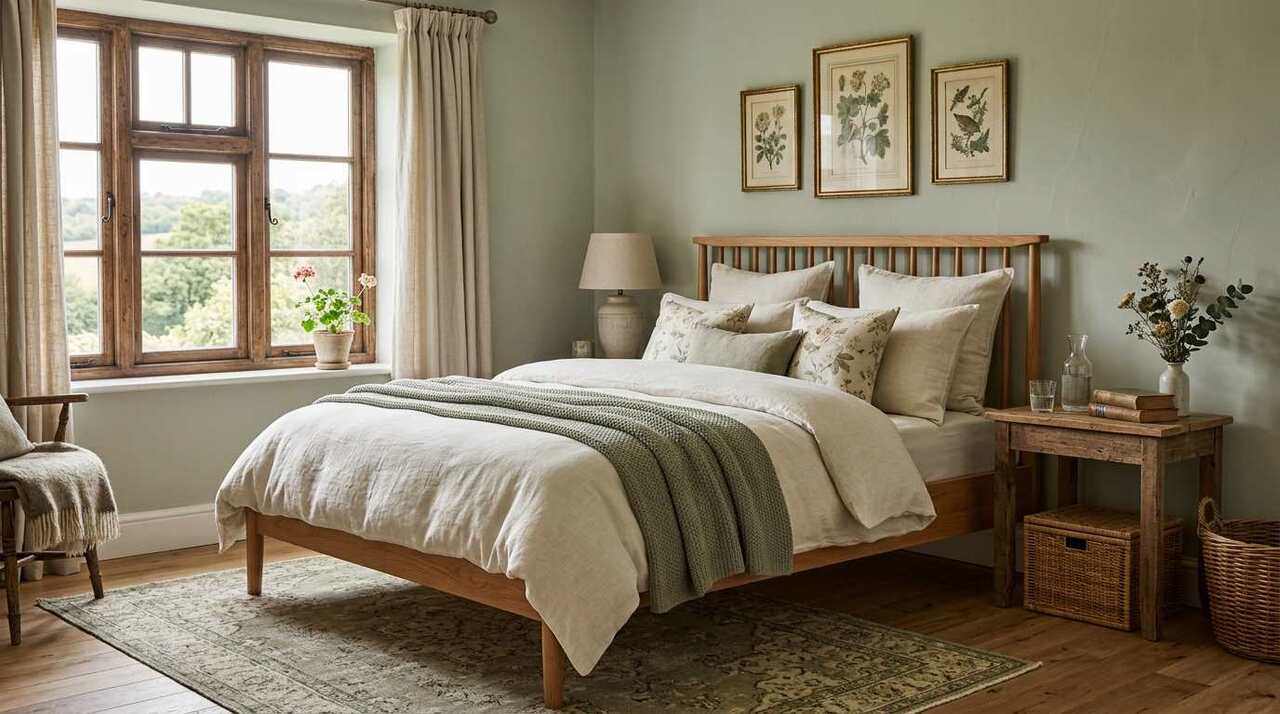
5. Apply Feng Shui Principles to the Bedroom
The bedroom should support rest, privacy, and relaxation. This makes it one of the most important rooms for intentional Feng Shui design.
We can begin by keeping the bedroom relatively uncluttered. Clothing, paperwork, exercise equipment, and work materials can visually connect the bedroom with daytime responsibilities, so storing them properly can help establish a more restful atmosphere.
A substantial headboard can create a sense of stability. Balanced bedside tables can also provide visual symmetry, although a perfectly symmetrical arrangement is not mandatory.
Soft lighting, natural textiles, muted colors, and comfortable bedding can contribute to a peaceful environment.
We should also consider electronic devices. Keeping work equipment and unnecessary screens away from the immediate sleeping area can make the bedroom feel more dedicated to rest.
6. Bring Nature Indoors
Nature plays an important role in many Feng Shui-inspired interiors. Plants, wood, stone, natural fibers, sunlight, and organic textures can make a home feel more connected to the natural world.
We do not need a large collection of plants. A few healthy, well-positioned plants can have more visual impact than dozens of poorly maintained ones.
Natural materials can also be introduced through:
- Linen curtains
- Cotton bedding
- Wooden furniture
- Woven baskets
- Stone accessories
- Ceramic pieces
- Rattan details
- Wool textiles
The result is often a warmer and more layered interior without requiring excessive decoration.
7. Reduce Clutter With Intention
Clutter is one of the easiest areas to address when applying Feng Shui principles.
When too many objects compete for attention, a room can feel visually heavy. We can improve the atmosphere by asking whether each item is useful, beautiful, meaningful, or necessary.
This does not mean creating an empty, minimalist home. A well-designed room can contain artwork, books, decorative objects, photographs, textiles, and personal collections.
The key is intentional placement.
Instead of allowing surfaces to become storage areas, we can give important objects enough space around them to be appreciated.
8. Balance Yin and Yang
Feng Shui uses the concepts of Yin and Yang to describe complementary qualities.
Yin qualities tend to be associated with softness, quietness, darkness, stillness, and relaxation. Yang qualities are associated with brightness, activity, movement, strength, and stimulation.
A successful interior can combine both.
For example, a living room might use:
- Soft upholstery with structured furniture.
- Warm lighting with brighter task lighting.
- Natural wood with metal details.
- Textured fabrics with smooth surfaces.
- Calm colors with a few energetic accents.
Rather than making every element identical, we create visual and sensory balance.
9. Use Color Thoughtfully
Color can strongly influence the atmosphere of a room. Feng Shui traditions connect colors with different elements and qualities, but modern interiors can interpret these relationships more subtly.
Soft greens can create a connection with nature. Earthy beige and terracotta tones can make a room feel grounded. White and gray can create a clean, structured appearance, while deeper blue tones can introduce visual depth.
We do not need to repaint an entire room to incorporate Feng Shui-inspired color. Accent walls, cushions, artwork, rugs, curtains, and smaller decorative objects can introduce color gradually.
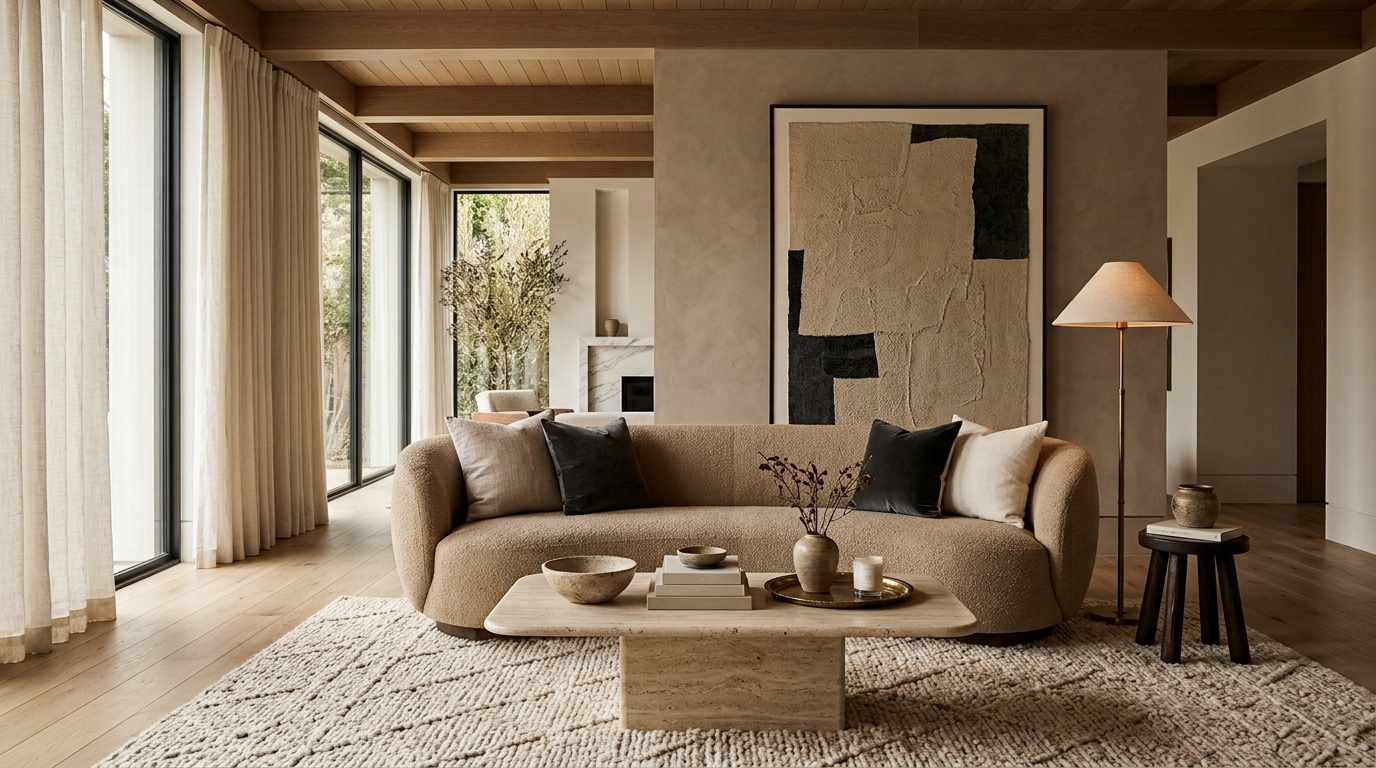
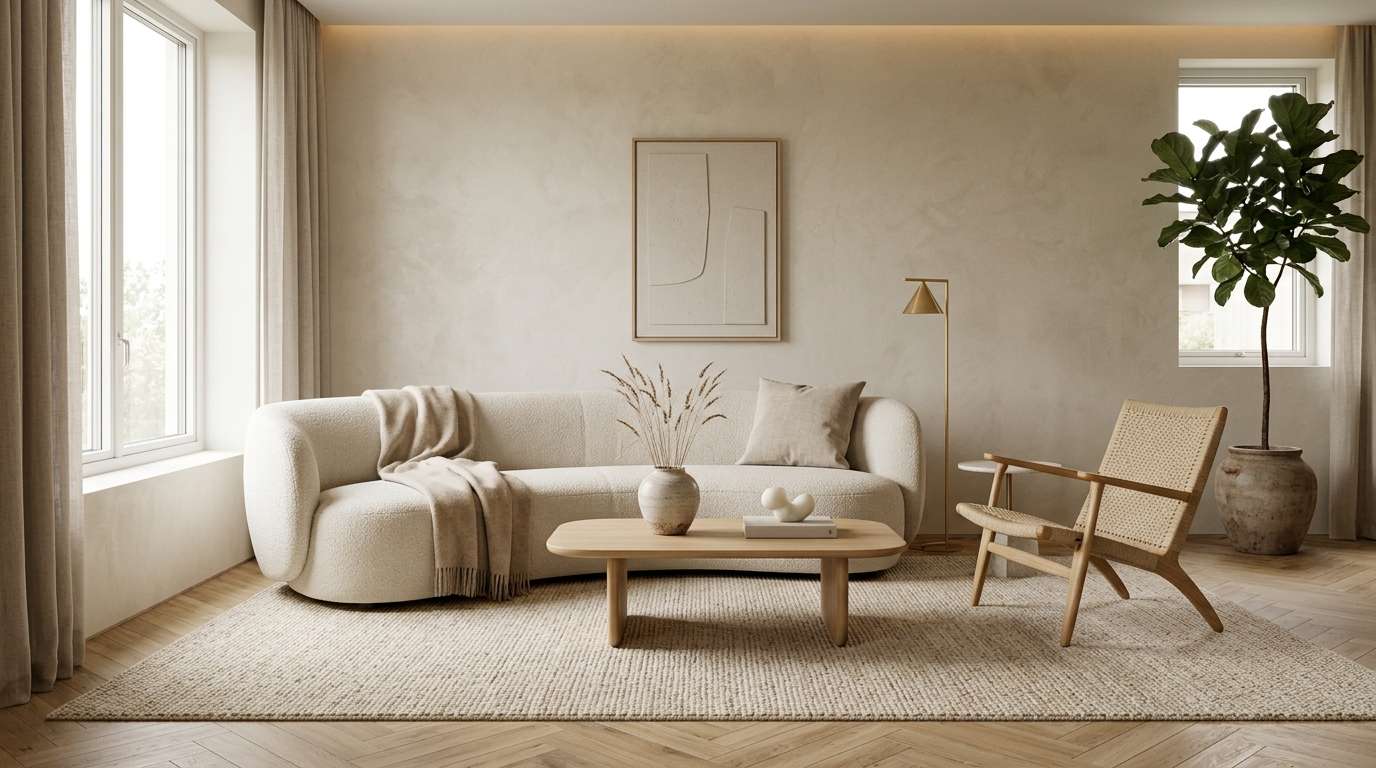
10. Feng Shui Principles for the Living Room
The living room should encourage comfortable interaction and natural movement.
We can arrange seating so that people can communicate easily rather than placing every chair toward a television. A sofa can provide an anchor, while chairs or additional seating can create a conversational arrangement.
Coffee tables should leave sufficient room for movement. Side tables should be accessible without obstructing pathways.
Natural light should be maximized where possible. During the evening, layered lighting can prevent the room from becoming either overly bright or gloomy.
Plants, books, artwork, and personal objects can add character while still maintaining visual order.
11. Create a Balanced Kitchen
The kitchen represents nourishment and daily activity, making organization especially important.
Clean countertops, functional storage, and easy access to frequently used items can create a sense of order. We can avoid allowing appliances, paperwork, packaging, and miscellaneous objects to accumulate unnecessarily.
Because kitchens naturally contain multiple materials and functions, balance is useful. Wood cutting boards, ceramic containers, plants, natural textiles, and subtle metal finishes can create visual variety without making the room feel chaotic.
A clean and organized kitchen also supports practical everyday living, which is one reason Feng Shui-inspired organization can be valuable beyond its traditional framework.
12. Make the Home Office Feel Focused
A home office benefits from clarity and structure.
We can apply the command position by placing the desk where the entrance is visible when practical. The workspace should have enough light and sufficient surface area for the tasks performed there.
Cable management is particularly useful. Tangled cables and piles of unused equipment can create unnecessary visual noise.
Instead of filling the office with decorative objects, we can select a few items that contribute to the atmosphere: a plant, framed artwork, quality desk lamp, attractive storage, or meaningful object.
13. Use Mirrors Carefully
Mirrors can make a room appear larger and brighter because they reflect light and visual space.
From a Feng Shui perspective, mirror placement has additional traditional considerations. Interpretations vary, so there is no need to treat every mirror placement rule as universal.
From a practical design perspective, we can ask three questions:
- What does the mirror reflect?
- Does it improve the room visually?
- Does its position support the function of the space?
A mirror that reflects natural light, artwork, or an attractive architectural feature can become a valuable design element.
14. Keep Doors and Windows Functional
Doors and windows are important parts of how a home connects with its surroundings.
We can keep doors clean, functional, and unobstructed. Windows should also be maintained so natural light can enter freely.
Curtains and blinds should provide privacy when needed without unnecessarily blocking daylight throughout the day.
Even small improvements—clean glass, repaired hardware, better curtains, or reorganized furniture near a window—can change how a room feels.
15. Choose Meaningful Decor
Feng Shui-inspired decorating does not require purchasing specialized objects.
Instead, we can select objects that have personal meaning or contribute positively to the atmosphere.
Artwork, family photographs, travel memories, books, ceramics, plants, and handmade pieces can all have a place in a balanced home.
The most important consideration is how the collection works as a whole. Too many meaningful objects can still become visual clutter, so editing remains important.
16. Feng Shui and Small Spaces
Small homes can benefit significantly from Feng Shui principles because organization and circulation become especially important when space is limited.
Multifunctional furniture can reduce unnecessary pieces. Wall-mounted storage can free floor space. Light colors and mirrors can increase the perception of openness.
We can also establish distinct zones without building walls. A rug can define a seating area, lighting can distinguish a workspace, and shelving can separate functions while preserving visual connection.
The goal is not to make a small room look empty. It is to make every element work efficiently.
17. Create Balance Without Following Rigid Rules
Feng Shui is sometimes presented as a strict collection of rules. In practice, we can use its principles as a framework for making more intentional decisions.
A home should still reflect the people who live there.
If a particular color, artwork, furniture style, or family object makes the space feel meaningful, there is no reason to remove it simply because it does not fit a particular decorating formula.
The most useful approach is to combine traditional Feng Shui concepts with practical interior design and personal preference.
18. A Simple Feng Shui Home Checklist
We can begin improving the energy and organization of a home without redesigning every room.
A simple checklist includes:
- Clear unnecessary clutter.
- Keep entrances welcoming and unobstructed.
- Improve natural and artificial lighting.
- Create comfortable pathways.
- Position major furniture thoughtfully.
- Introduce natural materials.
- Add healthy plants where appropriate.
- Balance soft and structured elements.
- Use color intentionally.
- Keep the bedroom calm and organized.
- Create a focused workspace.
- Maintain clean windows and functional doors.
- Display meaningful objects selectively.
- Avoid overcrowding surfaces.
- Make storage practical and accessible.
Conclusion: Designing a More Harmonious Home
The most useful Feng Shui principles encourage us to look at our homes with greater awareness. Instead of decorating simply to fill empty space, we can consider how each room functions, how people move through it, what the environment communicates, and how different elements work together.
A harmonious home does not have to be expensive, minimalist, or traditionally decorated. It can be contemporary, rustic, colorful, elegant, compact, or eclectic.
By improving circulation, reducing unnecessary clutter, balancing materials and colors, introducing natural elements, and placing important furniture thoughtfully, we can create interiors that feel more comfortable and intentional.
Ultimately, Feng Shui gives us a way to think about the relationship between space, environment, and everyday living. When we combine those principles with our own needs and personal style, even small changes can make a home feel more balanced, welcoming, and purposeful.


Leave a Reply